
There’s something magical about Easter morning, and nothing captures that spirit quite like homemade Easter bread fresh from the oven. This traditional Easter bread has been gracing tables across Italian homes and beyond for generations, filling kitchens with the sweet aroma of freshly baked bread and creating memories that last a lifetime.
Whether you call it Pane di Pasqua or simply Easter sweet bread, this beautiful yeasted bread is more than just a recipe; it’s a family tradition that brings the whole family together during the Easter holiday.
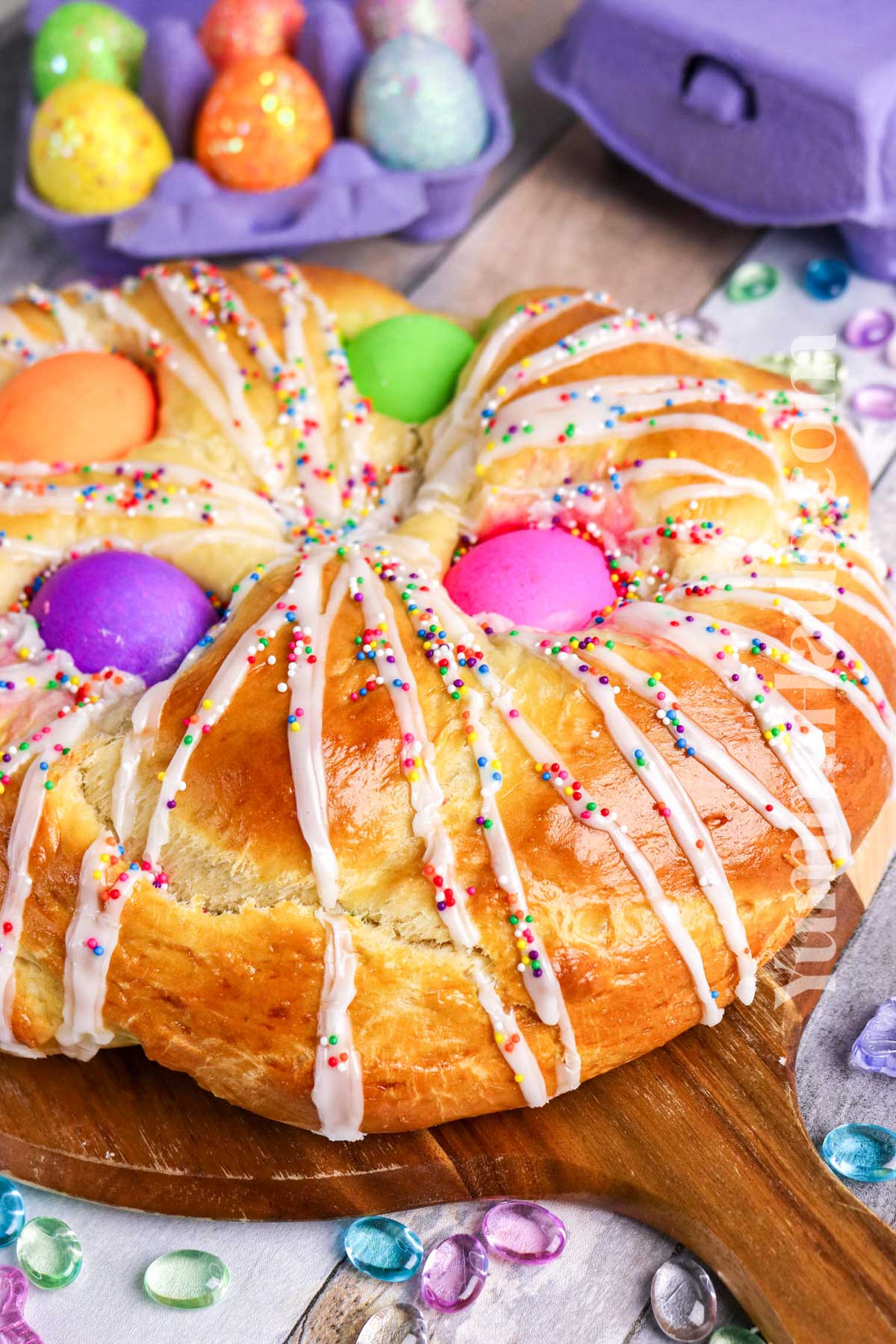
Gina’s Recipe Rundown:
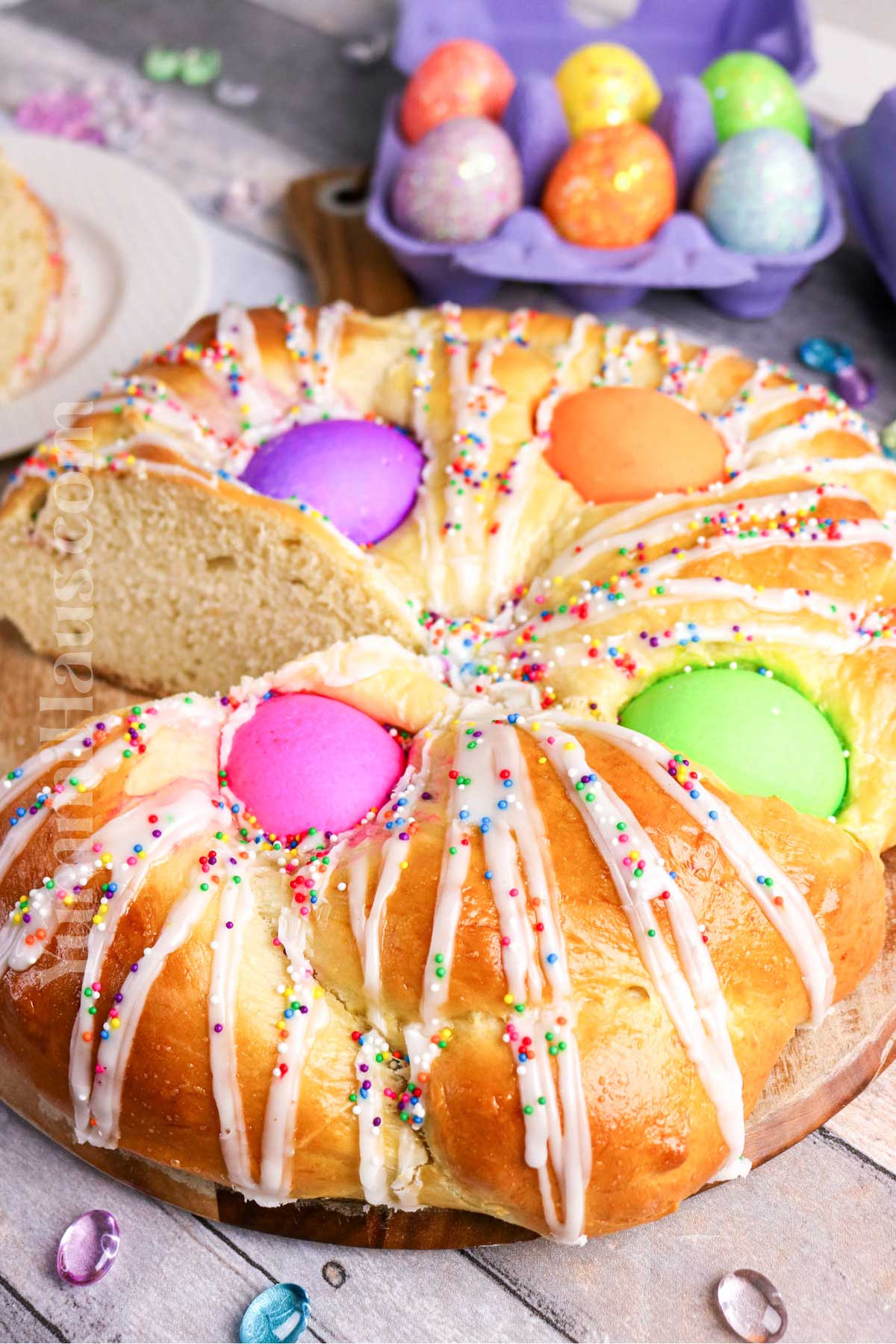
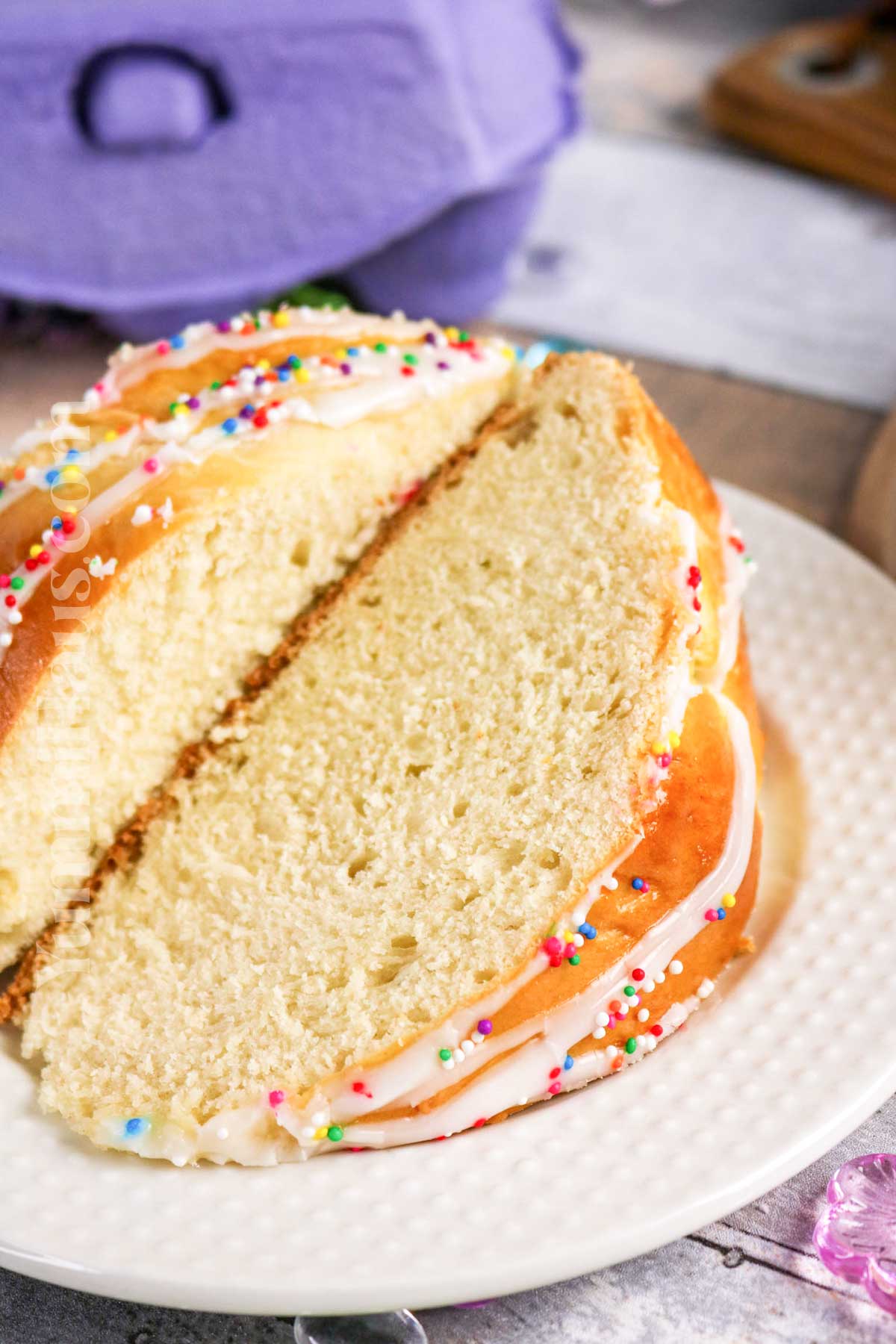
Texture: Soft and fluffy on the inside with a light, slightly chewy crumb and a tender, golden crust.
Taste: Sweet, rich, and slightly buttery, with a soft, tender crumb and subtle hints of vanilla and almond.
Ease: Moderately easy—requires basic kneading and rising time, but the braided shaping adds a fun, hands-on touch.
Why I love it: I love it for its warm, comforting aroma, festive braided look, and the sweet, tender bites that make every holiday feel special.
Why You’ll Love This Recipe
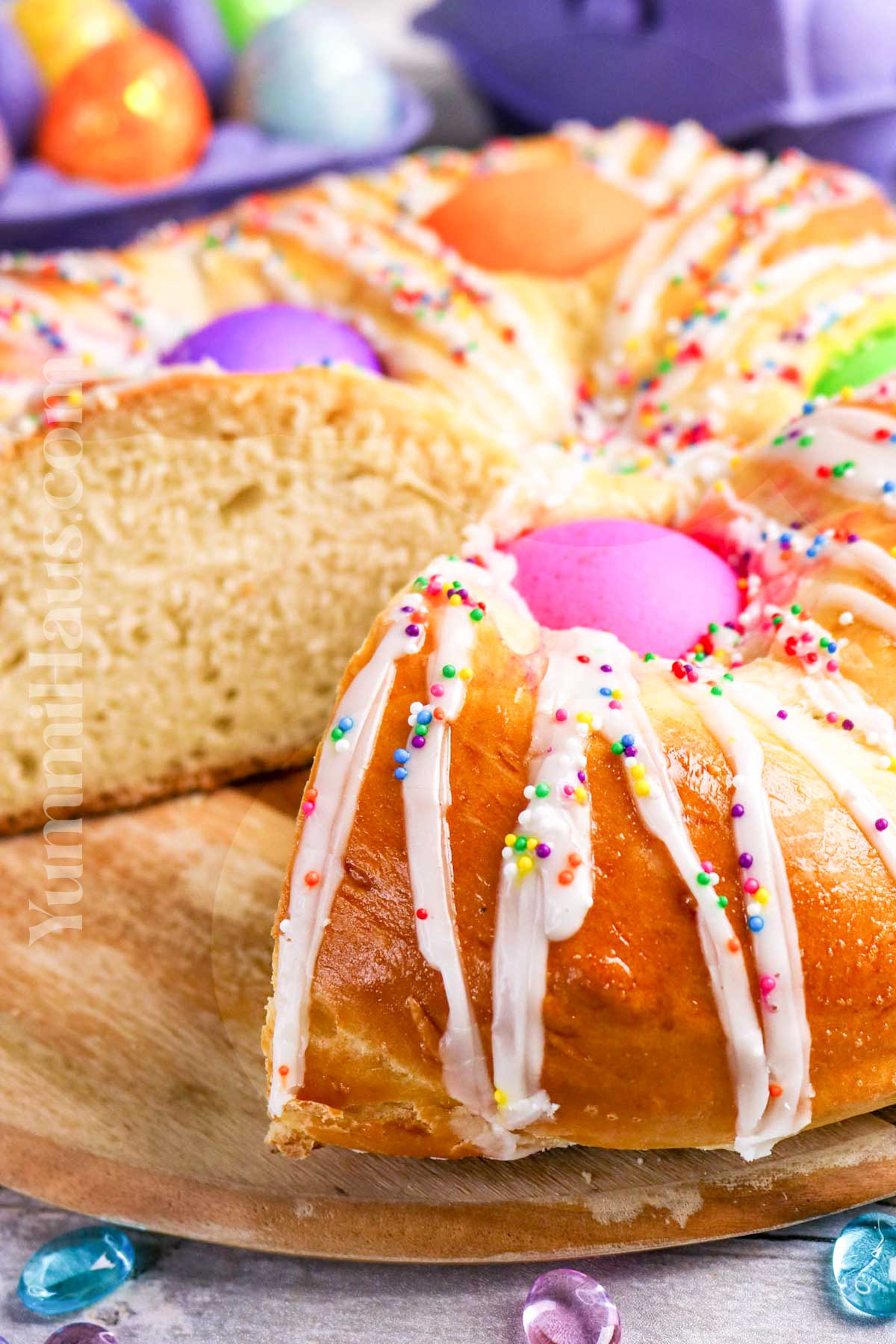
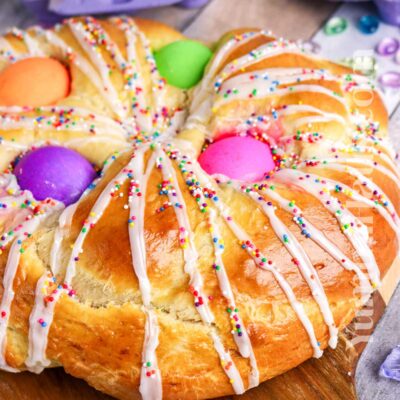
This Easter bread recipe is an absolute showstopper, and I’m not just saying that because it looks gorgeous with those colorful eggs nestled right into the dough. If you’ve never made yeasted bread before, don’t worry, this is surprisingly forgiving, even if it’s your first time working with dough. The soft dough comes together beautifully, and there’s something deeply satisfying about watching it transform from simple ingredients into a golden brown masterpiece.
The flavor is phenomenal. Think brioche bread meets challah bread, with a hint of vanilla and lemon zest that makes every bite feel special. It’s sweet enough to feel like a treat but not so sweet that you can’t enjoy it dunking bread into your morning coffee. Plus, the significance of Easter bread runs deep. The braided shape often represents the Holy Trinity, while some traditions shape it like a crown of thorns Jesus wore, making this more than just delicious, it’s meaningful.
What I love most is how this recipe brings people together. Making Easter bread is a wonderful way to start a family tradition or continue one passed down through generations. Kids absolutely love helping shape the dough and placing those dyed eggs into the braids. Trust me, once you make this for the first time, it’ll become your go-to recipe every Easter season.

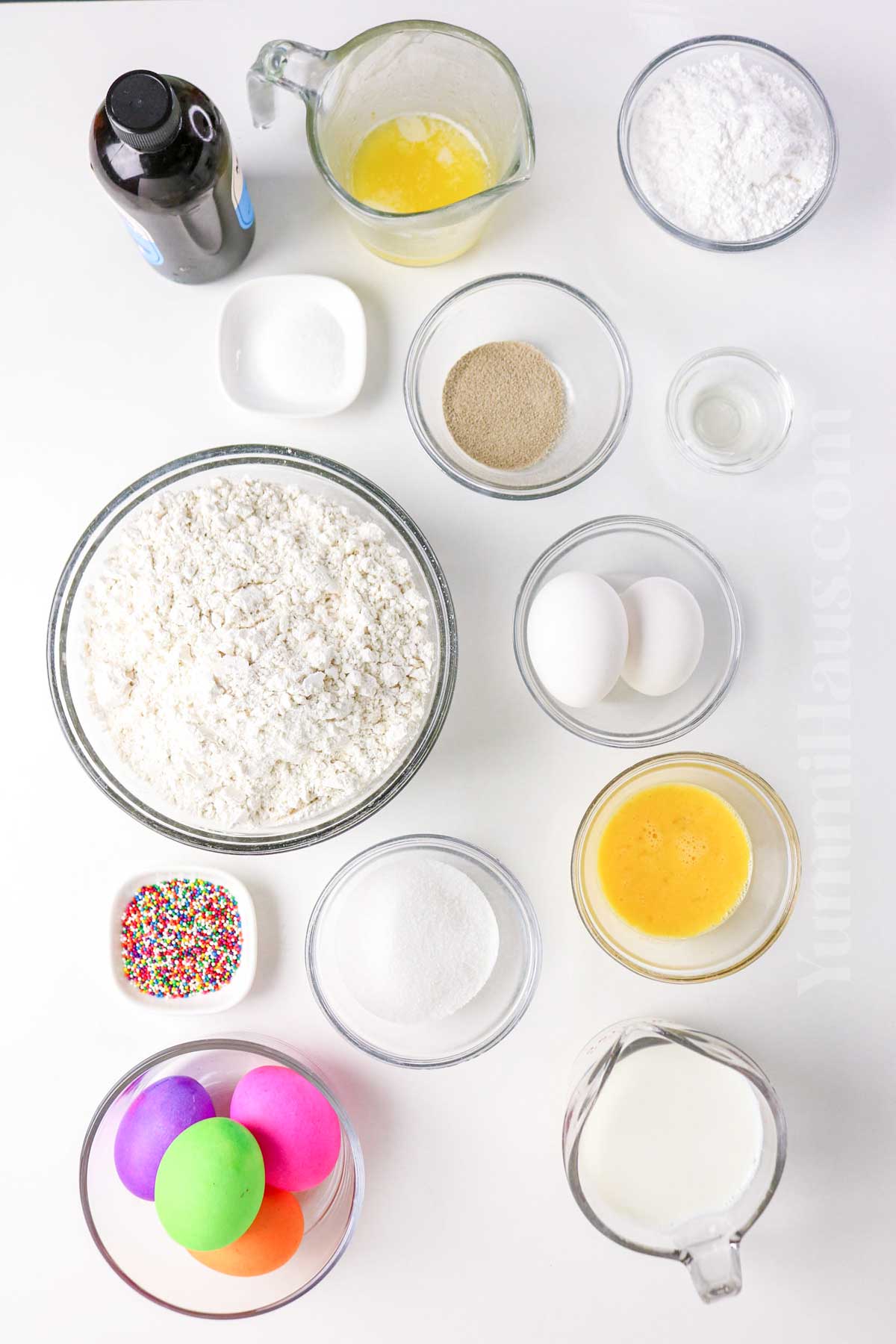
Ingredient Notes
- Whole milk – warms and activates yeast
- Active dry yeast – makes the bread rise
- Granulated sugar – feeds yeast and sweetens dough
- Large eggs – enrich the dough and add structure
- Butter – adds richness and tenderness
- Salt – enhances flavor
- Vanilla extract – adds aroma and sweetness
- Almond extract – adds nutty flavor
- All-purpose flour – forms the dough structure
- Beaten egg – for glossy egg wash
- Colored raw eggs (optional) – baked into a braid for tradition
- Confectioners’ sugar (optional) – for sweet drizzle
- Milk (optional) – thins drizzle
- Sprinkles (optional) – decorative topping
Kitchen Equipment
- Large mixing bowl
- Measuring cups and spoons
- Whisk or fork
- Wooden spoon or silicone spatula
- Stand mixer with dough hook (optional)
- Clean towel or flour-sack cloth
- Rolling surface (floured countertop or mat)
- Parchment-lined baking sheet
- Pastry brush
- Small bowl for glaze
- Cooling rack
How to Make Easter Bread
- Start by stirring the warm milk and yeast together in a large bowl, then let it sit for 5–10 minutes until it gets nice and foamy.
- Next, mix in the sugar, eggs, melted butter, salt, and vanilla. Add almond extract too if you like that nutty flavor.
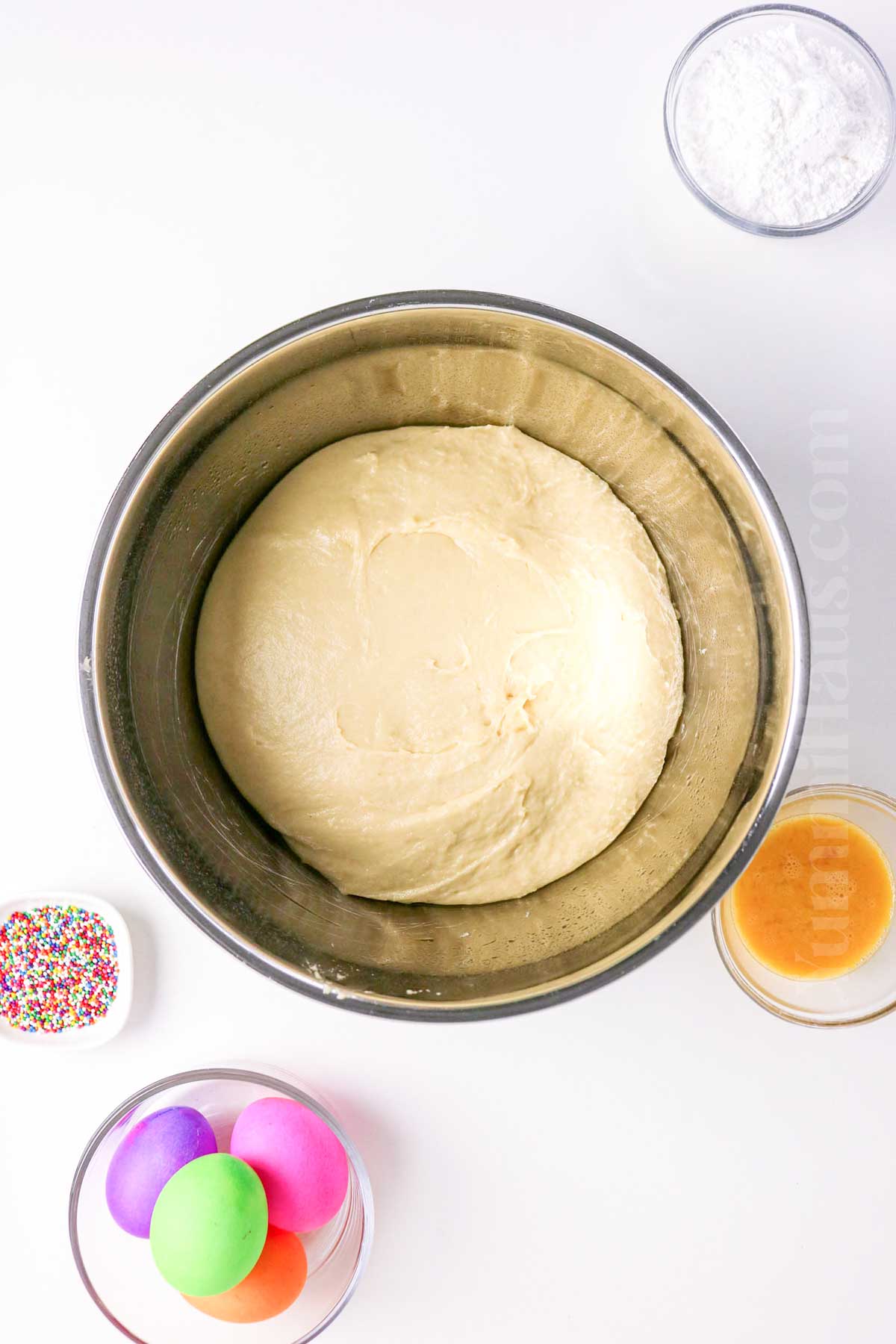
- Gradually stir in about 3½ cups of flour until you have a soft dough. If it’s still sticking a bit, you can add a little more flour, but keep it slightly tacky.
- Turn the dough onto a lightly floured surface and knead for 8–10 minutes until it feels smooth and elastic.
- Pop the dough into a greased bowl, cover it, and let it rise in a warm spot for about an hour—or until it has doubled in size.
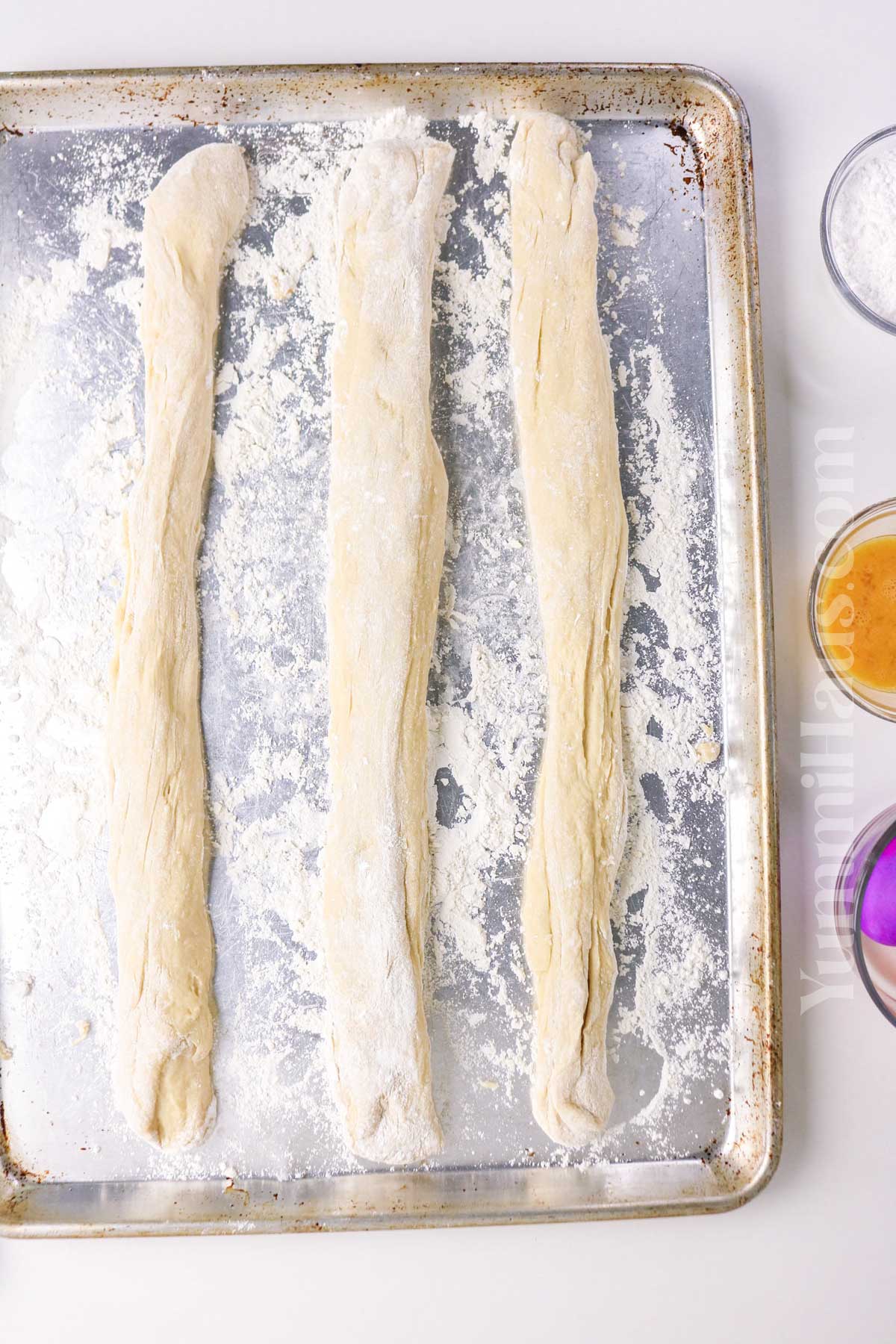
- Once it’s risen, punch the dough down and divide it into three equal pieces. Roll each piece into an 18-inch rope.
- Braid the three ropes together and pinch the ends to seal. Then gently pull the ends together to form a ring shape.
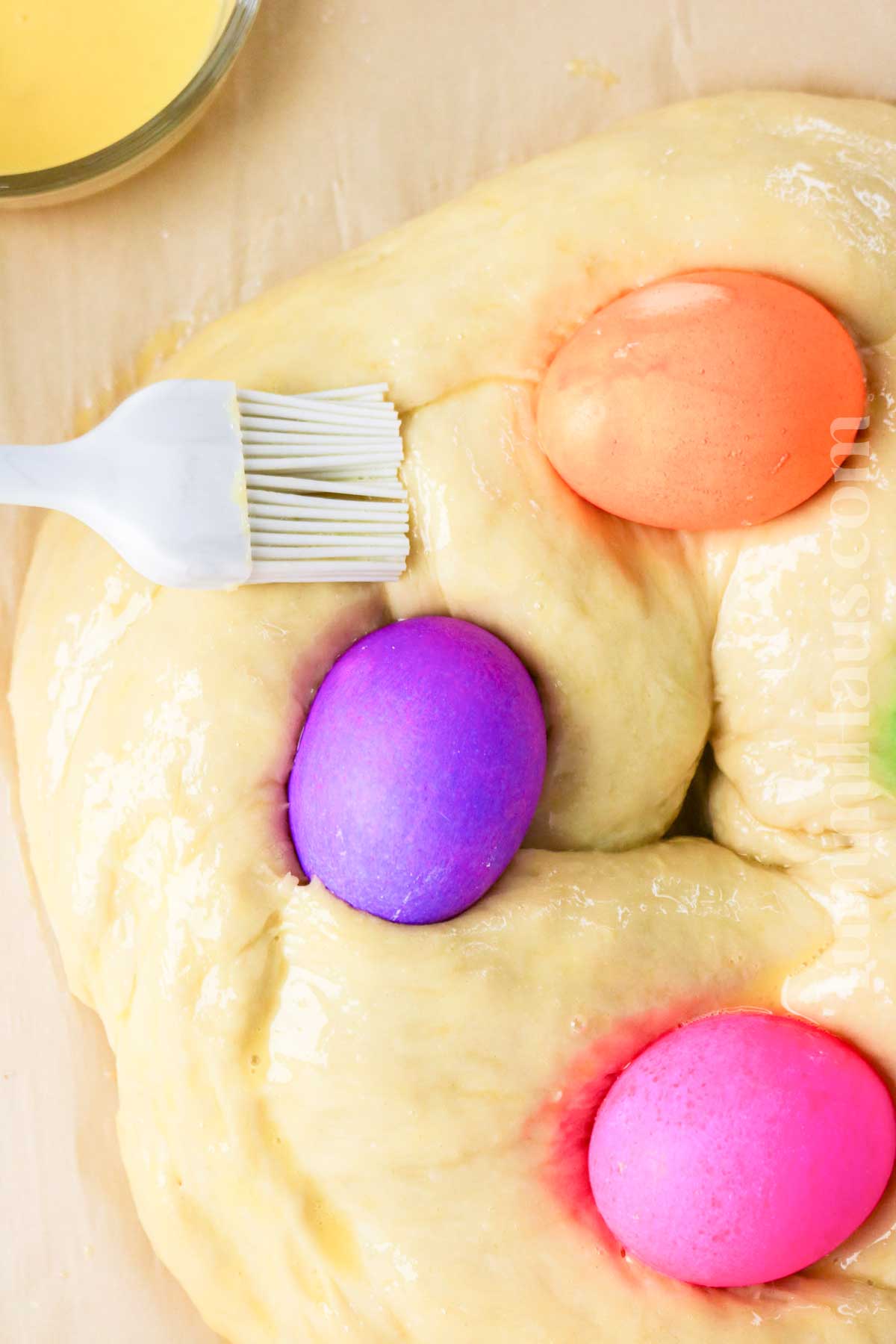
- Place the braid on a parchment-lined baking sheet. If you like, tuck in colored raw eggs right into the braid for a festive touch.
- Cover loosely with a clean towel and let it rise again for 30–45 minutes until puffy.
- Preheat your oven to 350°F. When it’s ready, brush the loaf with beaten egg for a beautiful golden finish.
- Bake for 25–30 minutes, until the bread is golden and sounds hollow when you tap the bottom.
- While the bread is still warm, whisk together confectioners’ sugar and milk to make a glaze. Drizzle it over the top and sprinkle with decorations if you like—do it while the glaze is wet so it sticks.
- Finally, let the bread cool completely before slicing and serving. Enjoy!
Variations & Substitutions
- One of the best things about this original recipe is how adaptable it is. Here are some ways to make it your own:
- If you don’t have active dry yeast, instant yeast works perfectly. You can mix it directly with the dry ingredients without proofing it first, though I still like to proof it to make sure it’s active.
- For a dairy-free version, substitute the warm milk with almond milk or oat milk, and use vegan butter instead of unsalted butter. It won’t be quite as rich, but it’ll still be delicious.
- Some families add anise extract instead of vanilla for a more traditional Italian flavor. If you love the taste of hot cross buns, this variation will feel familiar.
- Instead of braiding, you can divide the dough and bake it in loaf pans for a more traditional bread shape that’s perfect for slicing and toasting the next day.
- Add dried fruit like raisins or candied citrus peel to the dough during the final minutes of kneading for extra flavor and texture.
- For a sweet glaze, mix powdered sugar with a little milk and lemon juice, then drizzle it over the cooled bread. Top with colorful sprinkles for a festive touch.
- If you can’t find or don’t want to use whole eggs in the shell, you can absolutely skip them. The bread is still gorgeous and delicious without them.
Storage
Once your Easter bread has cooled completely, wrap it tightly in plastic wrap or store it in an airtight container. It’ll stay fresh at room temperature for about 2-3 days. The texture is actually wonderful on the second day, slightly firmer but still soft enough to enjoy.
For longer storage, this bread freezes beautifully. Wrap it tightly in plastic wrap, then place it in a freezer bag, squeezing out as much air as possible. It’ll keep in the freezer for up to 3 months. Thaw it overnight at room temperature, still wrapped, to help it retain moisture.
If your bread starts to get a little stale, don’t throw it out! Toast slices and spread them with butter, or use them to make amazing French toast. Some people in my family actually prefer it slightly stale for dunking bread in their coffee or hot chocolate on Easter morning.
The hard-boiled eggs baked into the bread should be fine for a day or two if the bread is stored properly, but for food safety, it’s best to enjoy the bread within 24 hours or remove the eggs before longer storage.
Expert Tips
After making this countless times, I’ve picked up some tricks that make a real difference:
Temperature Matters: Everything should be at room temperature when possible, eggs, butter (after melting and cooling), milk. Room temperature ingredients combine more easily and help the dough rise more predictably. Cold ingredients can shock the yeast and slow down the rising process.
Don’t Rush the Rise: I know it’s tempting to hurry things along, especially when you’re excited to bake, but letting the dough rise properly is crucial. The first rise develops flavor, and the second rise creates that light, fluffy texture. If your house is cold, create a warm place by turning your oven on for just a minute, turning it off, and then placing your covered bowl inside.
The Best Way to Know When It’s Done: Color is a good indicator, but using an instant-read thermometer is foolproof. When the internal temperature hits 190 degrees F, your bread is perfectly baked, cooked through, but still moist.
Work on a Lightly Floured Surface: When shaping your dough, use just enough flour to prevent sticking. Too much flour worked into the dough at this stage can make your bread dry and dense. A lightly floured flat surface is all you need.
Making Long Ropes: When rolling out your dough into long ropes for braiding, start from the center and work your way out to the ends, using even pressure. This creates more uniform ropes that braid more easily. If the dough keeps shrinking back, let it rest for 5 minutes; it needs to relax.
Egg Placement: Press those dyed eggs firmly into the braids. They can pop out during the second rise or baking if they’re not secure. Some people like to create little nests in the dough for extra security.
Brush Carefully: When applying your egg wash, use a pastry brush and be gentle. You don’t want to deflate all that beautiful rise you worked so hard for. Also, try not to let the egg wash pool around the eggs or at the bottom of the braids.
FAQ’s
What is the significance of Easter bread?
Traditional Italian Easter bread, or Pane di Pasqua, holds deep religious meaning. The braided shape often represents the Holy Trinity, while the eggs symbolize new life and resurrection, central themes of the Easter holiday celebrating Jesus Christ. In Italian homes, saying “Buona Pasqua” (Happy Easter) while sharing this bread is a cherished tradition that connects families to their heritage and faith.
Can I make this if it’s my first time baking with yeast?
Absolutely! This is actually a great yeasted bread for beginners. The dough is forgiving, and you’ll get the hang of it quickly. Just follow the instructions carefully, especially regarding water temperature for the yeast, and you’ll do great. Even if your braid isn’t perfect, it’ll still taste amazing.
What’s the difference between this and Paska recipe?
While Pane di Pasqua is Italian, Paska is the Eastern European version of Easter bread. They’re similar in that they’re both sweet, enriched breads traditionally made for Easter, but Paska often includes more eggs and butter and is typically baked in tall cylindrical pans. Both are delicious representations of traditional Easter bread from different cultures.
Can I use regular eggs instead of dyed ones?
Of course! While colorful eggs make the bread more festive and visually striking, plain RAW eggs work perfectly fine. Some people dye their eggs naturally using beet juice or turmeric for a more subtle look. The choice is entirely yours.
My dough isn’t rising. What did I go wrong?
Usually, this means the yeast wasn’t activated properly. The water might have been too hot (which kills yeast) or too cold (which keeps it dormant). Your yeast might also have expired. Always check the expiration date and proof your yeast in the small bowl first; if it doesn’t foam up, start over with fresh yeast.
How much flour should I actually use?
The amount can vary based on humidity, how you measure, and your specific flour. Start with 4 cups and add the remaining flour gradually until the dough pulls away from the sides of the bowl but remains soft. It’s better to add too little than too much. You can always add more, but you can’t take it out.
Can I make this the night before Easter?
Yes! You can prepare the dough the night before and let it do its first rise in the refrigerator overnight. The next day, bring it to room temperature for about 30 minutes, shape it, let it do the second rise, and bake. This actually develops even more flavor. It’s a great way to manage your time on a busy Easter morning.
What’s the difference between this and challah bread or brioche bread?
All three are enriched breads made with eggs and butter, but they have different origins and slight variations in ingredients and technique. Challah is Jewish bread traditionally made without dairy, brioche is French and extremely rich with butter, and Easter sweet bread falls somewhere in between with its own unique flavor profile that includes vanilla and often citrus.
Is this similar to hot cross buns?
Hot cross buns are also traditional Easter baked goods, but they’re quite different. They’re smaller, spiced buns marked with a cross on top, while Easter bread is a larger, sweeter loaf that’s often braided and decorated with eggs. Both are delicious Easter traditions worth trying!
Can I skip the eggs baked in the bread?
Yes! While the eggs are traditional and add to the visual appeal, the bread itself is the star. If you’re concerned about food safety or just prefer not to include them, leave them out. You can always serve colorful Easter eggs on the side instead.
If you love this bread recipe, you’re going to love these other baked Easter recipes, too. Please click each link below to find the easy, printable recipe!

More Great Easter Recipes
CONNECT WITH YUMMI HAUS!
Be sure to follow me on my social media, so you never miss a post!

Easter Bread

Ingredients
- 1 cup whole milk warmed to about 110°F
- 2¼ teaspoons active dry yeast 1 packet
- ⅓ cup granulated sugar
- 2 large eggs room temperature
- ¼ cup butter unsalted – melted and slightly cooled
- 1 teaspoon salt
- 1 teaspoon vanilla extract
- ½ teaspoon almond extract optional
- 3½ cups all-purpose flour 3½ to 4 cups
- 1 egg beaten (for egg wash)
- Colored raw eggs optional, for baking into the braid
- ⅔ cup confectioner’s sugar optional, for drizzle
- 1 tablespoon milk optional, for drizzle
- Sprinkles optional
Instructions
- Stir the warm milk and yeast together in a large bowl, let sit for 5–10 minutes until foamy.
- Mix in the sugar, eggs, melted butter, salt, vanilla, and almond extract if using.
- Slowly stir in 3½ cups of flour until a soft dough forms. You can add a little more flour if needed until the dough pulls away from the sides, but remains slightly tacky
- Turn the dough onto a lightly floured surface and knead for 8–10 minutes until smooth and elastic.
- Place the dough in a greased bowl, cover, and let rise in a warm place for about 1 hour or until it has doubled in size.
- Punch down the dough and divide it into three equal pieces. Roll each portion into a rope about 18 inches long.
- Braid the ropes of dough together and pinch the ends to seal, forming a long, braided loaf. Then pull the ends together to form the braid into a ring.
- Transfer the dough to a parchment-lined baking sheet.
- Gently nestle colored raw eggs into the braid if desired.
- Cover loosely with a flour-sack towel (or a lint-free rag), and let rise again for 30–45 minutes until puffy.
- Preheat the oven to 350°F.
- While the oven is heating, brush the loaf with beaten egg.
- Bake for 25–30 minutes, or until golden brown and the loaf sounds hollow when tapped on the bottom.
- Whisk the confectioner’s sugar and milk together in a small bowl until smooth.
- Drizzle the bread with the glaze while it is still warm, and immediately add sprinkles (if using) while the glaze is wet, as the glaze will harden as it sets.
- Allow the bread to cool completely before slicing and serving.
Nutrition
Nutritional information for the recipe is provided as a courtesy and is approximate. Please double-check with your own dietary calculator for the best accuracy. We at Yummi Haus cannot guarantee the accuracy of the nutritional information given for any recipe on this site.







Share Your Thoughts