

Easter is just around the corner, and if you’re looking for the perfect addition to your easter brunch or easter dinner, these Easter deviled eggs are exactly what you need. This classic egg recipe gets a fun holiday makeover that will have everyone at your easter table talking.
Whether you’re hosting a full easter celebration or just looking for a tasty snack to enjoy with family, this easy recipe is guaranteed to be a hit.
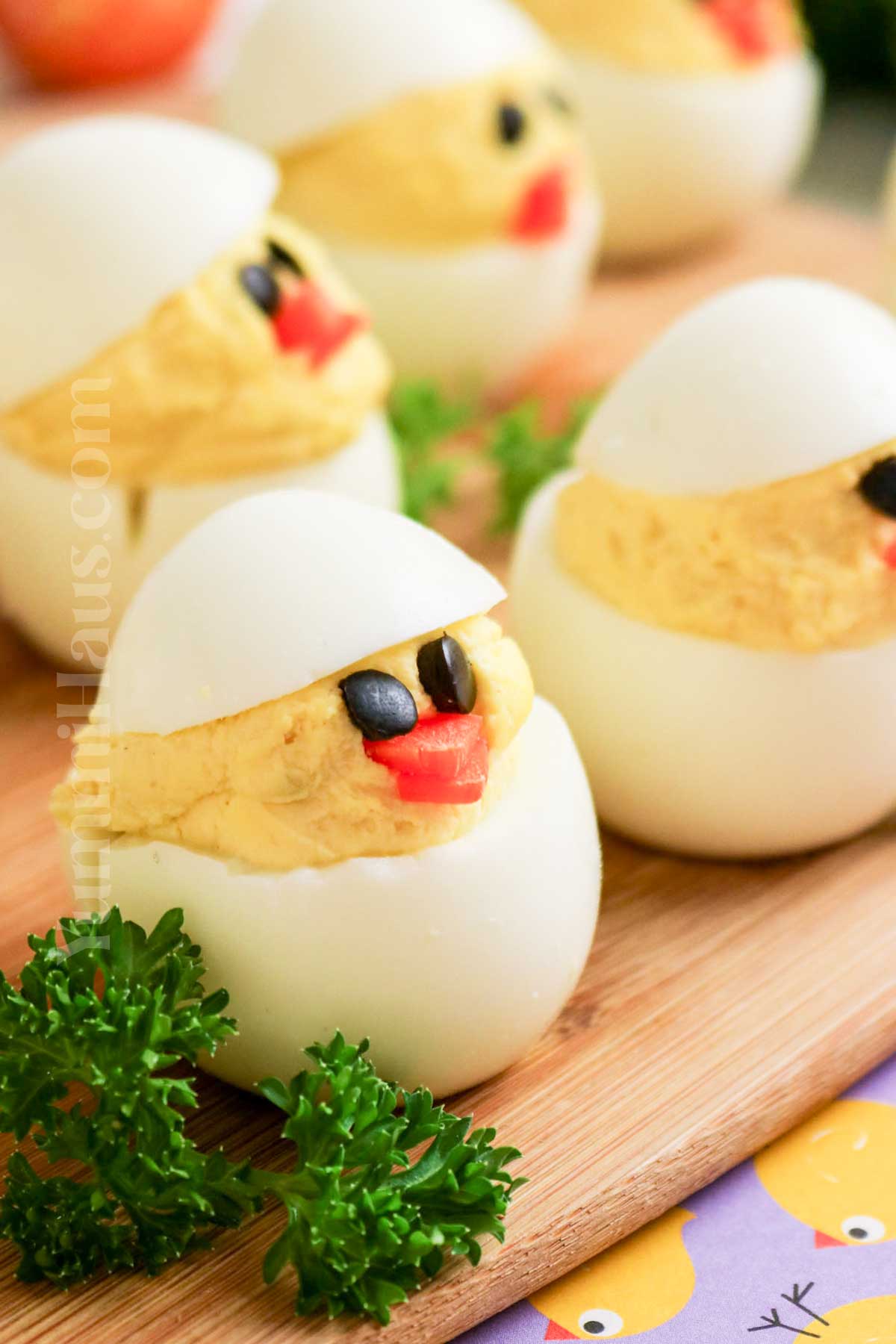
Gina’s Recipe Rundown:
Texture: The deviled eggs have a creamy, smooth yolk filling that contrasts perfectly with the firm yet tender egg whites for a satisfying bite.
Taste: The deviled eggs taste rich and savory with a tangy kick from the mustard, a hint of garlic, and a subtle saltiness that balances the creamy yolk filling.
Ease: These chick-themed deviled eggs are easy to make with simple ingredients and straightforward steps, perfect for a fun and festive Easter appetizer.
Why I love it: I love these Easter chick deviled eggs because they’re adorable, festive, and fun to make—plus, the creamy, flavorful filling is always a crowd-pleaser at any brunch or holiday gathering.
Why You’ll Love This Recipe
Let me tell you why these Easter deviled eggs are about to become your new favorite way to celebrate the holiday. First things first – they’re so much fun to make! The combination of traditional recipe techniques with festive decorating ideas makes this both a delicious addition to your spread and an activity the whole family can enjoy.
The best part? These are incredibly easy to put together with simple ingredients you probably already have in your kitchen. The creamy filling is perfectly seasoned with just the right amount of tang from Dijon mustard. Plus, we are turning ordinary deviled eggs into adorable easter chicks that match your Easter bunny decorations.
This side dish is versatile enough for any next special occasion too. Once you master the perfect hard-boiled egg technique I’m sharing, they are so simple.

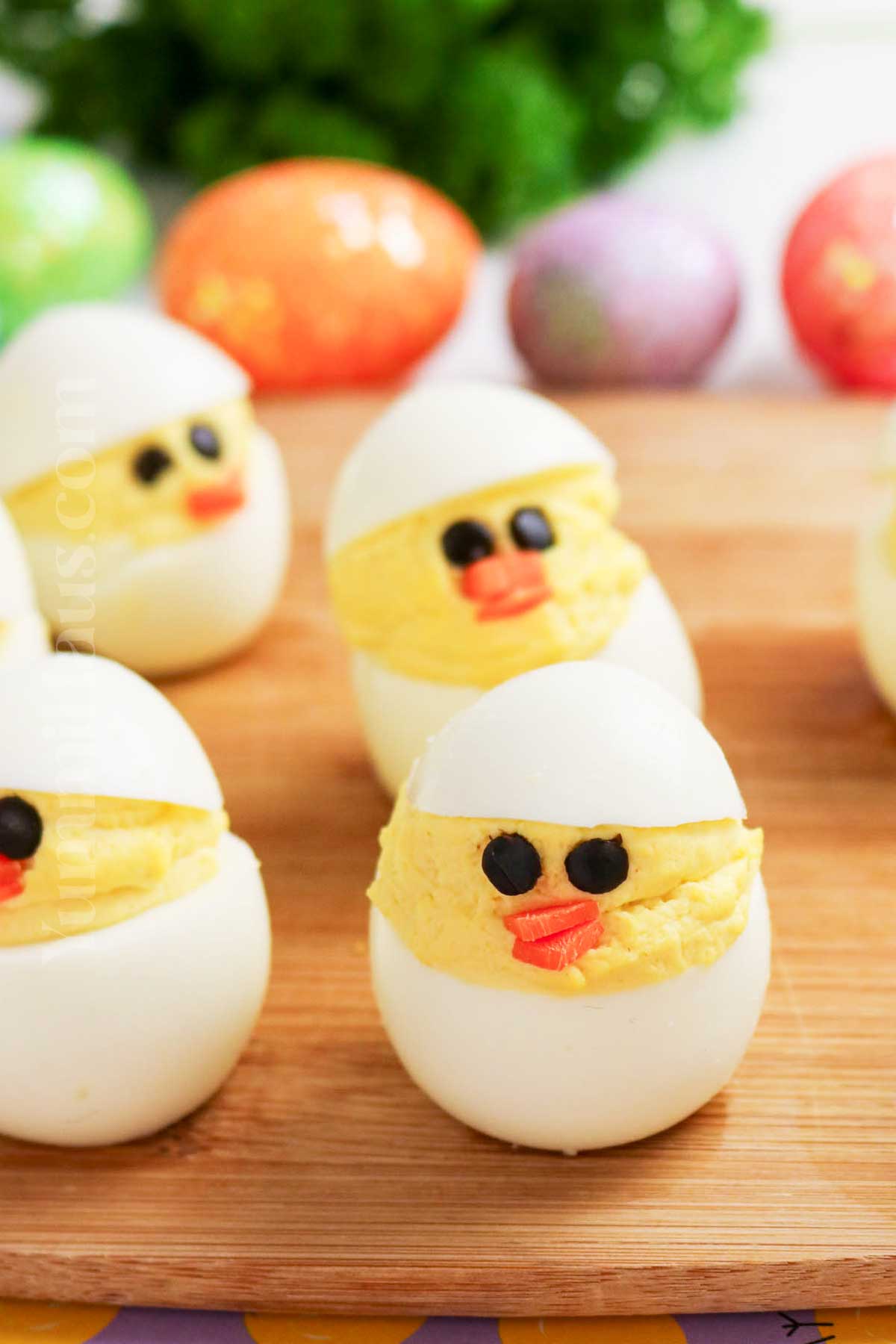
Ingredient Notes
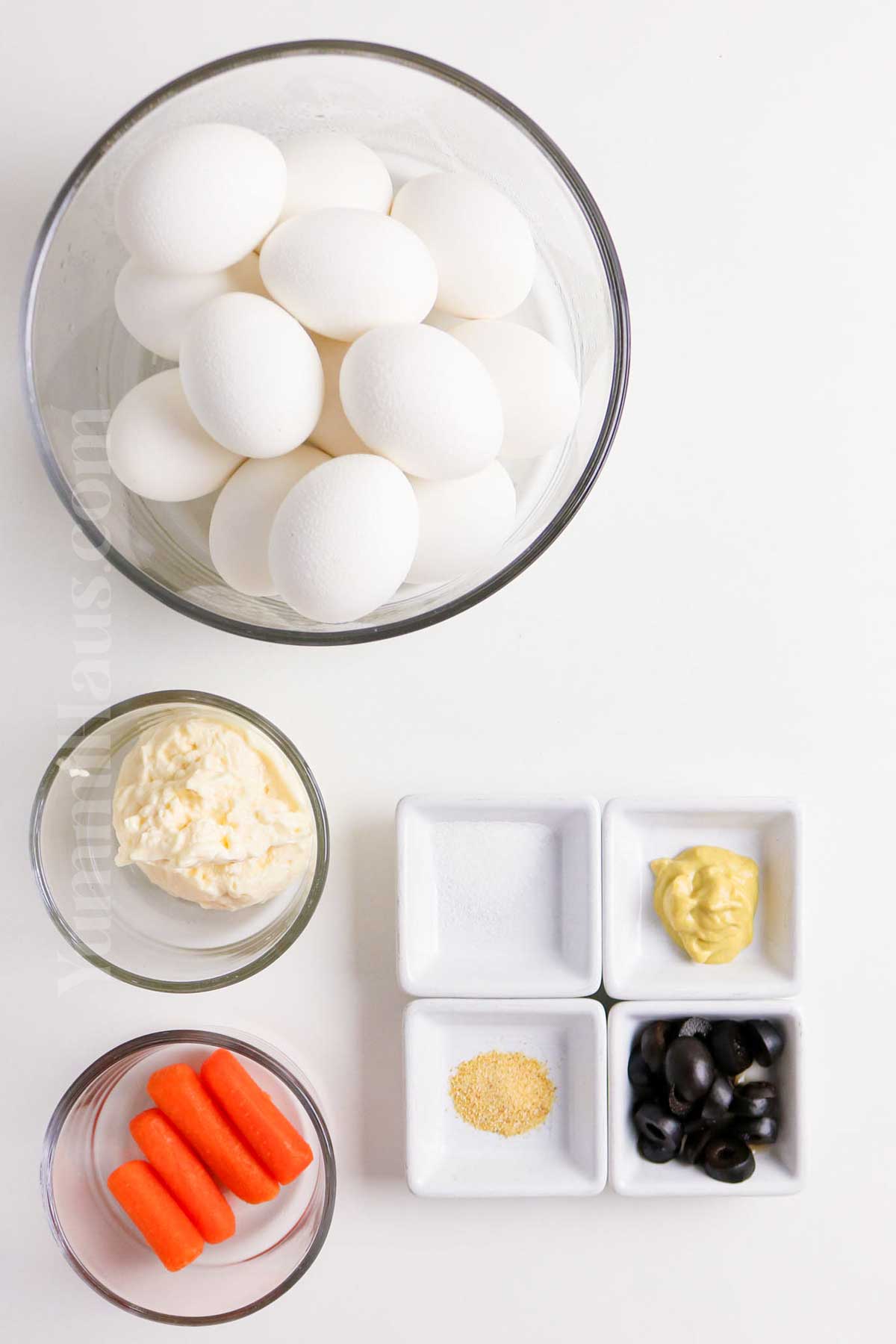
- Large eggs, hard-boiled and peeled: Use fully cooled hard-boiled eggs so they slice cleanly and hold their shape for assembling the chick design.
- Mayonnaise: Adds creaminess to the yolk filling and helps create a smooth, rich deviled egg texture.
- Dijon mustard: Provides a tangy flavor that balances the richness of the mayonnaise and egg yolks.
- Garlic powder: Adds a mild savory flavor that enhances the deviled egg filling without overpowering it.
- Salt: A small amount brings out all the flavors in the creamy yolk mixture.
- Baby carrot: Cut into tiny triangles to create the cute chick beaks for decorating the deviled eggs.
- Black olives: Small pieces are used to make the chick eyes, giving the deviled eggs their adorable look.
Kitchen Equipment
- Saucepan – to boil the eggs.
- Mixing bowl – for mashing and mixing the yolk filling.
- Fork – to mash the egg yolks until crumbly.
- Piping bag or zip-top plastic bag – for filling the egg whites neatly.
- Knife – to trim egg bottoms, cut tops, and slice carrots.
- Cutting board – for slicing carrots and prepping eggs.
- Plastic straw – to punch out small olive pieces for the chick’s eyes.
- Serving platter – to display your finished chick deviled eggs.
- Spoon – optional, for transferring yolk filling if not using a piping bag.
How to Make Easter Deviled Eggs
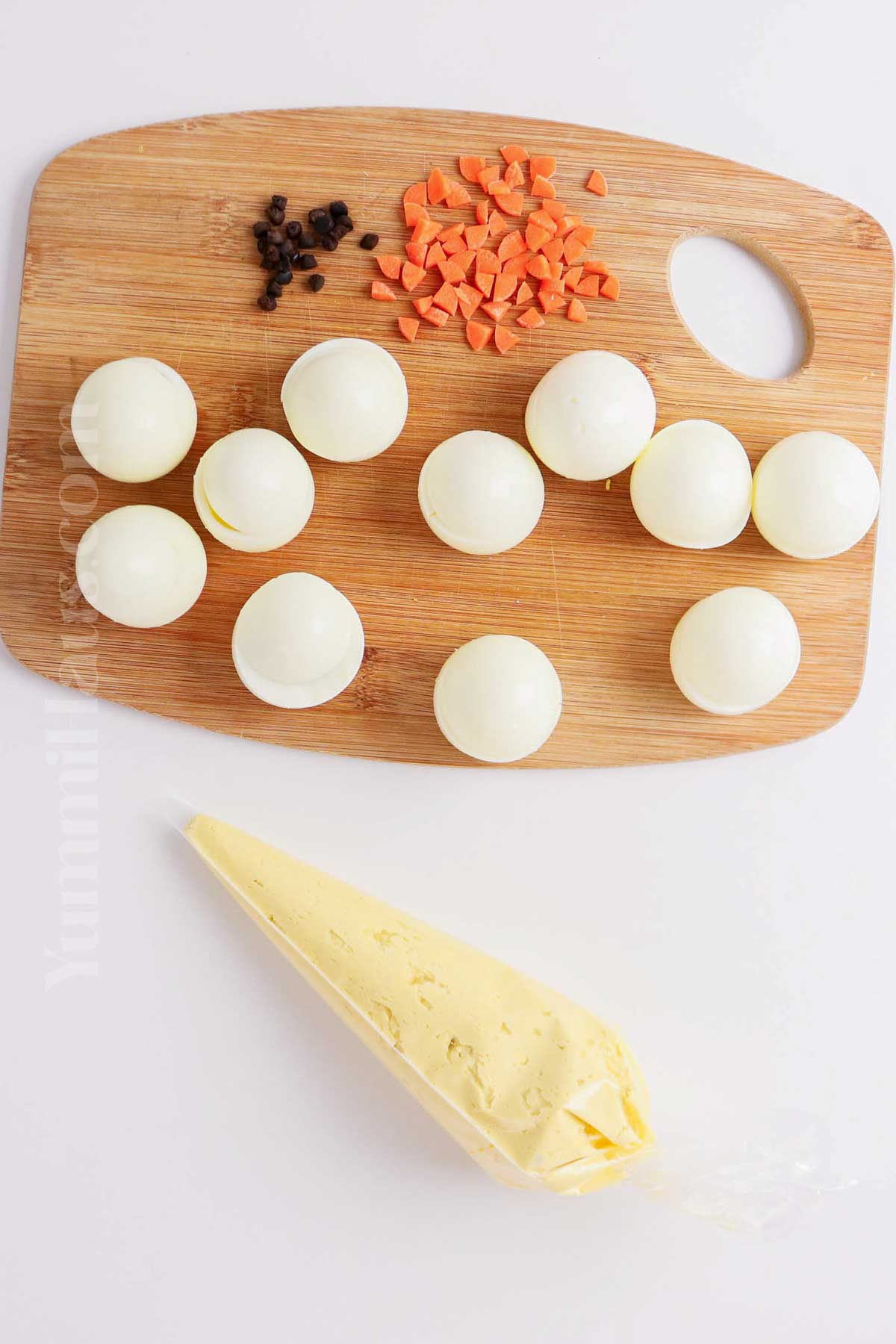
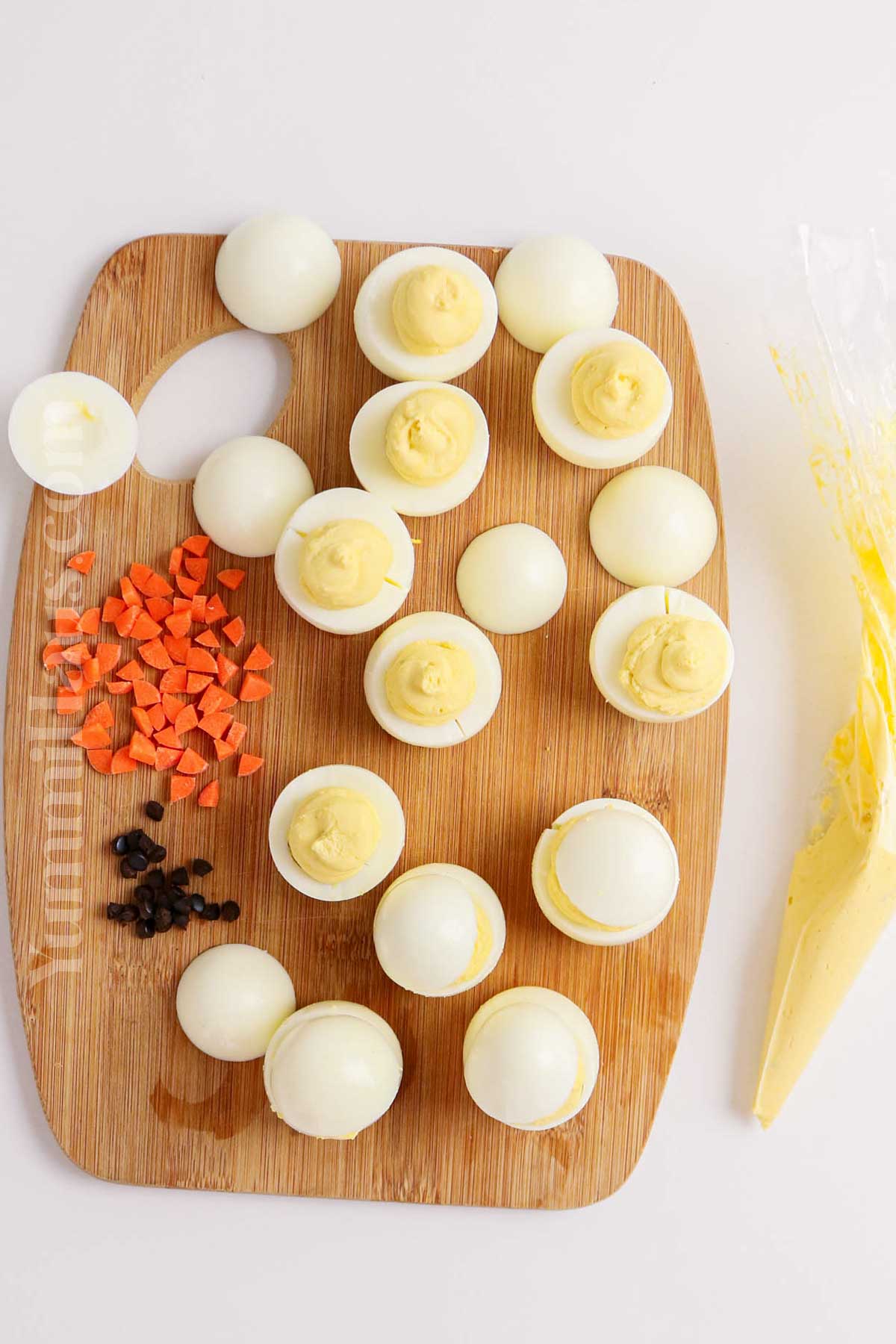
- Start by carefully peeling the hard-boiled eggs. Once they’re peeled, slice a very thin piece off the bottom of each egg so they can stand upright on the plate.
- Next, cut off the top portion of each egg—about one-third from the top—and set those little “caps” aside. Try to keep them paired with their matching bottoms so they fit back on easily later.
- Now gently scoop out the yolks and place them in a mixing bowl. Mash the yolks with a fork until they’re nice and crumbly. Add the mayonnaise, Dijon mustard, garlic powder, and salt, then mix everything together until the filling is smooth and creamy.
- Spoon the filling into a piping bag (or a zip-top bag with the corner snipped off) and pipe the mixture generously into the egg white bases.
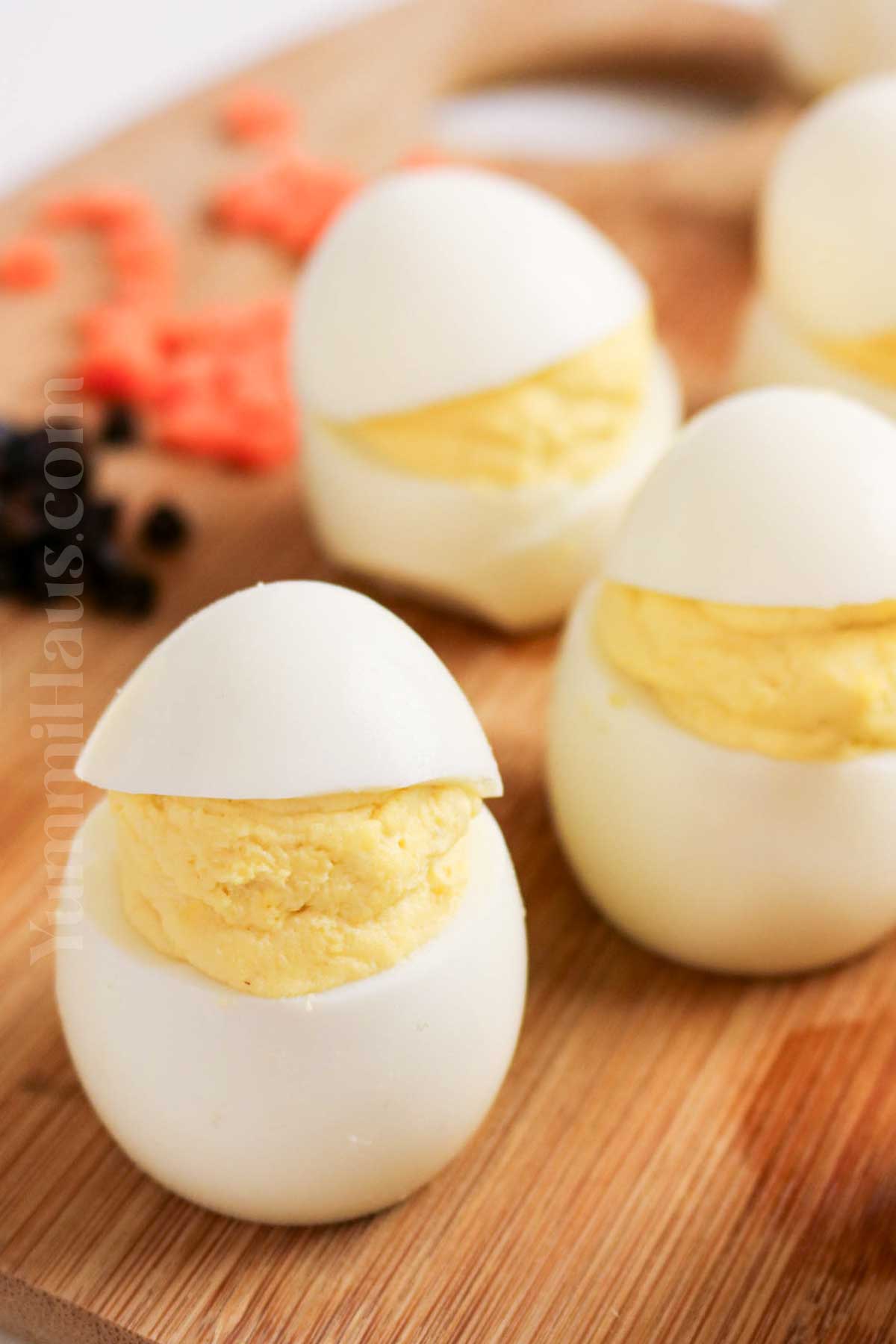
- Place the reserved egg tops back on so they look like little cracked eggshells, pressing lightly so they sit nicely.
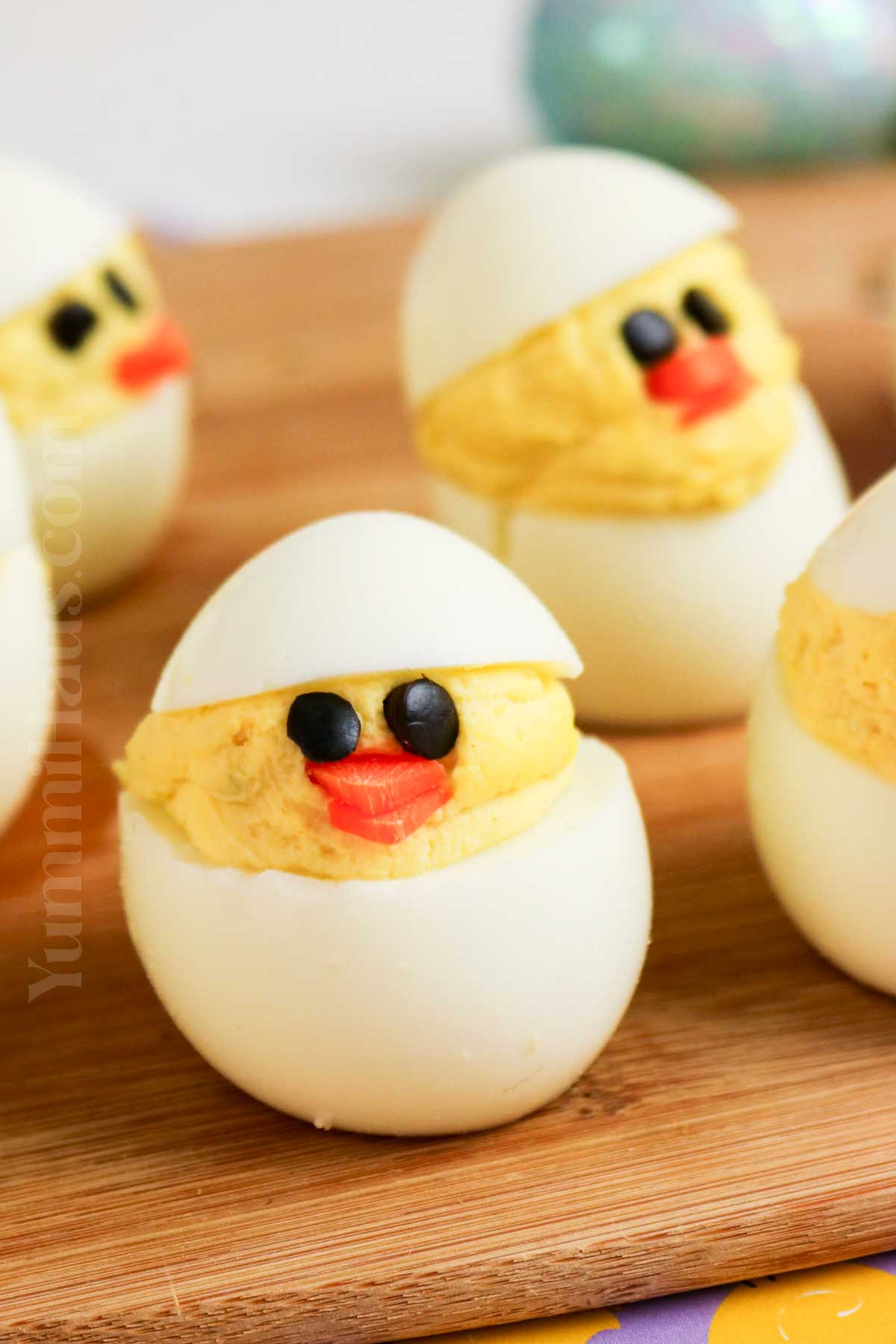
- For the decorations, slice the carrot into thin rounds, then cut each round into four small triangles to make the chick beaks. For the eyes, use a plastic straw to punch tiny circles out of the black olives.
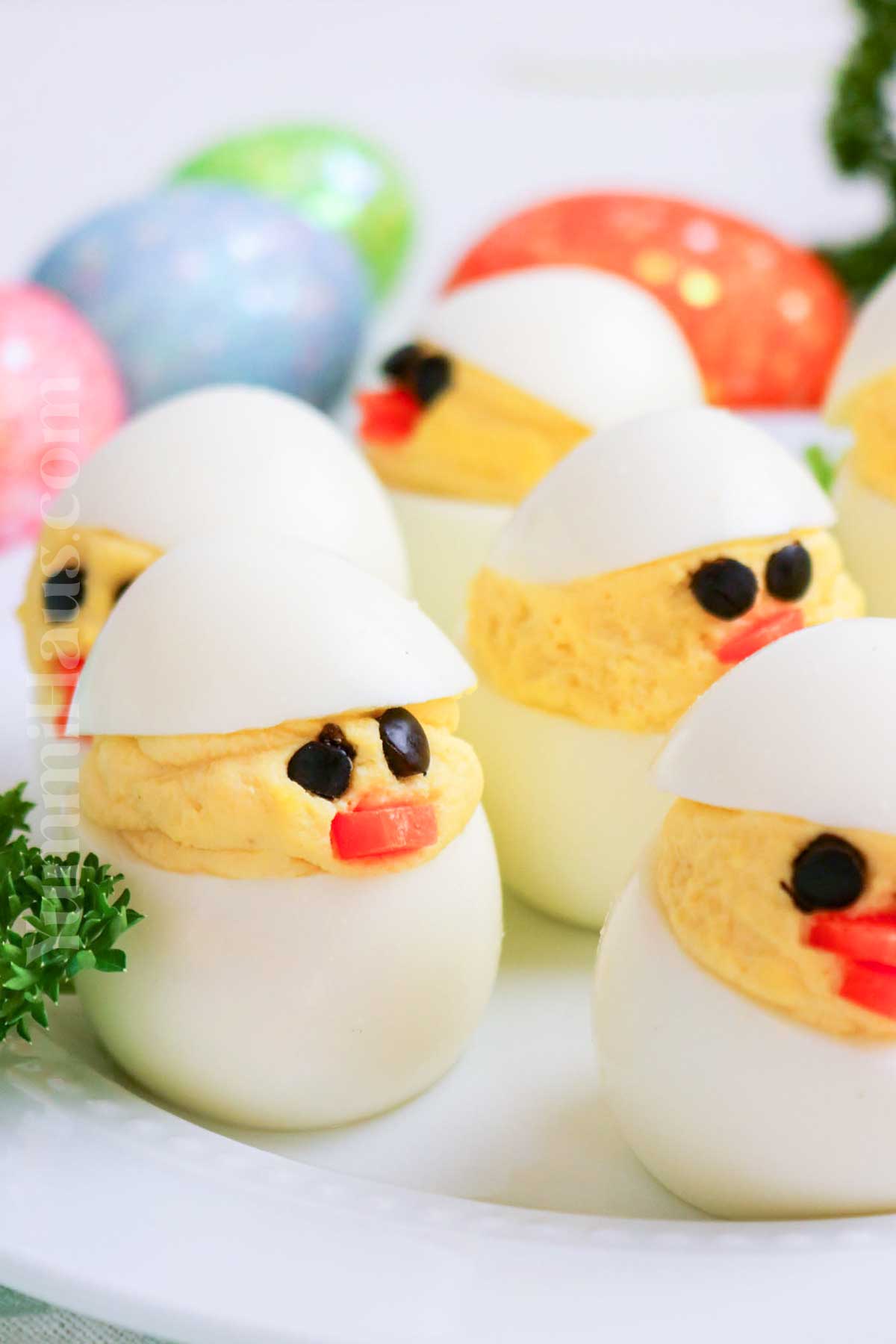
- Finally, press two olive pieces into each egg for eyes and tuck two carrot wedges between them for the beak to create the little chick face.
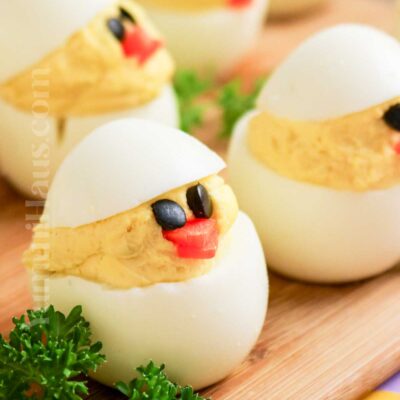
- Arrange your adorable egg chicks on a serving platter, and if you’d like, add a few sprigs of fresh parsley or dill around them for a festive Easter touch.
Variations & Substitutions
One of the best things about this egg recipe is how customizable it is. Here are some variations I love:
Different Mustards: Try dijon mustard instead of yellow mustard for a more sophisticated flavor. Both work beautifully.
Heat Level: Kick up the heat with some hot sauce for adults. You can also add a little dash of onion juice for depth.
Creamy Alternatives: Swap half the mayo for Greek yogurt to lighten things up without sacrificing that creamy texture.
Pickled Additions: A splash of pickle juice or vinegar adds a delicious, tangy kick.
Smoking Option: Add a tiny pinch of smoked paprika to the yolk mixture for a smoky flavor.
Avocado Twist: Mash in half an avocado with the egg yolks for a creamy, healthy fat boost.
Bacon Lovers: Top with crumbled bacon for a savory upgrade.
Storage
Store your leftover deviled eggs in an airtight container in the refrigerator. They’ll stay fresh for up to 2 days, though they’re honestly best enjoyed within 24 hours when the filling is at peak creaminess.
If you’re making these ahead, you can prepare the hard-boiled eggs the night before. Store the egg whites in one airtight container and the deviled filling in another. Assemble them the day of your easter brunch for the freshest presentation.
The assembled deviled eggs should be kept cold until serving time. They’re perfect for bringing to potlucks since they travel well in a covered container.
Expert Tips
Here are my tried-and-true great tips for perfect Easter deviled eggs every time:
- Start with eggs that are at least a week old. Fresh eggs are harder to peel. I know it sounds counterintuitive, but trust me on this one.
- Always use cold water when starting your eggs. Putting eggs directly into boiling water can cause cracking.
- Don’t skip the ice bath! This is one of the best ways to get easily peelable eggs and stops them from getting that gray ring around the yolk.
- Pipe the filling right before serving if possible. This keeps everything looking fresh and prevents the filling from drying out.
- To keep eggs upright on your serving platter, slice just a tiny bit off the rounded ends of the eggs on the bottom. They’ll sit perfectly flat.
- Make extra! These disappear fast at any easter celebration. The recipe card can easily be doubled.
- If you don’t have a piping bag, don’t stress. A ziplock bag works perfectly. Just fill it, push the filling to one corner, and snip off the tip.
- Taste your yolk mixture before filling. Everyone’s preference is different, so adjust the seasonings to your liking.
FAQ’s
How far in advance can I make Easter deviled eggs?
You can prepare the hard-boiled eggs up to 2 days ahead. Store them uncut in the refrigerator. Make the yolk mixture the day before and keep it separate from the egg whites. Assemble them 2-4 hours before serving for the best results.
Why are my deviled eggs watery?
This usually happens if the eggs weren’t dried completely after boiling. Make sure to pat them thoroughly dry with paper towels. Also, if you’re adding pickle juice or Worcestershire sauce, add it gradually so you don’t make the filling too thin.
Can I use a different kind of mustard?
Absolutely! Yellow mustard is traditional, but Dijon mustard gives a more refined flavor. You can even use spicy brown mustard if you like a little kick.
What’s the secret to easy-peeling eggs?
Use older eggs, start them in cold water, and immediately transfer to an ice bath after cooking. The ice water causes the egg to contract slightly from the shell, making peeling much easier.
Can I make these without a piping bag?
Yes! A ziplock bag works great as a substitute for a piping bag. You can also just spoon the filling into the egg whites, though it won’t look quite as fancy.
How do I keep my deviled eggs from sliding around on the plate?
Trim a tiny slice off the rounded ends of the eggs on the bottom so they sit flat. You can also place them on a bed of lettuce or use a deviled egg serving tray with indentations.
Can I make these dairy-free?
Most traditional deviled egg recipes are already dairy-free! Just check your mayo brand to be sure. The egg recipe uses simple ingredients that naturally don’t include dairy.
How many deviled eggs should I make per person?
Plan for about 2-3 deviled egg halves per person if you’re serving them as a side dish at easter dinner. If they’re the main attraction at Easter brunch, bump it up to 4-5 per person.
Can I freeze deviled eggs?
Unfortunately, deviled eggs don’t freeze well. The egg whites become rubbery and watery when thawed. These are best enjoyed fresh, so only make what you’ll eat within a couple of days.
My egg yolks have a green ring. What happened?
That’s from overcooking. The green ring is harmless but doesn’t look great. Follow the timing exactly and use an ice bath to prevent this from happening.
What’s your favorite way to serve these?
I love arranging them on a platter with the different colored eggs mixed together for a rainbow effect. Adding small bunches of fresh herbs around the edges makes the whole presentation pop. They’re such a delicious addition to any easter table!
If you love this egg recipe, you’re going to love these other recipes to get you ready for Easter, too. Please click each link below to find the easy, printable recipe!


More Great Deviled Egg Recipes
CONNECT WITH YUMMI HAUS!
Be sure to follow me on my social media, so you never miss a post!

Easter Deviled Eggs

Ingredients
- 12 large eggs hard-boiled and peeled
- ⅓ cup mayonnaise
- 1½ teaspoons Dijon mustard adjust to taste
- ¼ teaspoon garlic powder
- ⅛ teaspoon salt or as needed
- 1 baby carrot
- 3 black olives 2-3 olives
Instructions
- Carefully peel the hard-boiled eggs.
- Trim a very thin slice from the bottom of each egg so it can stand upright.
- Cut off the top portion of each egg (about one-third from the top) and set the tops aside, keeping them matched with their bases.
- Gently remove the yolks and place them in a mixing bowl.
- Mash the egg yolks with a fork until crumbly.
- Add the mayonnaise, Dijon mustard, garlic powder, and salt. Mix until smooth and creamy.
- Transfer the filling to a piping bag or a plastic bag with one corner snipped off.
- Pipe the yolk mixture into the bottom of the egg whites, filling them generously.
- Place the reserved egg tops back on, pressing lightly so they sit securely.
- Slice the carrot into thin rounds, then cut each round into four pieces, forming triangular wedges to be the beaks.
- For the eyes, push a plastic straw through the olives to punch out small circular pieces.
- Press two olive pieces into each egg for eyes and tuck two carrot wedges between them to form a beak.
- Arrange the egg chicks on a serving platter. If desired, add fresh herbs like parsley or dill around them for a festive finish.
Nutrition
Nutritional information for the recipe is provided as a courtesy and is approximate. Please double-check with your own dietary calculator for the best accuracy. We at Yummi Haus cannot guarantee the accuracy of the nutritional information given for any recipe on this site.







Share Your Thoughts