

If you’ve never tried chiffon cake before, you’re in for such a treat! Chiffon cake is incredibly popular on island, and after living there full-time, it quickly became one of those desserts we grew to love and crave. You’ll find it in bakeries, celebrations, and home kitchens, and there’s something about its light, fluffy texture that makes it especially perfect for island living.
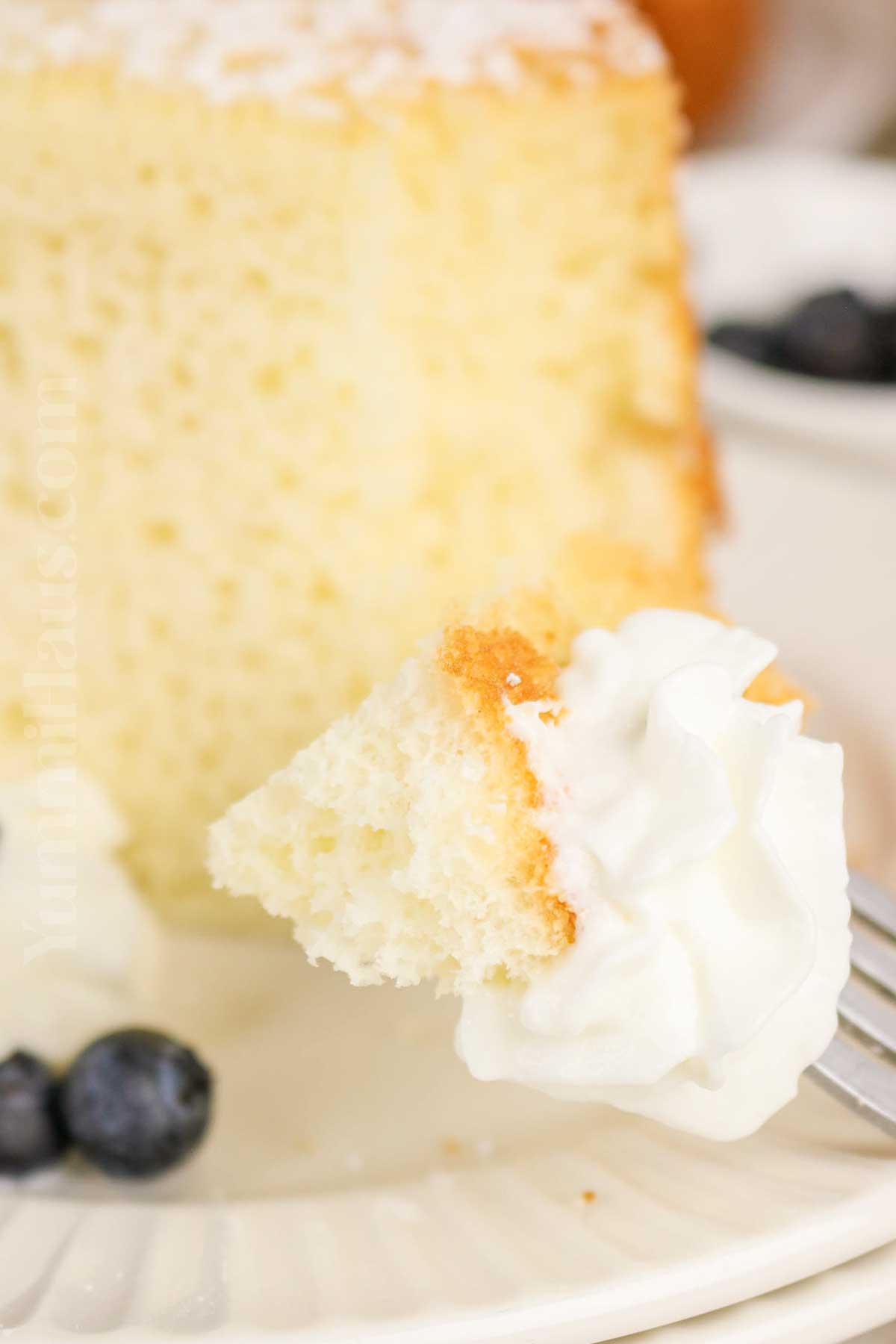
This fluffy vanilla chiffon cake is the perfect balance between a traditional butter cake and an angel food cake. It has the airy, delicate texture you love in a sponge cake, but the egg yolks add just enough richness to keep it moist and tender. The result is a light, soft cake that feels almost weightless with every bite.
What makes chiffon cake so special is the way whipped egg whites are folded into the batter, creating its signature tall, airy texture. Unlike a pound cake, which can be rich and dense, or angel food cake, which contains no fat, chiffon cake gives you a little of the best of both worlds. After making and enjoying it so many times while we lived on island, this is a recipe I’m especially happy to share.
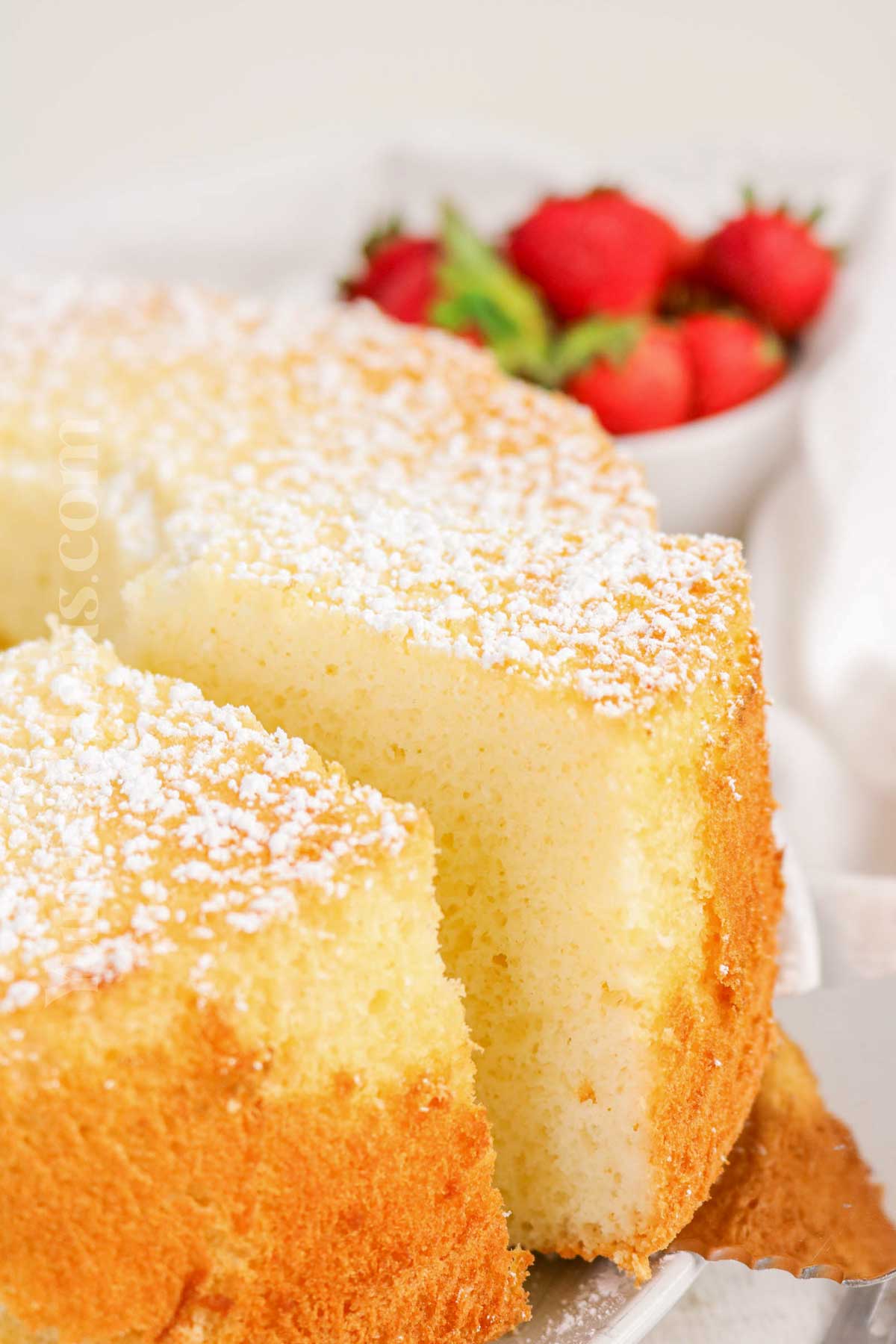
Gina’s Recipe Rundown:
Texture: Light, airy, and incredibly tender, with a soft, moist crumb that practically melts in your mouth.
Taste: Lightly sweet with a delicate vanilla flavor, balanced by a subtle richness from the egg yolks and oil.
Ease: Simple to make with a few extra steps for whipping and folding the egg whites, but well worth the effort for its light, airy texture.
Why I love it: I love this chiffon cake because it’s light, fluffy, and nostalgic, reminding me of the time we spent living on island and all the little moments that made us fall in love with it.
Why You’ll Love This Recipe
This fluffy chiffon cake is incredibly versatile and forgiving, making it perfect for home bakers of all skill levels. The subtle flavor of vanilla pairs beautifully with fresh fruit, whipped cream, or even cream cheese frosting. You’ll love how the neutral oil keeps the cake moist without making it heavy, and the whisk attachment on your mixer does most of the hard work for you.
The airy chiffon cake texture is simply unmatched. When you cool it upside down in a tube pan, gravity helps maintain that gorgeous height and prevents the delicate cake from collapsing. Plus, unlike other types of sponge cakes, this one stays fresh longer and actually tastes even better the next day. With a little care and attention to the technique, you’ll create a perfect chiffon cake that looks bakery-worthy but tastes even better because it’s homemade.

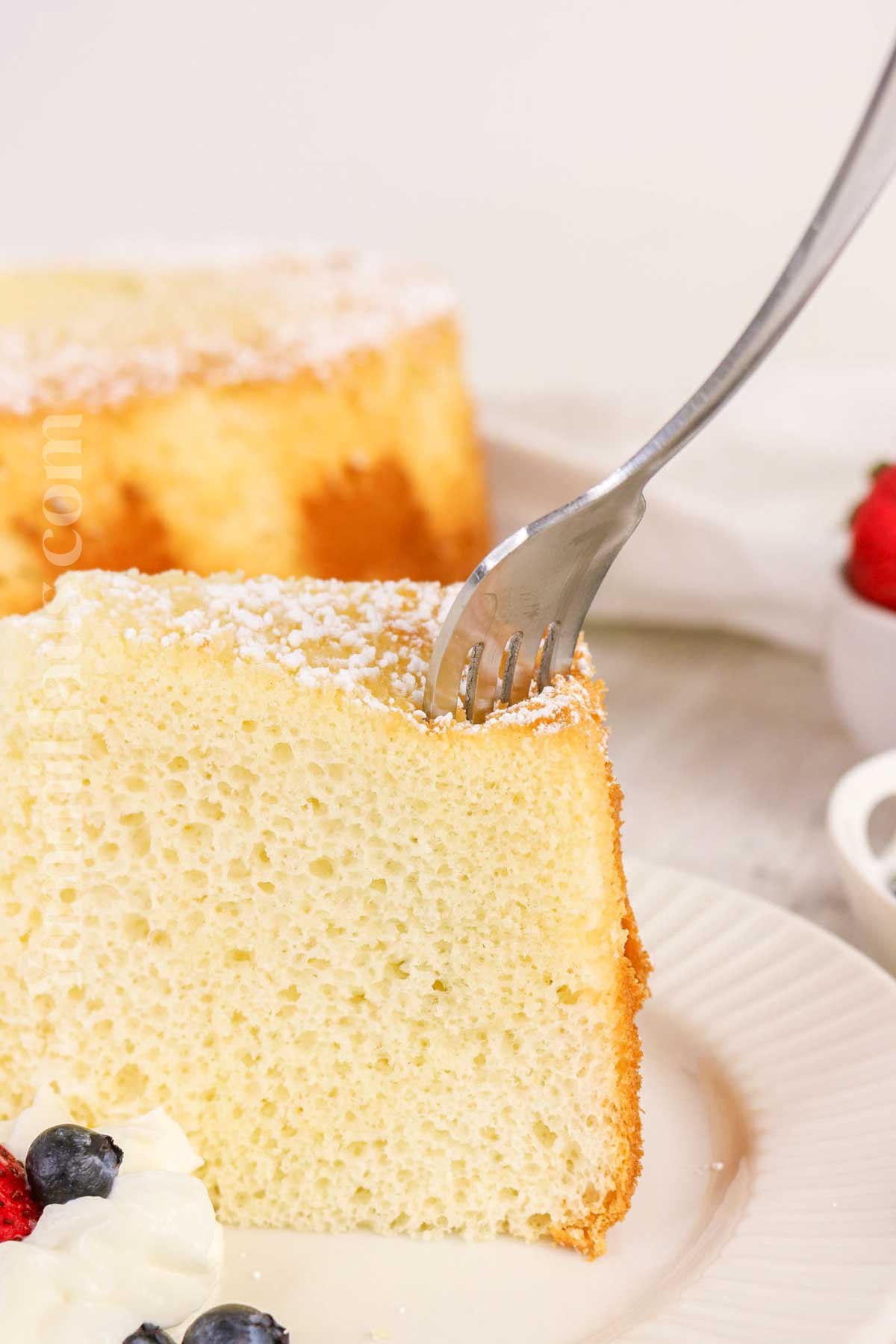
Ingredient Notes
- Cake flour: Creates a light, tender, and delicate crumb.
- Baking powder: Helps the cake rise and stay fluffy.
- Salt: Enhances the overall flavor.
- Whole milk, room temperature: Adds moisture and richness while helping the batter mix evenly.
- Large egg yolks, room temperature: Add richness, moisture, and structure.
- Neutral oil: Keeps the cake moist and soft. Olive, canola, grapeseed, or sunflower oil work well.
- Vanilla extract: Adds a warm, aromatic vanilla flavor.
- Granulated sugar: Sweetens the cake and contributes to its tender texture.
- Large egg whites, room temperature: Whip into a stable meringue that gives chiffon cake its signature airy texture.
- Cream of tartar: Stabilizes the egg whites and helps create a stronger, more stable meringue.
- Granulated sugar: Sweetens and stabilizes the whipped egg whites while helping create a light, smooth meringue.
Kitchen Equipment
- Large mixing bowls
- Whisk
- Electric hand mixer or stand mixer
- Rubber spatula
- Sifter or fine-mesh sieve
- Measuring cups and spoons
- Chiffon cake pan or tube pan
- Cooling rack
- Small knife or offset spatula
How to Make Chiffon Cake
- Preheat the oven to 325°F and place the oven rack in the center. Use an ungreased 10-inch tube pan or chiffon cake pan.
- Mix the dry ingredients. In a large mixing bowl, whisk together the cake flour, baking powder, salt, and ⅔ cup of sugar.
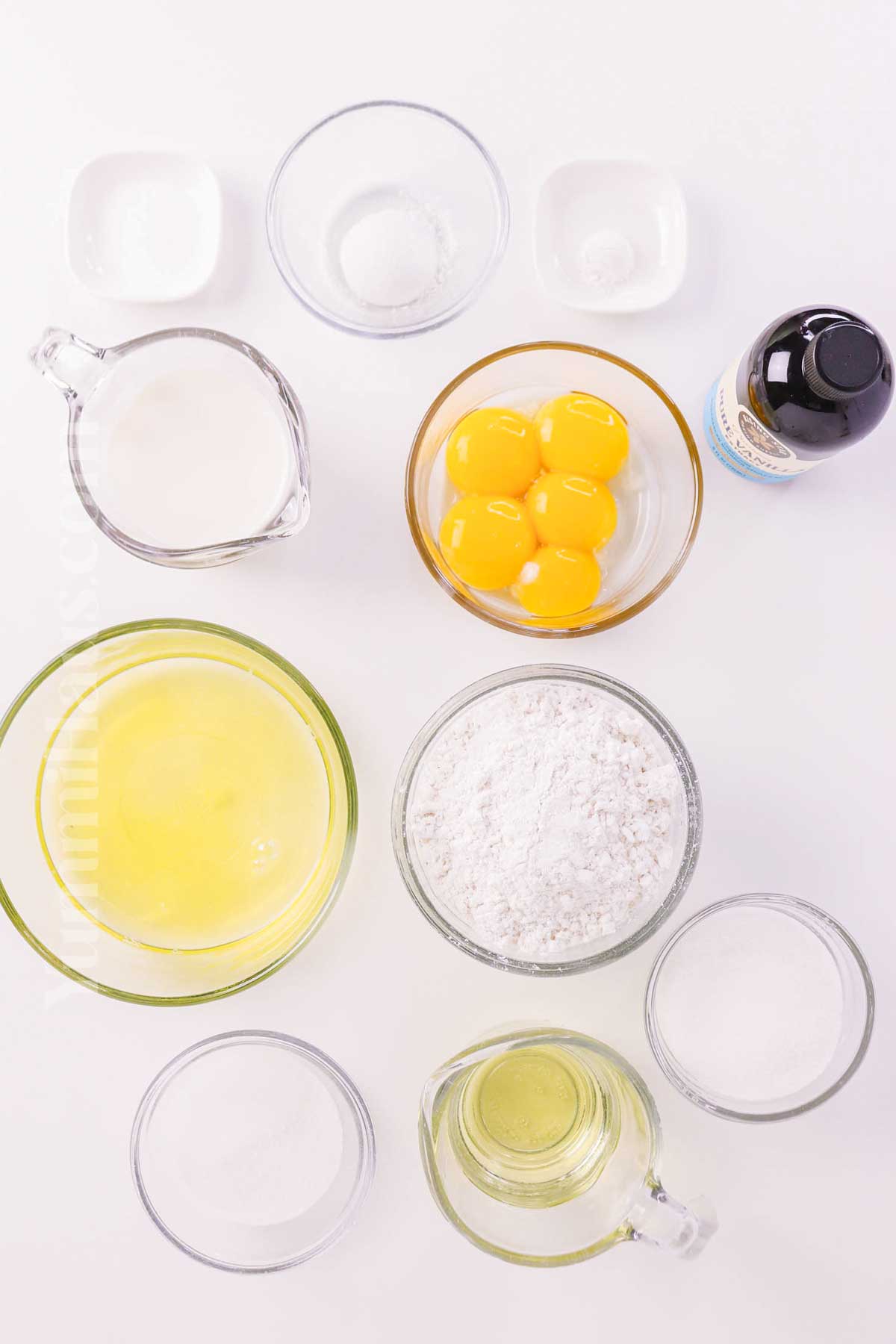
- Whisk the wet ingredients. In a separate bowl, whisk the milk, egg yolks, oil, and vanilla until smooth and well combined.
- Make the batter. Pour the wet mixture into the dry ingredients and whisk until you have a smooth, lump-free batter.
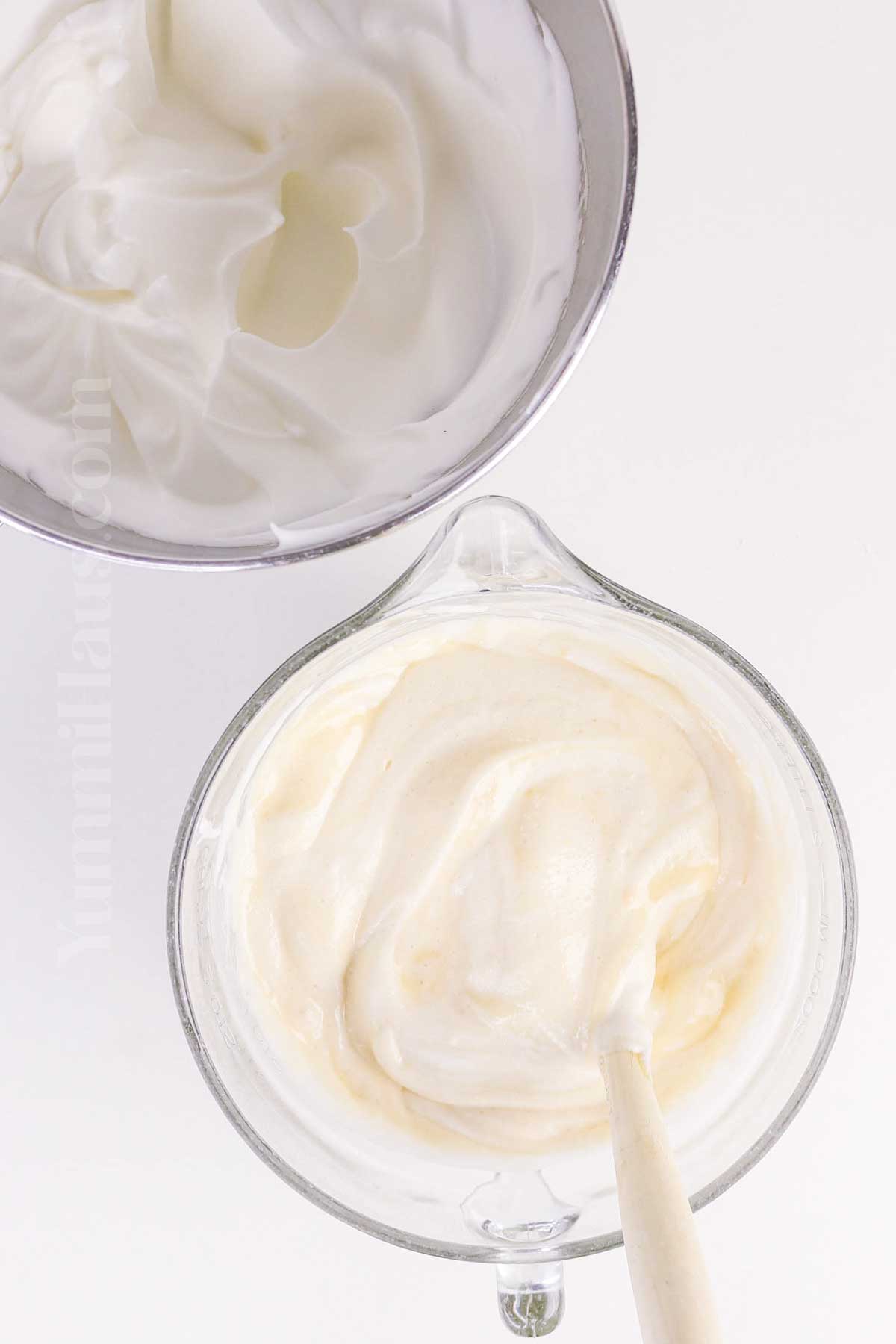
- Whip the egg whites. In a large, clean bowl, beat the egg whites and cream of tartar with an electric mixer until foamy. Gradually add the remaining ⅓ cup of sugar while continuing to beat. Keep mixing until stiff, glossy peaks form.
- Fold everything together. Gently fold one-third of the whipped egg whites into the batter to lighten it. Add the remaining egg whites in two additions, folding each time gently so you don’t deflate the airy mixture.
- Fill the pan. Pour the batter into the ungreased pan and gently smooth the top. Give the pan a couple of light taps on the counter to release any large air bubbles.
- Bake. Bake for 40–45 minutes, or until the top is golden brown and springs back when lightly touched.
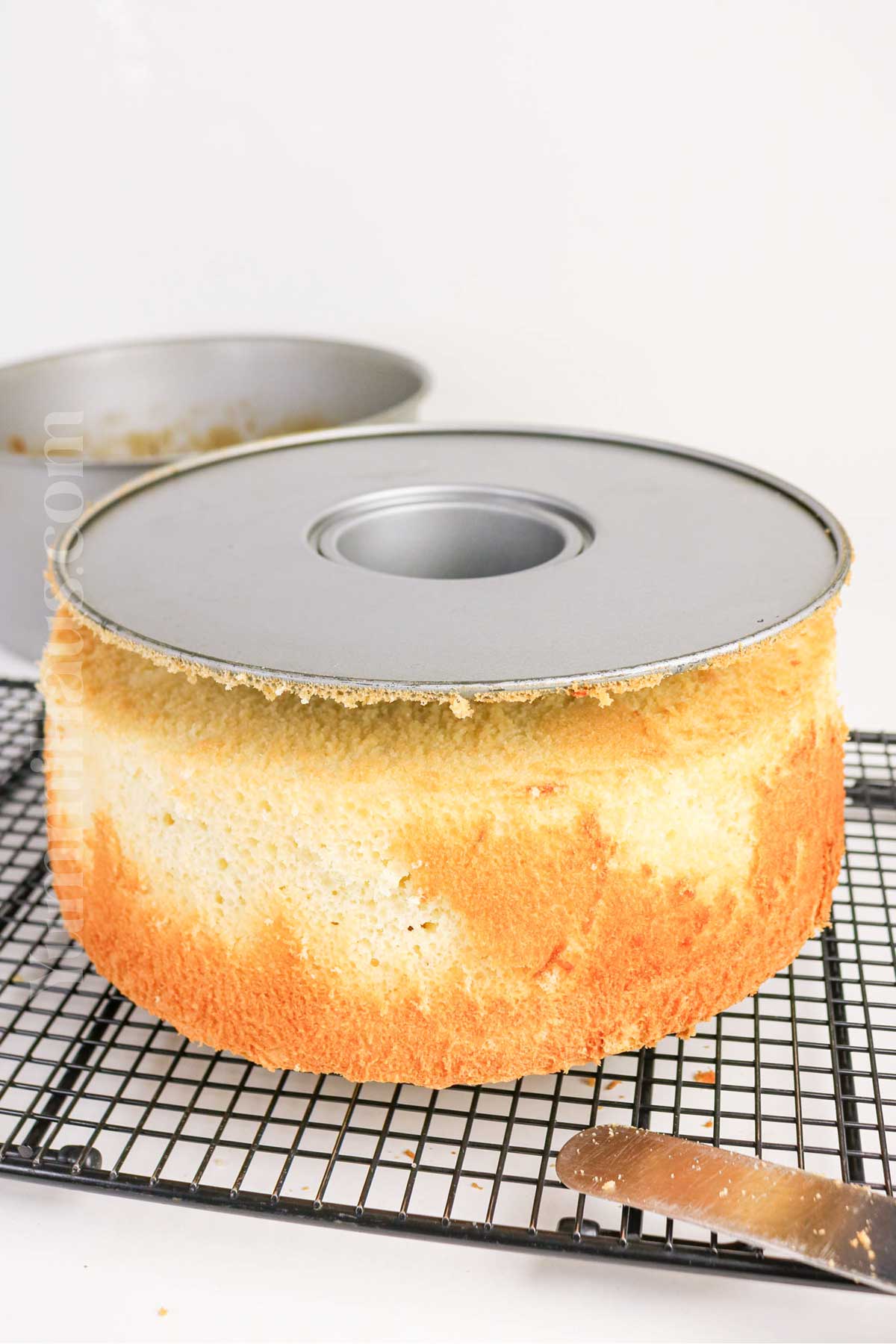
- Cool upside down. As soon as the cake comes out of the oven, immediately invert the pan and let the cake cool completely upside down for at least 2 hours. This keeps the delicate cake from collapsing.
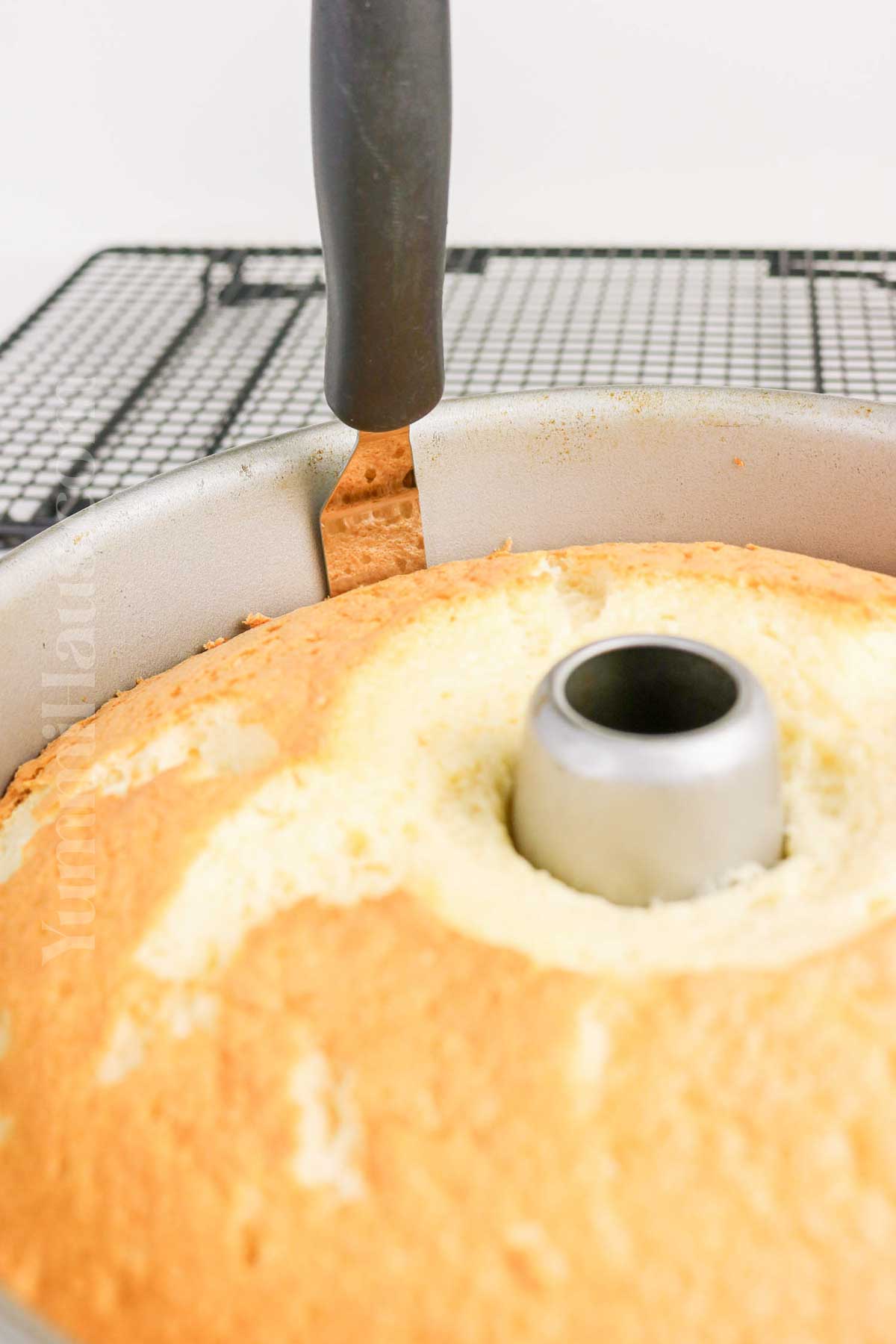
- Release the cake. Once the cake is completely cool, run a thin knife or offset spatula around the outer edge and center tube. Carefully remove the cake from the pan, then release it from the base.
- Serve. Enjoy the chiffon cake plain, dusted with confectioners’ sugar, or topped with fresh berries and whipped cream.
A quick pan tip: For the best texture and easiest release, a traditional aluminum chiffon pan works better than a nonstick tube pan. Don’t grease the pan—the batter needs to cling to the sides as it rises.
Variations & Substitutions
Flavor Variations:
While this vanilla version is classic, there are so many fun ways to customize your chiffon cake! Try a lemon chiffon cake by adding lemon juice and zest to the batter for a bright, citrusy flavor. A chocolate chiffon cake is divine when you substitute some of the cake flour with cocoa powder. For something unique, matcha chiffon cake adds beautiful color and earthy flavor. You can even experiment with coffee, orange, or coconut extracts.
Ingredient Substitutions:
If you don’t have cake flour on hand, you can use all-purpose flour, though the texture will be slightly less delicate. For the vegetable oil, any neutral oil works great, including canola or even olive oil if you want a fruity note (though stick with light olive oil for best results). Some bakers use coconut milk instead of whole milk for added richness and flavor. You can also use water in place of milk if needed, though milk adds a bit more body.
Dietary Modifications:
While chiffon cakes rely heavily on eggs, you can adjust the sugar amount slightly to taste. Some recipes call for potato starch mixed with flour for an even lighter texture. Just remember that the egg whites are key to this type of cake, so major egg substitutions won’t give you that signature fluffy texture.
Storage
Room Temperature:
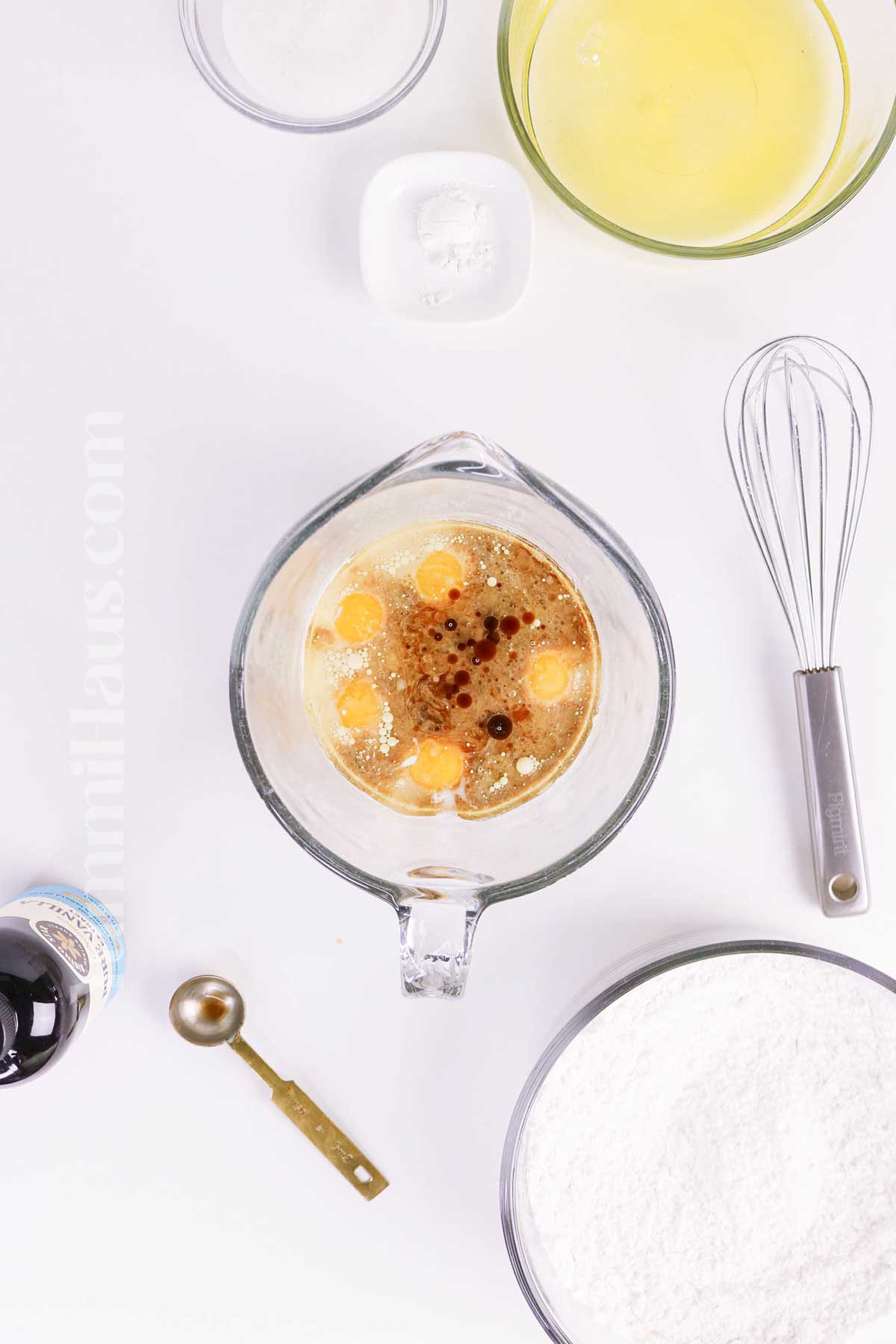
Your chiffon cake stays fresh at room temperature for up to 3 days when stored properly. Once completely cooled, wrap the cake tightly in plastic wrap or store it in an airtight container. The beauty of chiffon is that it doesn’t dry out as quickly as other types of sponge cakes thanks to the oil in the batter.
Refrigeration:
If your kitchen is warm or humid, you can refrigerate the cake for up to 5 days. Just make sure it’s well wrapped in plastic wrap to prevent it from absorbing fridge odors. Bring it back to room temperature before serving for the best flavor and texture.
Freezing:
Chiffon cake freezes beautifully for up to 3 months! Wrap individual slices or the whole cake tightly in plastic wrap, then in aluminum foil. Thaw in the refrigerator overnight or at room temperature for a few hours. This is perfect if you want to bake ahead for a special occasion.
Expert Tips
Preparing Your Ingredients:
Make sure all your ingredients are at room temperature before you start. This helps everything combine more smoothly and results in better volume. Separate your eggs carefully, ensuring no yolk gets into the whites, as even a tiny bit of fat will prevent them from whipping properly.
Whipping the Egg Whites:
Start beating your egg whites on low speed, then gradually increase to medium speed, and finally to medium-high speed. Add the remaining sugar gradually once you reach medium peaks; this creates greater volume and more stable peaks. You want stiff peaks that stand straight up but aren’t dry or grainy. Overbeaten whites will actually deflate your cake.
Folding Technique:
When combining the whipped egg whites with the egg yolk mixture, use a gentle folding motion with your rubber spatula. Cut down through the center, sweep along the bottom, and bring the spatula up the side of the bowl. Rotate the bowl and repeat. This preserves those air bubbles that give you that fluffy chiffon cake texture. Don’t overmix; a few streaks of white are okay.
Baking and Cooling:
Never grease your chiffon cake pan! The batter needs to cling to the sides of the pan to rise properly. Bake until the top of the cake is golden brown and springs back when lightly touched. A cake tester should come out clean. The key thing is to immediately invert the cake upside-down to cool. If your pan doesn’t have feet, balance it on a bottle. This prevents the delicate cake from collapsing as it cools.
Removing from the Pan:
Once completely cool (this takes a longer time, at least an hour), run a thin knife around the side of the pan and the center tube. Push up on the removable bottom, then run the knife along the bottom. This is the best way to release your beautiful creation without damaging it.
FAQ’s
What makes chiffon cake different from angel food cake?
While both are light and airy, angel food cake uses only egg whites, while chiffon cake includes egg yolks and oil. This makes chiffon richer and more tender with a subtle flavor, while angel food is leaner and chewier.
Can I use a regular cake pan instead of a tube pan?
Unfortunately, no. The tube pan design is essential for proper heat distribution and for the cake batter to climb up as it bakes. The removable bottom also makes it easier to release this delicate cake without damaging it.
Why didn’t my cake rise properly?
This usually happens if the egg whites weren’t beaten to stiff peaks, or if they were deflated during folding. Make sure your bowl is completely clean, add the sugar gradually, and fold gently. Also, don’t open the oven door during baking, as temperature fluctuations can cause collapse.
Do I really need to cool the cake upside down?
Yes! Cooling the cake upside down is crucial for maintaining that tall, fluffy texture. The cake is so light and airy that it would collapse under its own weight if cooled right side up.
Why do some recipes call for baking powder?
Baking powder provides additional lift and insurance for a successful rise. While the whipped egg whites are the primary leavening agent in this type of foam cake, baking powder helps ensure consistent results, especially for first-time bakers.
How do I know when my chiffon cake is done?
The top should be golden brown and spring back when lightly touched. A cake tester or toothpick inserted near the center should come out clean. The cake will also start to pull away slightly from the sides of the pan.
My cake stuck to the pan. What did I do wrong?
You may have greased the pan (don’t!) or didn’t let it cool completely before trying to remove it. The cake needs to cling to the pan while baking and cooling. Use a thin knife to gently release it only after it’s completely cool.
If you love this cake recipe, you’re going to love these other cake recipes, too. Please click each link below to find the easy, printable recipe!
More Great Treat Recipes to Pair with this Cake
Best Bakery Buttercream Frosting
Chocolate Buttercream Frosting
CONNECT WITH YUMMI HAUS!
Be sure to follow me on my social media, so you never miss a post!

Chiffon Cake

Ingredients
- 1 ⅔ cups cake flour
- 2 ½ teaspoons baking powder
- ¾ teaspoon salt
- ⅔ cup whole milk room temperature
- 5 large egg yolks room temperature
- 7 tablespoons oil neutral – such as olive, canola, grapeseed, or sunflower oil
- 2 teaspoons vanilla extract
- ⅔ cup granulated sugar
- 6 large egg whites room temperature
- ½ teaspoon cream of tartar
- ⅓ cup granulated sugar
Instructions
- Preheat the oven to 325°F. Place the oven rack in the center position. Use an ungreased 10-inch tube pan or chiffon cake pan.
- Mix the cake flour, baking powder, salt, and ⅔ cup sugar in a large mixing bowl.
- Whisk the milk, egg yolks, oil, and vanilla in a separate bowl until smooth
- Pour the wet ingredients into the dry ingredients and whisk until the batter is smooth and free of lumps.
- Beat the egg whites and the cream of tartar in a large, clean bowl with an electric mixer until foamy.
- Gradually add the remaining ⅓ cup sugar while beating. Continue beating until stiff, glossy peaks form.
- Fold one-third of the whipped egg whites into the batter to lighten it.
- Gently fold in the remaining egg whites in two additions, being careful not to deflate the mixture.
- Pour the batter into the ungreased pan and gently smooth the top. Tap the pan lightly on the counter once or twice to release any large air bubbles.
- Bake for 40 to 45 minutes, or until the top is golden brown and springs back when lightly touched.
- Remove and immediately invert the pan and allow the cake to cool completely upside down for at least 2 hours.
- Once completely cool, run a thin knife or offset spatula around the outer edge and center tube. Remove the cake from the pan and release it from the base.
- Serve plain, dusted with confectioners’ sugar, or topped with fresh berries and whipped cream.
Notes
Equipment
- Chiffon Cake Pan
Nutrition
Nutritional information for the recipe is provided as a courtesy and is approximate. Please double-check with your own dietary calculator for the best accuracy. We at Yummi Haus cannot guarantee the accuracy of the nutritional information given for any recipe on this site.







Share Your Thoughts