
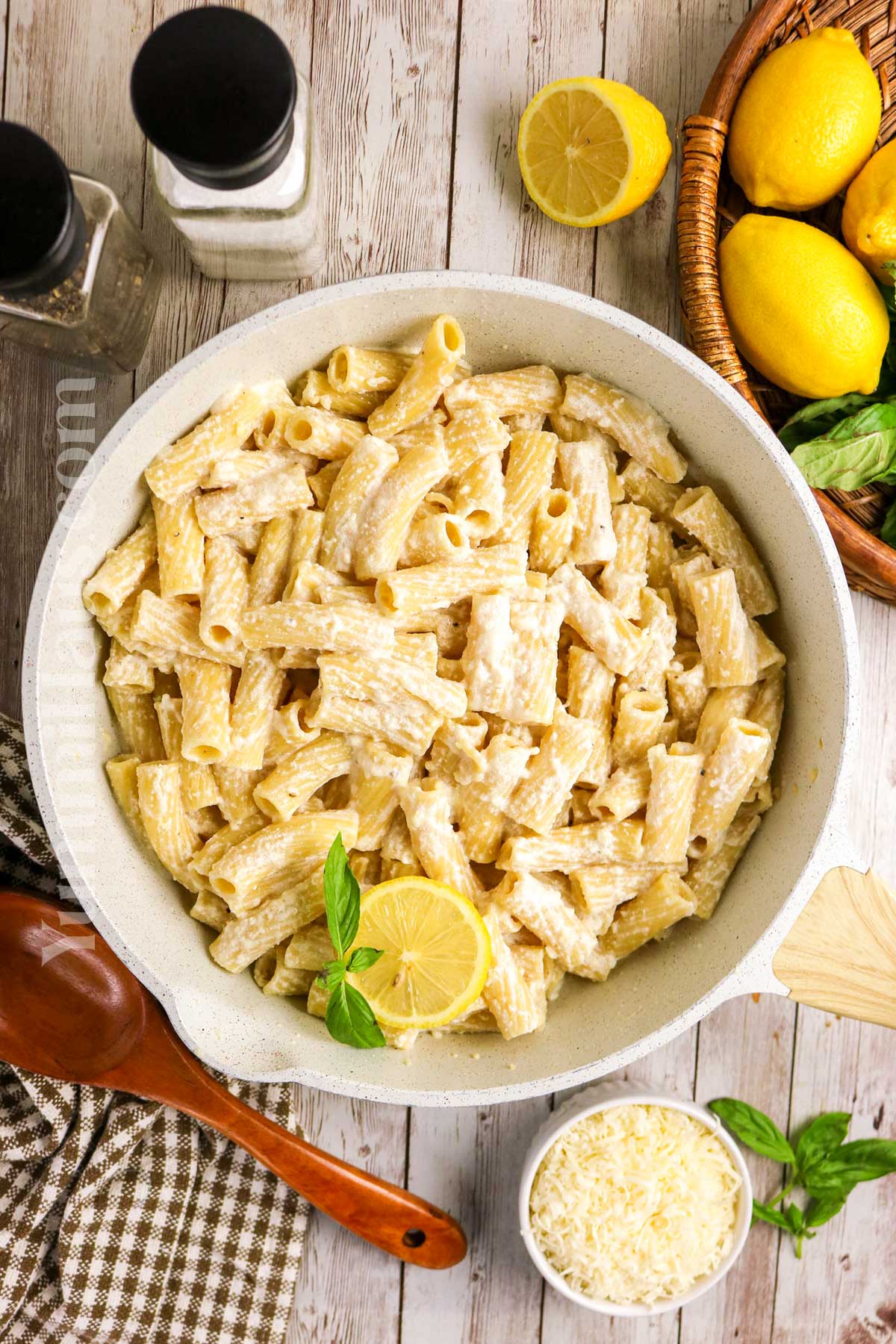
There’s something magical about combining simple ingredients to create a dish that tastes as if it came straight from the Amalfi Coast. This lemon ricotta pasta recipe brings together creamy ricotta cheese, bright lemon flavor, and perfectly cooked pasta for an easy weeknight meal that requires minimal effort but delivers maximum delicious flavor. The creamy sauce comes together in just minutes, making this one of those pasta dishes you’ll turn to again and again for weeknight dinners.
Whether you’re making this for the first time or you’ve already fallen in love with this recipe, the combination of fresh lemon, whole milk ricotta, and parmesan cheese creates a cheesy sauce that clings beautifully to your pasta. The fresh flavors shine through with every bite, and the addition of fresh basil and a sprinkle of black pepper takes this creamy pasta from simple to sensational.
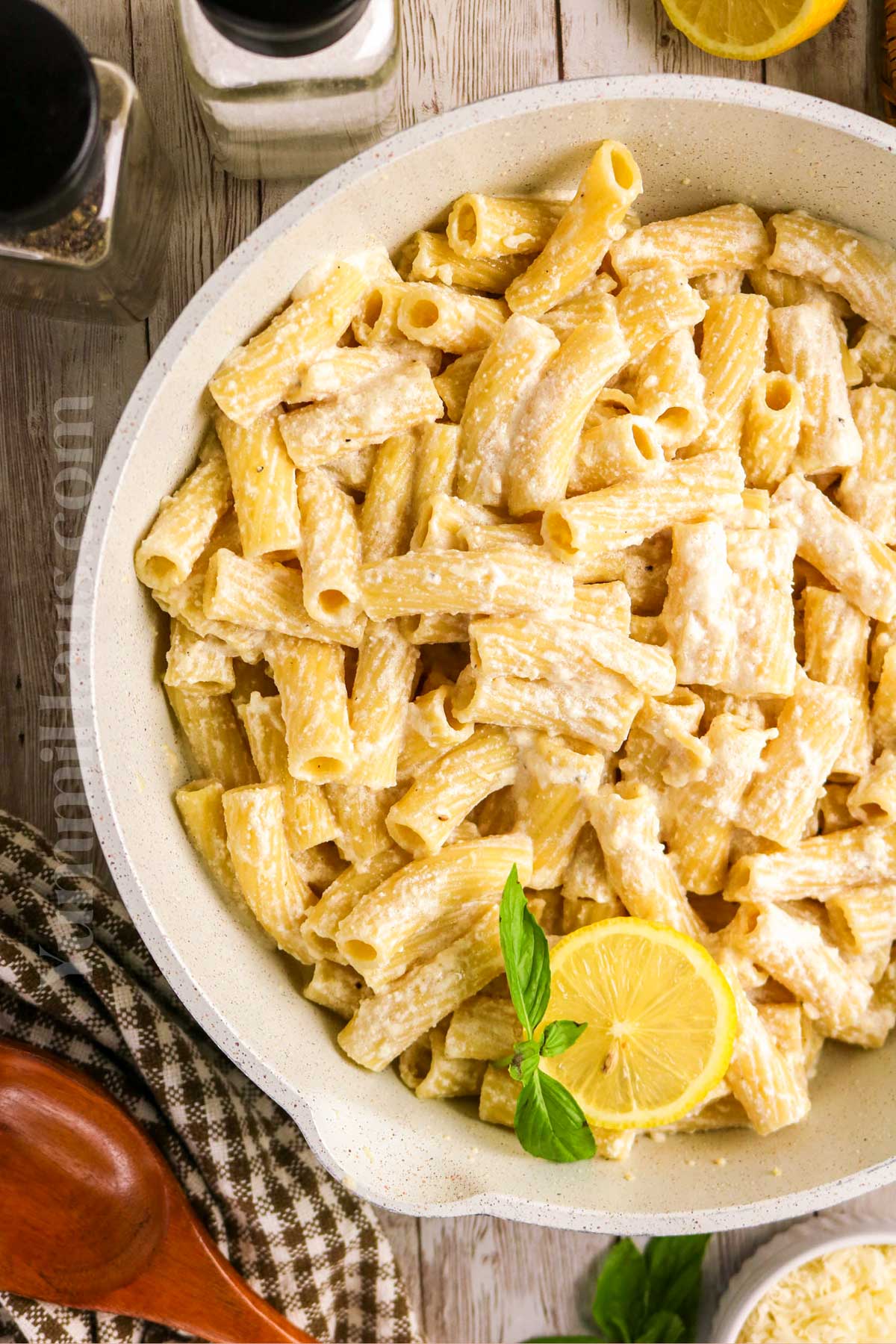
Gina’s Recipe Rundown:
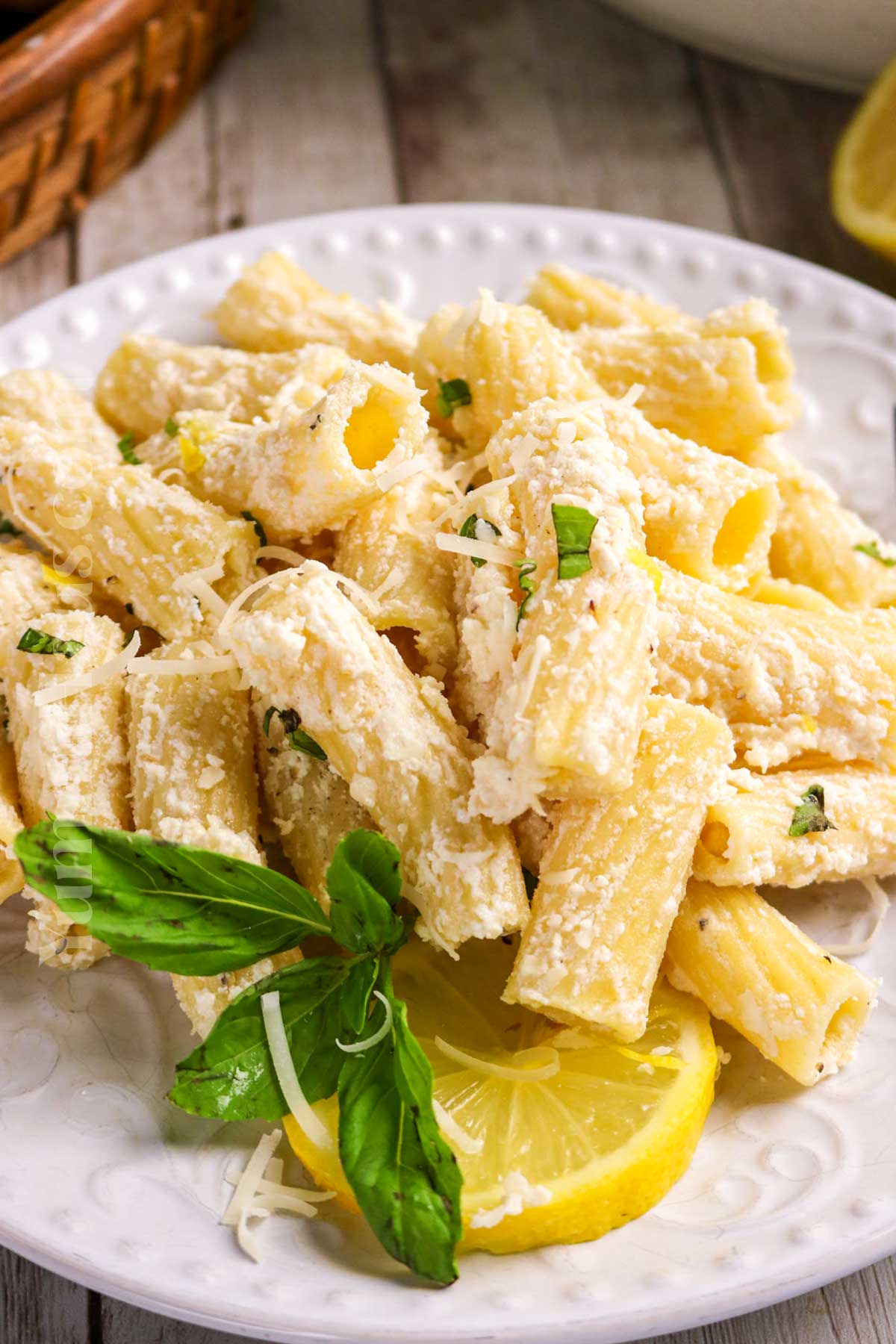
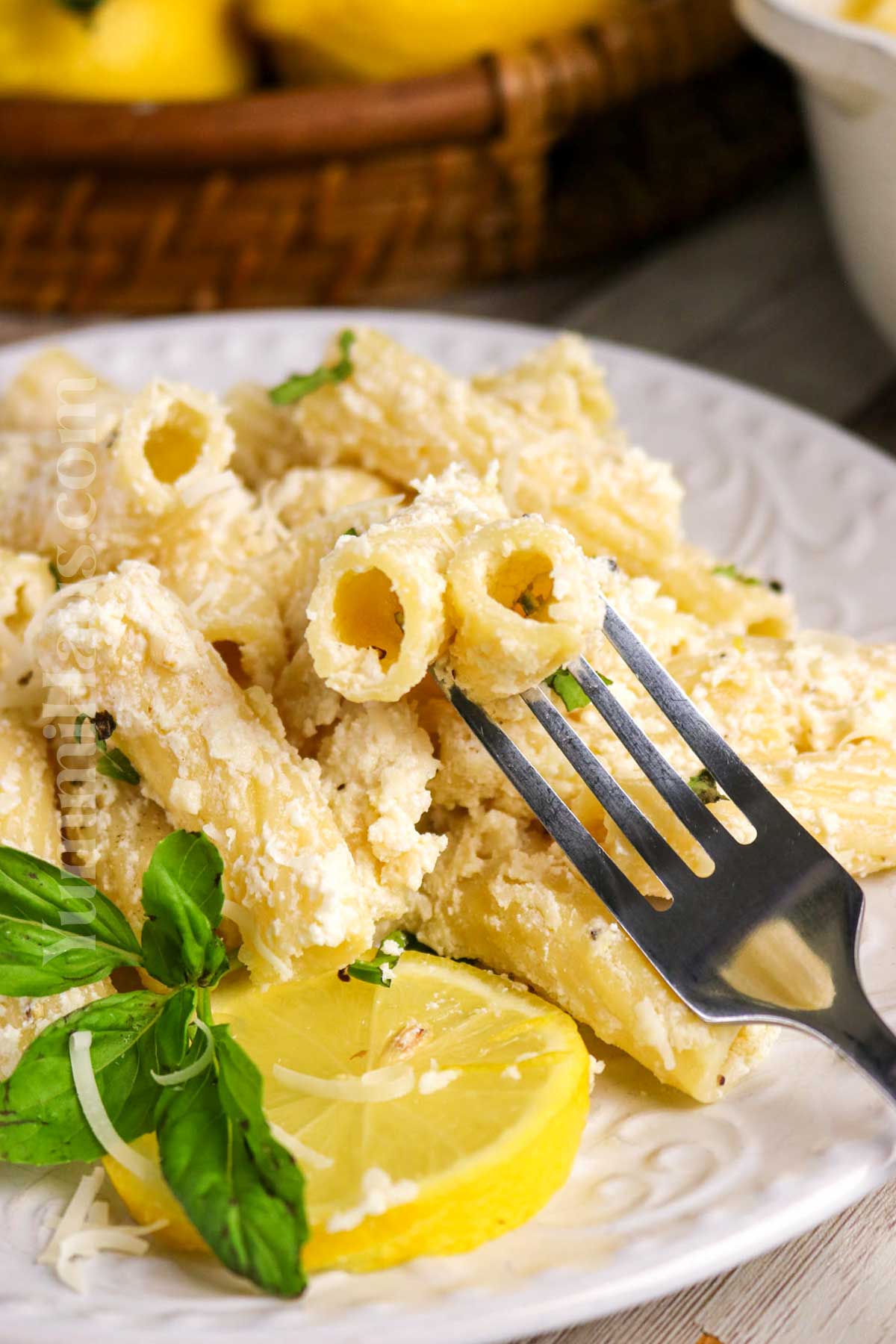
Texture: This Lemon Ricotta Pasta is creamy, silky, and luxuriously smooth with a bright, light finish.
Taste: It tastes bright and tangy from the lemon, balanced by the rich creaminess of the ricotta and salty Parmesan.
Ease: It’s incredibly easy to make, coming together in one skillet with simple ingredients in about 20 minutes.
Why I love it: I love this recipe because it delivers big flavor with minimal effort—fresh, creamy, bright, and comforting all at once.
Why You’ll Love This Recipe
This zesty lemon ricotta pasta is the definition of comfort food with a fresh twist. The lemon ricotta sauce is incredibly creamy without being heavy, and it comes together while your pasta cooks, which means dinner is on the table in less than 20 minutes. You’ll love how the lemon zest and lemon juice brighten up the rich, creamy ricotta, creating a perfect balance that keeps you coming back for another bite.
The beauty of this recipe is that it uses fresh ingredients you probably already have in your kitchen. There’s no complicated technique or hours of simmering required, just good quality ricotta cheese, fresh lemon, and hot pasta tossed together with some reserved pasta water to create the silkiest texture. It’s proof that you don’t need a long list of ingredients to make something that tastes absolutely restaurant-worthy.
Plus, this dish is incredibly versatile. You can serve it as is for a simple vegetarian meal, or add grilled chicken breasts or baby spinach to make it heartier. It works beautifully for a quick lunch or as the star of your dinner table, and it’s elegant enough to serve to guests who will think you spent hours in the kitchen.

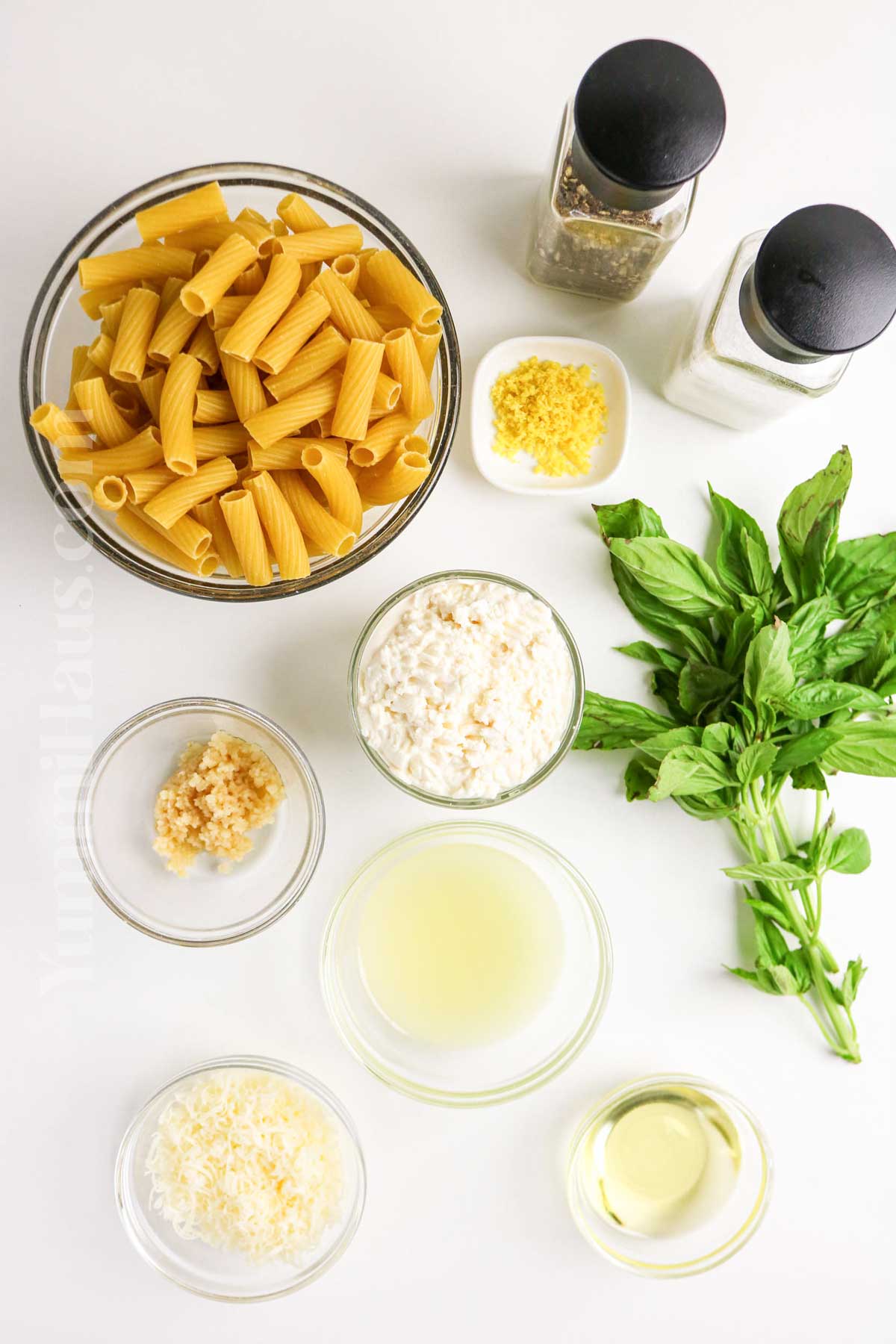
Ingredient Notes
- Pasta (rigatoni, penne, or spaghetti) – Choose a shape that holds the creamy sauce well; short pasta gives more surface area, while spaghetti offers a silky texture.
- Whole milk ricotta cheese – Provides a rich, creamy base; whole milk ricotta blends more smoothly than part-skim. Lemon, zested and juiced – Fresh lemon brightens the sauce with acidity and aromatic citrus oils.
- Parmesan cheese – Adds salty, nutty depth and helps thicken the ricotta sauce.
- Olive oil – For sautéing the garlic and adding body to the sauce; use extra-virgin for the best flavor.
- Garlic, minced – Gives the pasta a savory, aromatic backbone.
- Salt and black pepper – Essential for seasoning and balancing the bright lemon flavor.
- Reserved pasta water – Helps loosen and emulsify the ricotta mixture into a silky sauce.
- Fresh basil or parsley (for garnish) – Adds freshness, color, and a light herbal finish.
Kitchen Equipment
- Large pot – for boiling the pasta
- Large skillet or sauté pan – to make the sauce and toss everything together
- Mixing bowl – for whisking the ricotta mixture
- Microplane or zester – to zest the lemon
- Citrus juicer (optional) – for squeezing the lemon juice
- Measuring cups and spoons – to measure ingredients and reserve pasta water
- Colander – for draining the pasta
- Wooden spoon or spatula – for stirring the garlic and sauce
- Tongs or pasta spoon – for tossing the pasta in the sauce
How to Make Lemon Ricotta Pasta
- Cook your pasta in a big pot of well-salted water, following the package directions. Before you drain it, scoop out about a cup of that starchy pasta water and set it aside.
- While the pasta’s doing its thing, warm the olive oil in a large skillet over medium heat. Add the minced garlic and let it cook for about 30 seconds—just until it smells amazing.
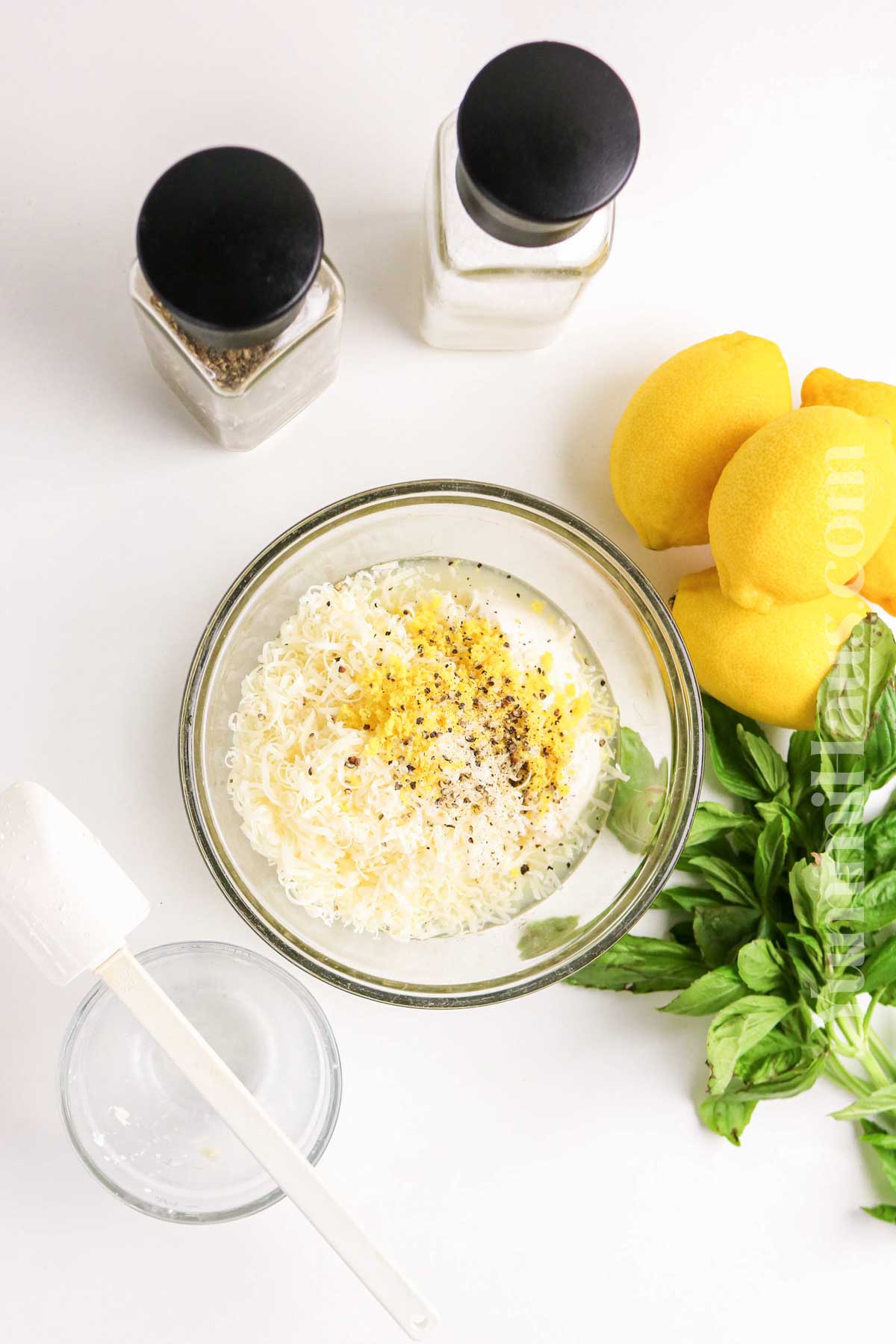
- In a separate bowl, mix together the ricotta, lemon zest, lemon juice, Parmesan, salt, and pepper until everything is smooth and creamy.
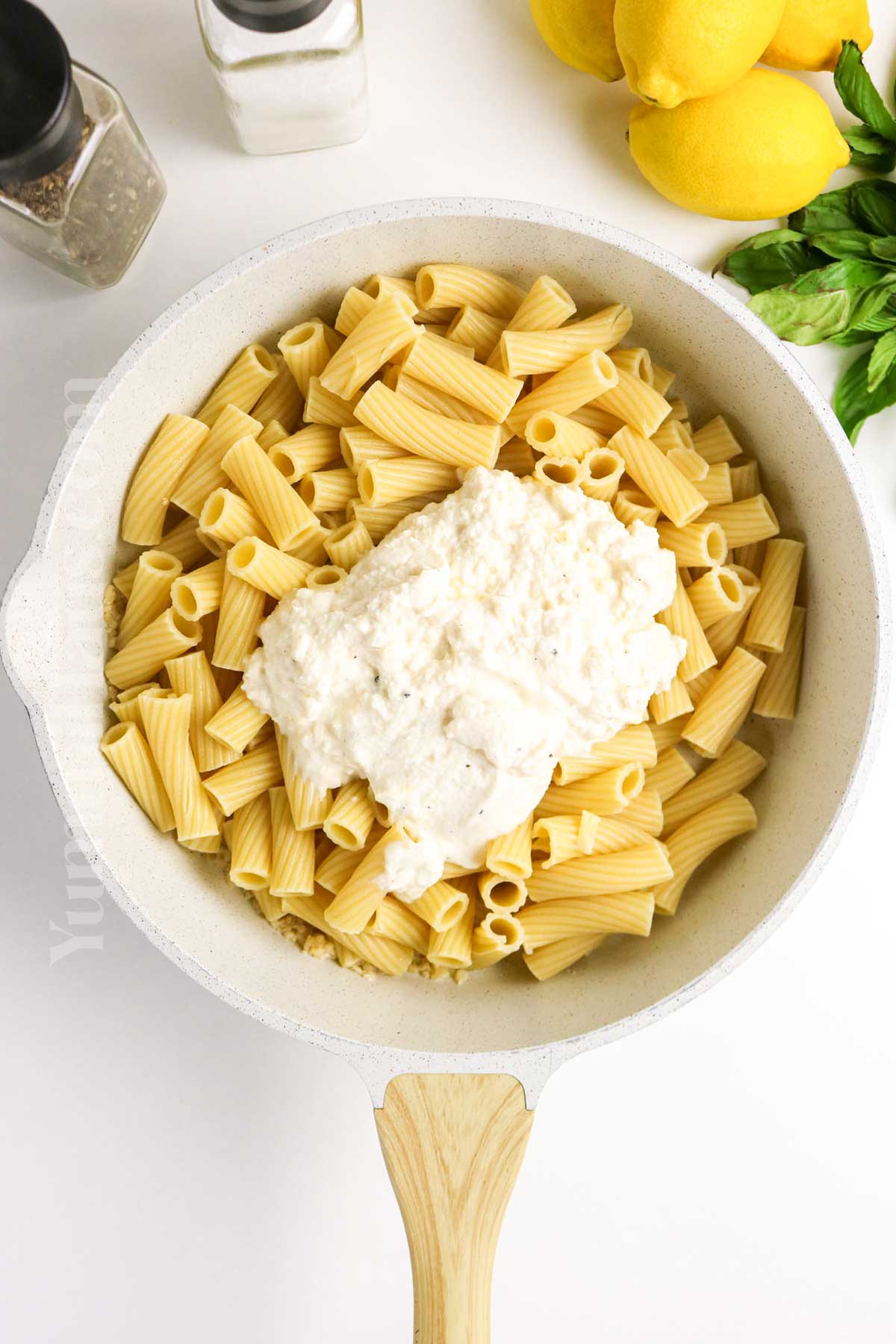
- Once the pasta is drained, add it straight into the skillet with the garlic.
- Turn the heat down to low and stir in the ricotta mixture.
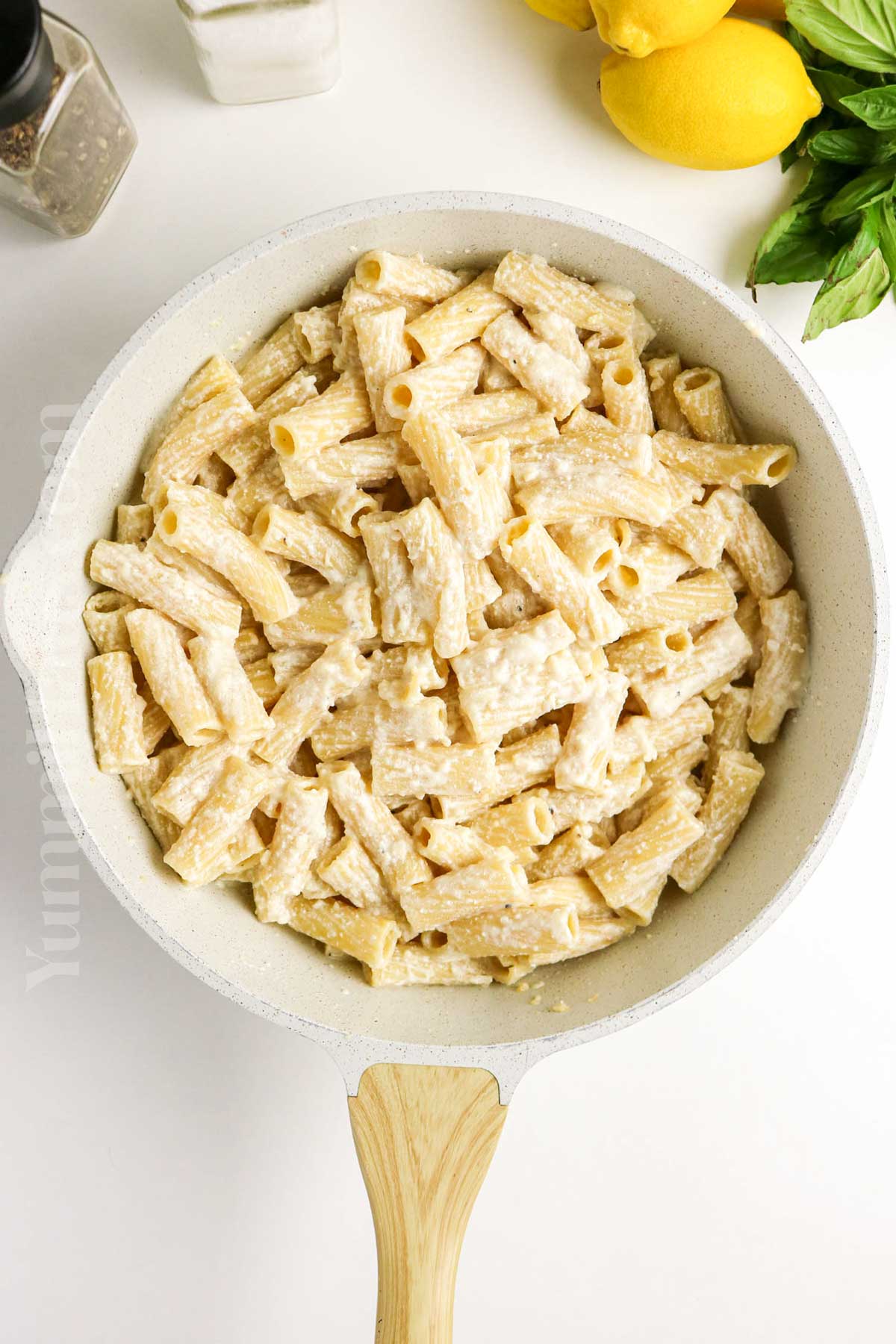
- Slowly pour in some of the reserved pasta water, a little at a time, tossing everything together until the sauce turns silky and coats the pasta perfectly.
- Give it a taste and adjust the seasoning as needed. Serve it warm, topped with extra Parmesan and fresh herbs if you like.
Variations & Substitutions
Pasta Shape: While this recipe works beautifully with long pasta like spaghetti, linguine, or fettuccine, feel free to use any pasta shape you prefer. Short pasta like penne or rigatoni holds the creamy sauce wonderfully, too. Just cook according to the package directions until al dente.
Ricotta Options: Whole milk ricotta gives the best taste and creamiest texture, but you can use part-skim if that’s what you have. Fresh ricotta from a specialty shop will make this dish even more luxurious, but standard grocery store ricotta works perfectly fine.
Add Some Greens: Toss in fresh spinach or baby spinach during the last minute of cooking your pasta. The heat will wilt it perfectly, and it adds color and nutrition to your dish.
Protein Additions: This pairs wonderfully with grilled chicken breasts, shrimp, or even crispy pancetta. Add cooked protein right before serving.
Spice It Up: If you like heat, add red pepper flakes to your lemon ricotta sauce. Start with a pinch and adjust to your taste.
Fresh Herbs: While fresh basil is traditional and delicious, you can also use fresh parsley, mint, or a combination of fresh herbs for different flavor profiles.
Dairy Adjustments: If your sauce seems too thick, add a splash of milk along with the reserved pasta water to loosen it up.
Vegan Version: Use vegan ricotta and nutritional yeast instead of Parmesan cheese for a plant-based version.
Storage
Store any leftover pasta in an airtight container in the refrigerator for up to 3 days. The sauce may thicken as it sits, which is completely normal with creamy ricotta-based sauces.
To reheat, place the pasta in a pan over medium heat and add a few tablespoons of water, milk, or extra virgin olive oil to help revive the creamy sauce. Stir gently until heated through. You can also reheat individual portions in the microwave, adding a splash of milk or water and stirring halfway through.
This dish tastes best fresh, so I recommend only making what you’ll eat in one or two meals. The bright lemon flavor and fresh flavors are most vibrant right after cooking, though it’s still delicious as leftovers.
Expert Tips
Save That Pasta Water! This is crucial. Before draining your pasta, scoop out at least a cup of pasta water. The starchy pasta cooking water is what helps the sauce come together and cling to the noodles. You might not need the whole cup of the pasta water, but it’s better to have it ready. Start with a quarter cup and add more as needed.
Room Temperature Ricotta: Take your ricotta cheese out of the fridge about 15 minutes before you start cooking. Room temperature ricotta mixes more smoothly into the sauce and creates a better texture.
Fresh is Best: Use fresh lemon juice instead of bottled. The difference in flavor is significant, and since lemon is the star of this dish, you want that authentic, bright taste.
Don’t Overcook: Cook your pasta to al dente according to the package directions. It will continue cooking slightly when you toss it with the hot sauce.
Work Quickly: Mix your hot pasta with the lemon ricotta mixture while everything is still warm. The heat helps the sauce coat the pasta beautifully.
Adjust Consistency: If your sauce is too thick, add more reserved pasta water a little at a time. If it’s too thin, add a bit more parmesan cheese or let it sit for a minute to thicken.
Taste as You Go: Add lemon juice gradually and taste. You want brightness but not overpowering sourness. You can always add more, but can’t take it away.
Finish with Quality Ingredients: A drizzle of good extra virgin olive oil and freshly grated parmesan cheese right before serving elevates this simple dish significantly.
Serve Immediately: This creamy pasta is best enjoyed right away while the sauce is silky and the pasta is hot.
Make it a Meal: Serve with garlic bread and a simple green salad for a complete dinner that feels special but comes together with minimal effort.
FAQ’s
Why is my sauce not creamy?
The most common reason is not using enough reserved pasta water. The starchy water is what helps emulsify the sauce and create that silky texture. Add it gradually while tossing the pasta until you get the consistency you want. Also, make sure your ricotta is well-stirred before adding it to the pasta.
How do I prevent the sauce from becoming grainy?
Use good-quality whole milk ricotta and make sure not to overheat the sauce. Once you’ve tossed the hot pasta with the ricotta mixture, don’t continue cooking it over the heat. The residual heat from the pasta is enough to warm everything through.
Can I freeze this pasta?
Cream-based pasta dishes with ricotta don’t freeze particularly well, as the texture can become grainy when thawed. This recipe comes together so quickly that it’s better to make it fresh when you want it.
My sauce seems too lemony. What can I do?
Add more ricotta cheese or parmesan cheese to mellow out the lemon flavor. You can also add a splash of milk or cream, or toss in more cooked pasta to balance the flavors.
What can I serve with lemon ricotta pasta?
This pairs perfectly with garlic bread, a simple arugula salad, roasted vegetables, or grilled chicken breasts. It’s rich enough to be the star but also works as a side dish for grilled fish or chicken.
I don’t have a fresh lemon. Can I use bottled lemon juice?
Fresh lemon really is important for the best taste in this recipe since the bright lemon flavor is central to the dish. Bottled juice lacks the aromatic oils and fresh taste that make this pasta special.
Can I make this with homemade pasta?
Yes! Homemade pasta is wonderful in this recipe. Just remember that fresh homemade pasta cooks much faster than dried pasta, usually in just 2 to 3 minutes. Still save that pasta cooking water though, as you’ll need it for the sauce!
If you love this pasta recipe, you’re going to love these other pasta dinners, too. Please click each link below to find the easy, printable recipe!
More Great Lemon Dinner Recipes
Lemon Pepper Chicken – Crock Pot
CONNECT WITH YUMMI HAUS!
Be sure to follow me on my social media, so you never miss a post!

Lemon Ricotta Pasta

Ingredients
- 12 oz pasta rigatoni, penne, or spaghetti
- 1 cup whole milk ricotta cheese
- 1 lemon zested and juiced
- ⅓ cup Parmesan cheese grated – plus more for serving
- 2 tablespoons olive oil
- 2 cloves garlic minced
- salt and black pepper to taste
- ¼ cup reserved pasta water more as needed
Optional: fresh basil or parsley for garnish
Instructions
- Cook the pasta in a large pot of well-salted water according to package directions. Reserve 1 cup of pasta water before draining.
- While the pasta cooks, heat the olive oil in a large skillet over medium heat. Add the garlic and cook for about 30 seconds until fragrant.
- Stir the ricotta, lemon zest, lemon juice, Parmesan, salt, and pepper together in a bowl until smooth.
- Add the drained pasta to the skillet with the garlic.
- Reduce the heat to low and stir in the ricotta mixture.
- Add reserved pasta water a little at a time, tossing until the sauce is creamy and coats the pasta evenly.
- Taste and adjust seasoning.
- Serve warm with additional Parmesan and fresh herbs if desired.
Nutrition
Nutritional information for the recipe is provided as a courtesy and is approximate. Please double-check with your own dietary calculator for the best accuracy. We at Yummi Haus cannot guarantee the accuracy of the nutritional information given for any recipe on this site.







Share Your Thoughts