
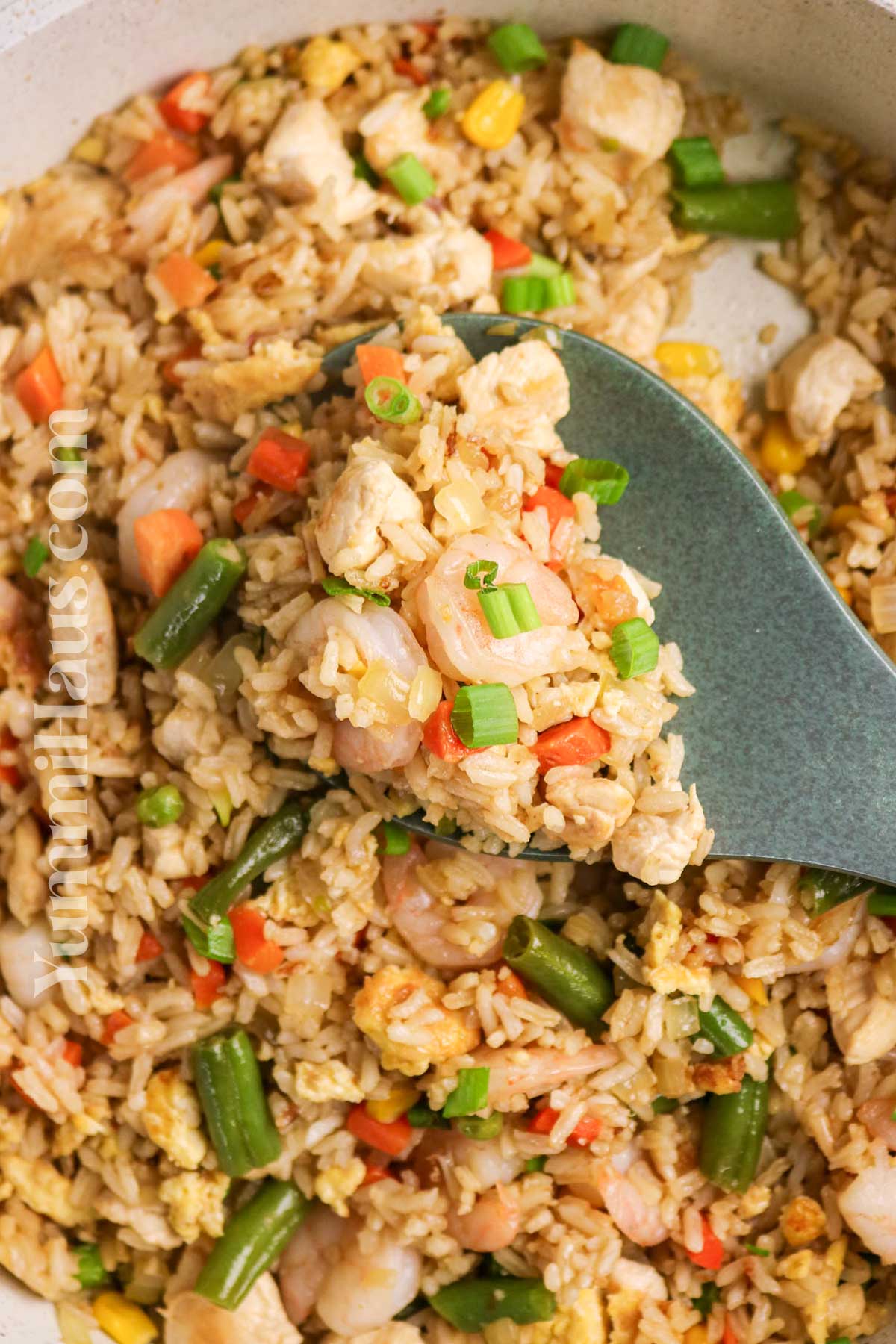
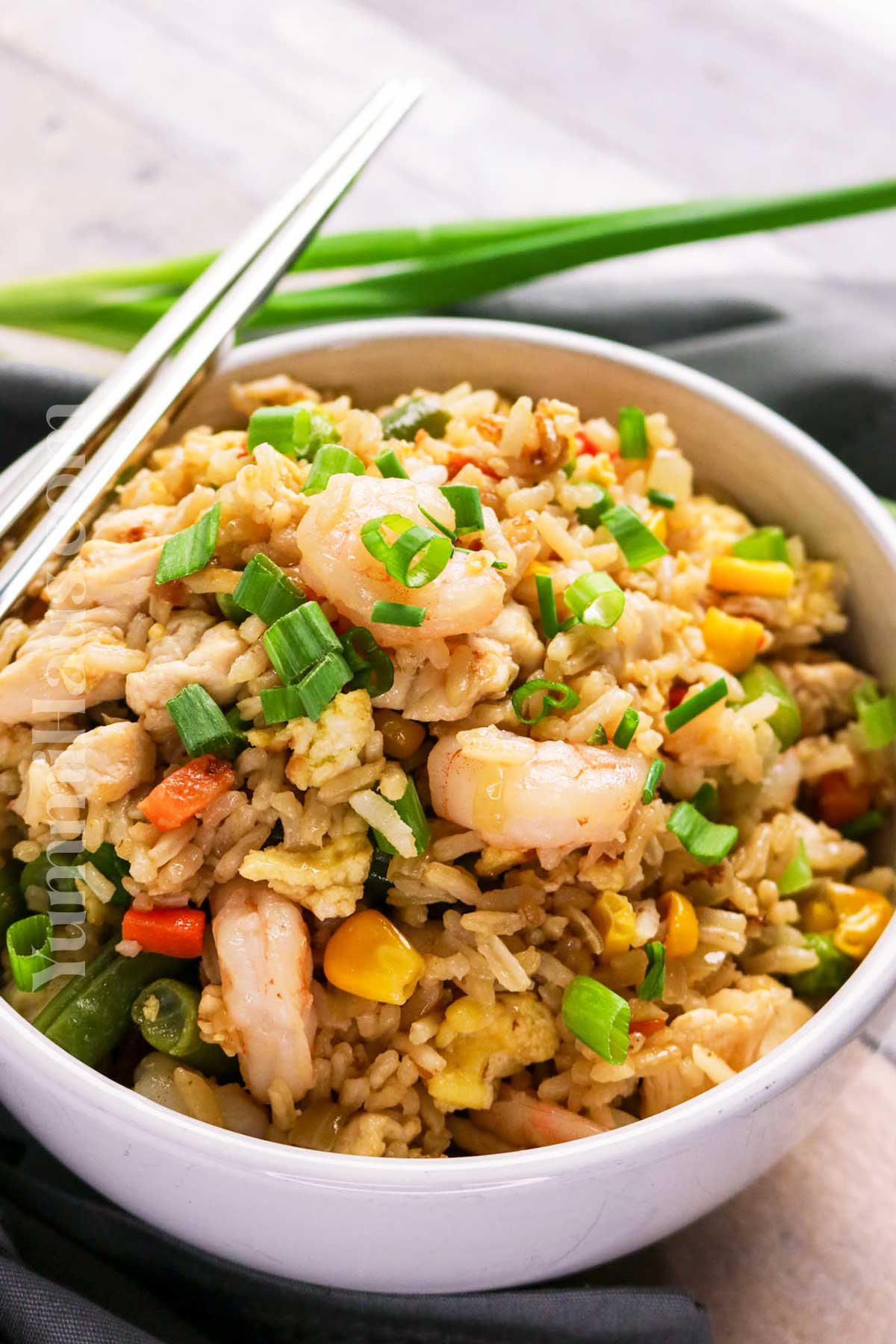
Looking for a quick, satisfying weeknight dinner that feels a little special? This Shrimp and Chicken Fried Rice hits all the right notes—juicy shrimp, tender chicken, crisp veggies, and perfectly seasoned rice, all tossed together in a single pan.
It’s flavorful, comforting, and ready in about 30 minutes, making it perfect for busy nights when you want something homemade without the fuss. Plus, it’s a great way to use leftover rice!
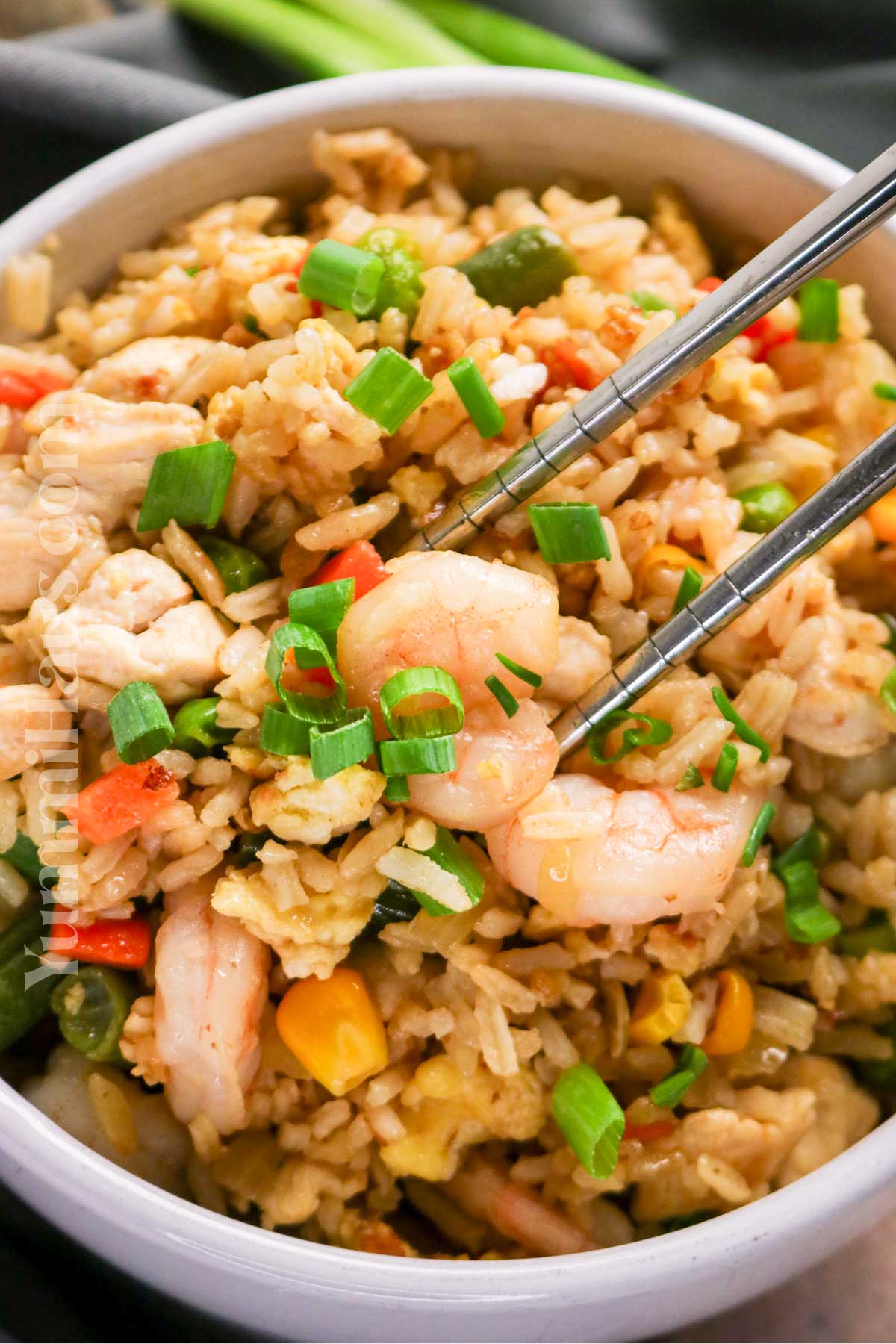
Gina’s Recipe Rundown:
Texture: This dish has a wonderful mix of textures in every bite.
Taste: This fried rice is bursting with flavor! It’s perfectly balanced—savory, slightly sweet, and packed with satisfying textures.
Ease: This fried rice is surprisingly easy to make, even on a busy weeknight. With just one pan, a few simple steps, and mostly everyday ingredients, you can have a flavorful, restaurant-style meal ready in about 30 minutes.
Why I love it: It’s a one-pan meal that feels special without any fuss, and I can customize it with whatever veggies or proteins I have on hand.
Why You’ll Love This Recipe
You’ll love this fried rice because it’s quick, flavorful, and hits all the comfort-food notes. Juicy fresh shrimp, tender chicken, crisp veggies, and perfectly seasoned rice all come together in one pan for an easy weeknight meal that’s easy, satisfying, and totally customizable.
It’s the kind of dinner that feels special but comes together in no time! I love that you can use up that cold leftover rice and turn it into something with so much flavor. We have made this with basmati rice, or sometimes long grain rice, fresh garlic, and a sprinkle of red pepper flakes.


Ingredient Notes
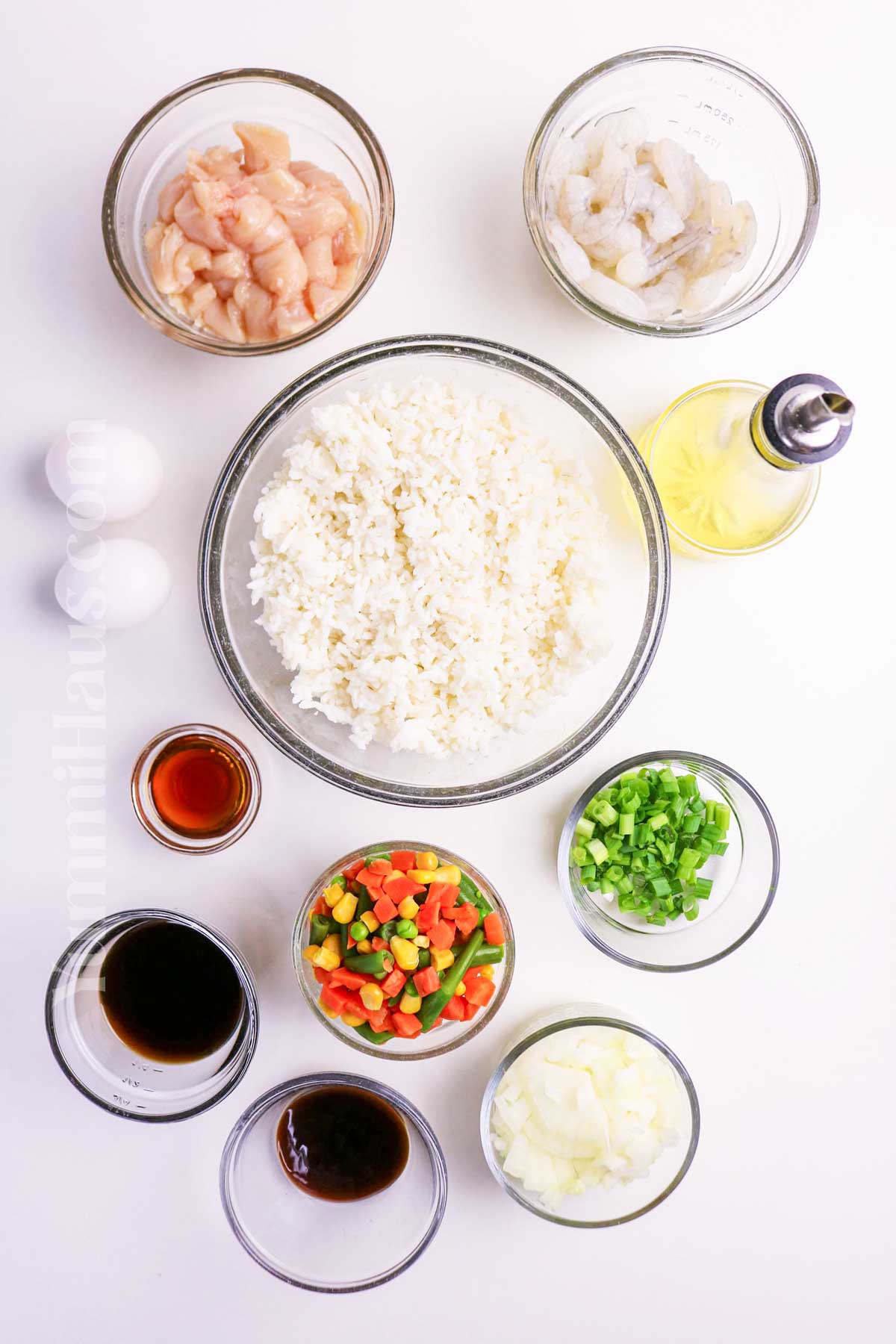
- Vegetable oil – for stir-frying, neutral flavor works best.
- Medium shrimp, peeled and deveined – fresh or thawed from frozen; tail-on or off depending on preference.
- Chicken breast, boneless and skinless, diced – cooks quickly and keeps the dish lean.
- Large eggs, lightly beaten – add protein and a soft, fluffy texture.
- Onion, diced – adds sweetness and depth of flavor.
- Frozen peas and carrots, thawed – classic fried rice vegetables for color and crunch.
- Cold cooked rice (preferably day-old) – prevents mushy fried rice and helps with proper stir-frying.
- Soy sauce – adds savory umami flavor.
- Oyster sauce – optional but boosts richness and depth.
- Sesame oil – for a fragrant, nutty finish.
- Green onions – fresh garnish and mild onion flavor.
- Salt and pepper, to taste – adjust seasoning to preference.
Kitchen Equipment
- Large skillet, large pan, or large wok
- Spatula or wooden spoon for stir-frying
- Cutting board
- Knife
- Measuring spoons (for oils and sauces)
- Mixing bowl (for beating the eggs)
- Plate or bowl (to set cooked shrimp and chicken aside)
- Airtight container for leftovers
- Paper towels for excess moisture
How to Make Shrimp and Chicken Fried Rice
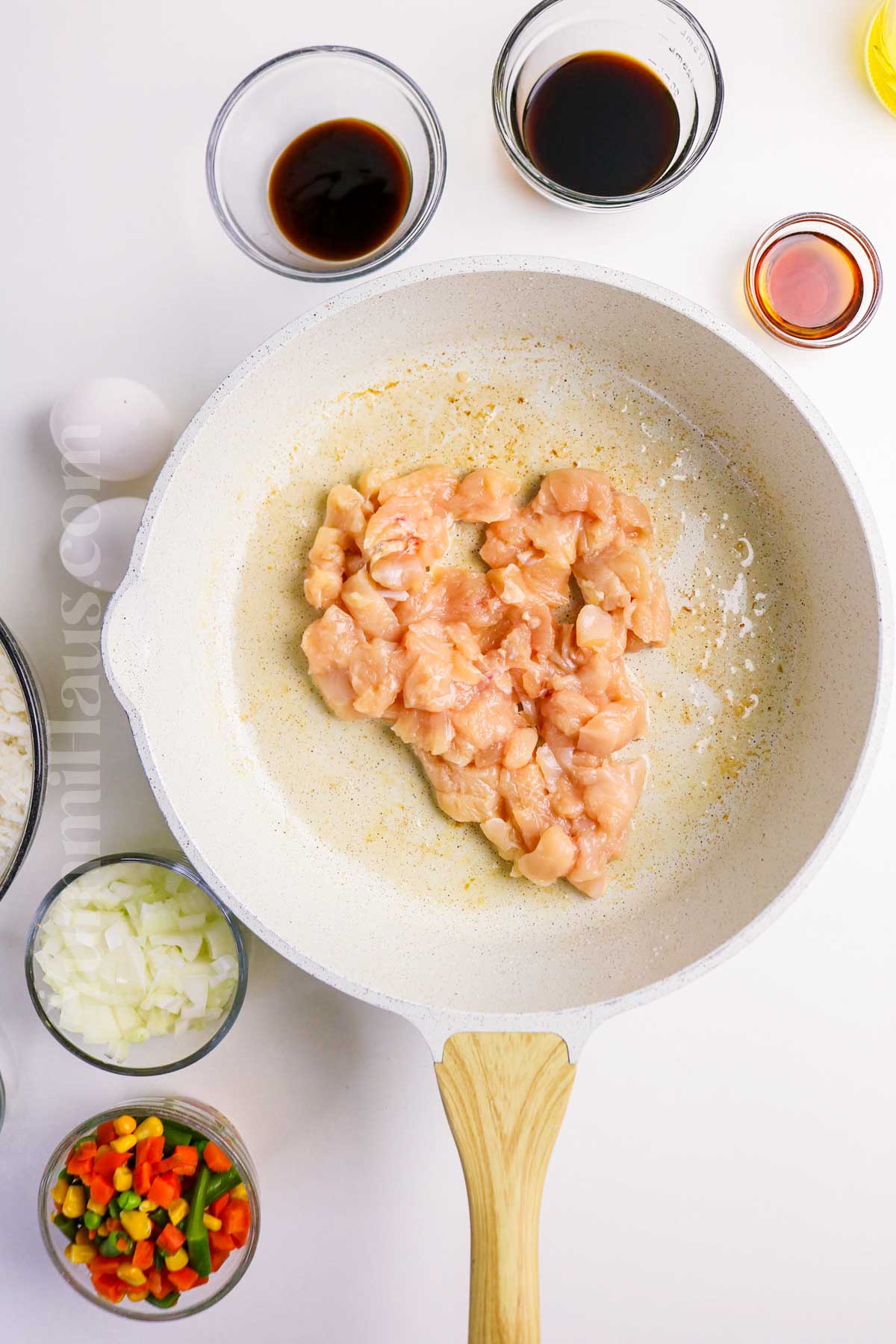
- Start by heating a tablespoon of oil in a large skillet or wok over medium-high heat. Toss in the shrimp and cook until they turn pink, about 2 minutes per side. Once done, remove them from the pan and set aside.
- Next, cook the chicken in the same pan until it’s nicely browned and cooked through, about 5 minutes. Remove and set aside with the shrimp.
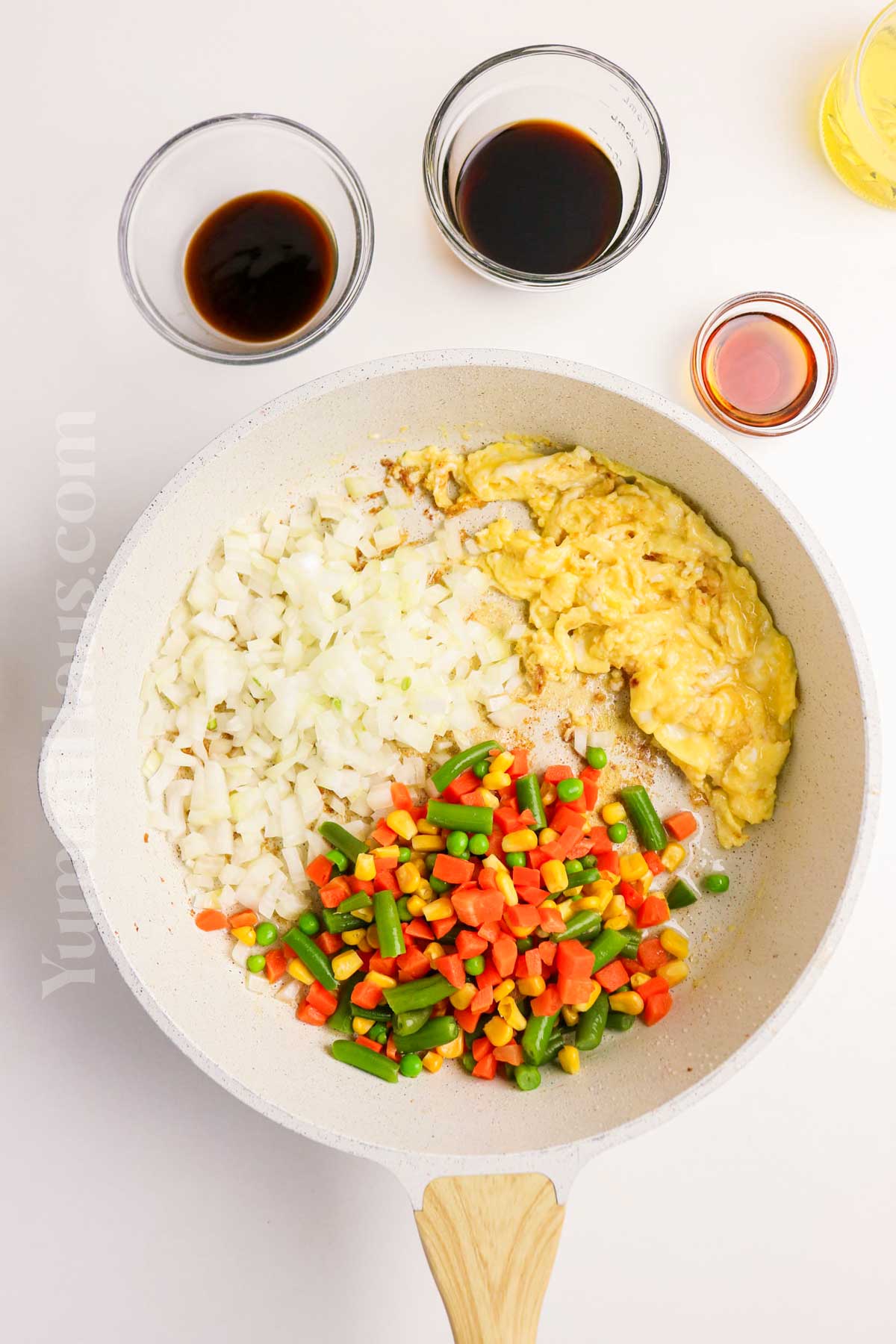
- Add the remaining oil to the pan, then pour in the beaten eggs. Scramble them until just set, then push them to one side of the pan.
- Toss in the onion, peas, and carrots, and cook for 2–3 minutes until they start to soften. Now add the rice, breaking up any clumps and spreading it evenly in the pan. Stir everything together.
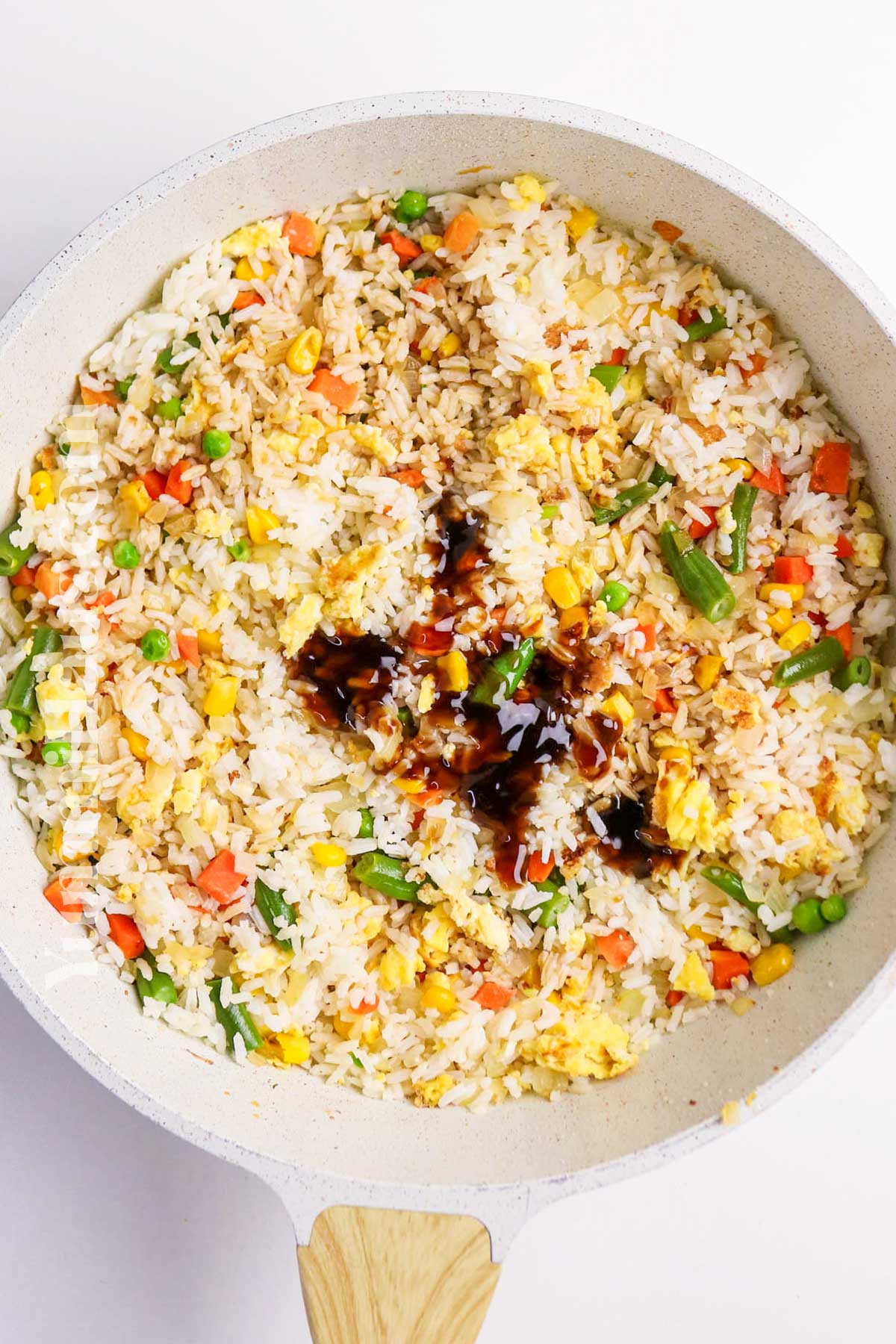
- Pour in the soy sauce, oyster sauce (if you’re using it), and sesame oil, then stir-fry for another 3–4 minutes until the rice is heated through.
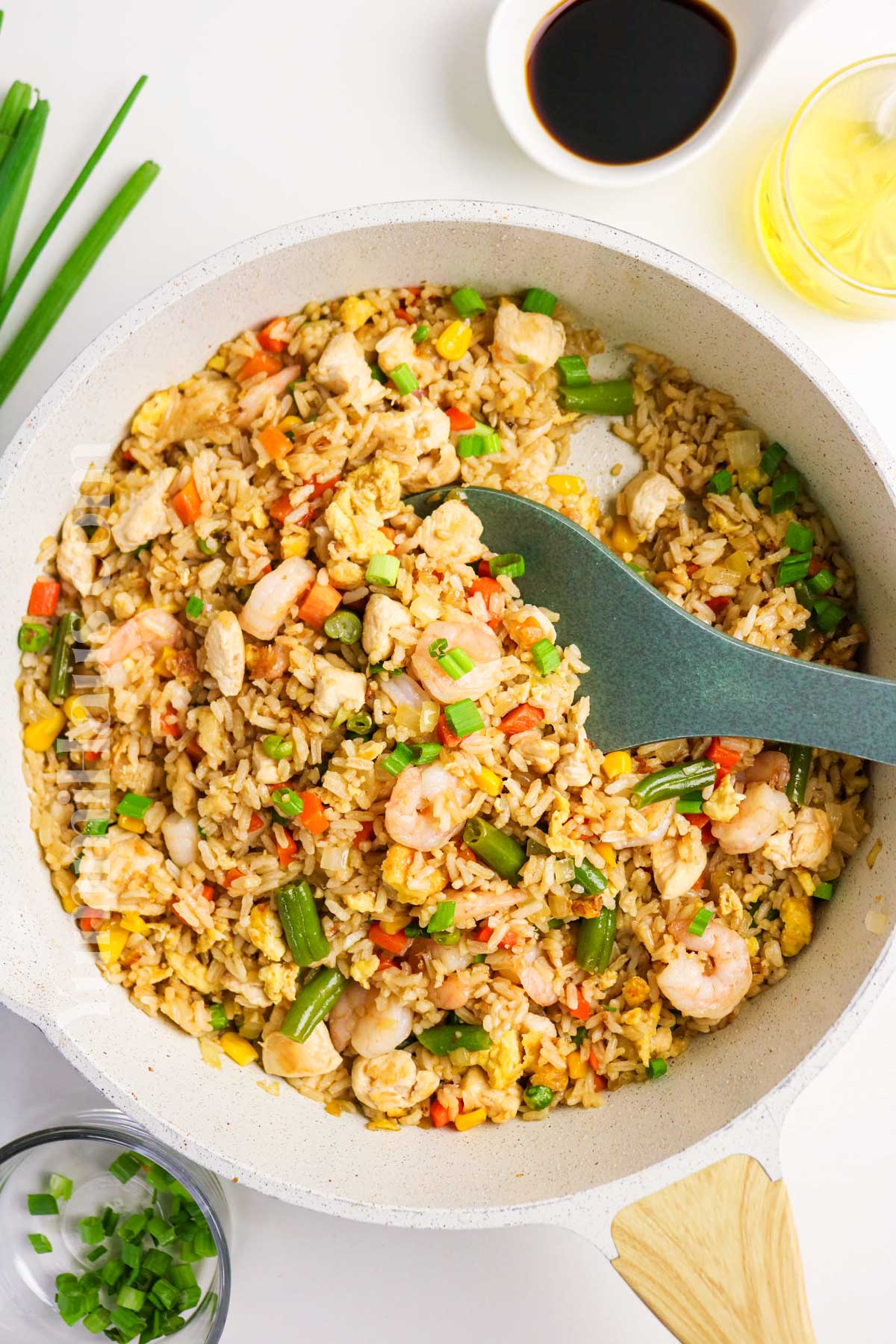
- Finally, return the shrimp and chicken to the pan, toss everything together, and season with salt and pepper to taste. Sprinkle with green onions before serving, and you’re ready to dig in!
Variations & Substitutions
Rice Alternatives
Brown rice works if you prefer whole grains, but requires longer cooking time and produces a chewier texture. Cook it completely and refrigerate overnight, just like white rice. Medium-grain rice creates stickier results that some people prefer, though it won’t separate as distinctly as long-grain varieties.
Cauliflower rice offers a low-carb option. Pat it extremely dry before cooking and reduce liquid ingredients by half. The texture differs completely from grain rice but absorbs flavors well. Quinoa provides a protein boost and works following the same day-old preparation method.
Protein Swaps
Replace shrimp with scallops, cut into quarters, which provide similar sweetness and quick cooking time. Firm tofu, cubed and pressed dry, creates vegetarian protein that crisps nicely in high heat. Pork tenderloin or beef sirloin, sliced thin, substitutes for chicken with a bolder flavor.
Use only shrimp or only chicken if you prefer single-protein versions. Increase the chosen protein to one pound total. Chinese sausage (lap cheong), diced small, adds sweet-savory depth that works alone or combined with other proteins.
Vegetable Options
Swap peas for edamame or diced green beans. Replace carrots with bell peppers for a different sweetness and color. Broccoli florets, blanched briefly, work instead of traditional vegetables. Corn adds sweetness that pairs well with both proteins.
Mushrooms (shiitake or cremini), diced small, contribute meaty umami. Bean sprouts added at the very end provide crunch without cooking down. Snap peas sliced on the diagonal offer more interesting texture than regular peas.
Sauce and Seasoning Adjustments
Tamari replaces soy sauce for gluten-free needs with nearly identical flavor. Coconut aminos work for soy-free diets but taste slightly sweeter. Fish sauce instead of oyster sauce gives funkier umami depth.
Avocado oil substitutes for peanut oil with a similar high smoke point. Toasted sesame oil is essential, but regular sesame oil works in a pinch with less intense flavor. White pepper is traditional, but black pepper provides similar heat with more visible specks.
Storage
Refrigerator Storage
Cool fried rice completely before refrigerating to prevent bacterial growth. Spread it in a thin layer on a sheet pan for faster cooling rather than leaving it in a deep container. Transfer to airtight containers once fully cooled.
Store in the refrigerator for three to four days maximum. Glass containers work better than plastic since they don’t absorb odors or stain from soy sauce. Portion into individual serving sizes for easy reheating during the week.
Rice dishes pose food safety concerns if left at room temperature for too long. Bacteria multiply rapidly between 40°F and 140°F, so refrigerate within two hours of cooking. Never let fried rice sit out overnight.
Freezer Storage
Freeze fried rice in portioned amounts for up to three months. Use freezer-safe bags with air pressed out or rigid containers with tight lids. Label with date so you can track freshness. The texture changes slightly after freezing, but remains enjoyable.
Shrimp texture degrades more than chicken during freezing, becoming slightly rubbery. Consider freezing versions without shrimp and adding fresh cooked shrimp when reheating. Flash freeze on a sheet pan first, then transfer to bags to prevent clumping.
Reheating Methods
Microwave works for quick reheating but produces a softer texture. Sprinkle a tablespoon of water over the rice and cover with a damp paper towel. Heat in one-minute intervals, stirring between, until steaming hot throughout.
Stovetop reheating in a skillet or wok restores the best texture. Add a tablespoon of oil and heat over medium-high. Break up clumps and stir frequently until everything is hot. This method re-crisps the rice and revives wok breath flavor.
An air fryer creates a crispy texture similar to fresh cooking. Spread rice in a thin layer in the basket and heat at 350°F for five to eight minutes, shaking halfway through. This method works especially well for smaller portions.
Expert Tips
Rice Preparation is Everything
Day-old refrigerated rice is non-negotiable for proper texture. Fresh rice contains too much moisture and turns mushy under high heat. Cook rice the day before and spread it on a sheet pan to cool completely before refrigerating uncovered. This dries the surface of each grain so they separate beautifully during frying.
Break up any rice clumps with your hands before starting to cook. Cold rice straight from the refrigerator works better than room temperature because it holds its structure during the initial heat blast.
Mise en Place Saves Everything
Have every ingredient prepped and within arm’s reach before turning on the heat. Fried rice cooks in minutes, so you cannot stop to chop vegetables or measure sauces. Line up proteins, vegetables, aromatics, sauces, and rice in the order you will use them.
Beat eggs in advance and keep them ready to pour. Mix all sauce ingredients together in a small bowl rather than adding them separately. This preparation prevents burning and ensures even cooking throughout the process.
Heat Management Creates Wok Breath
Maximum heat is critical for authentic flavor and texture. Preheat your wok or largest skillet for two to three minutes before adding oil. The pan should be almost smoking before you start cooking. This high temperature creates the slightly charred flavor called wok breath or wok hei.
Cook ingredients in small batches to maintain temperature. Overloading the pan drops the heat and causes steaming instead of frying. Remove each cooked component to a plate before starting the next ingredient, then combine everything at the end.
Protein Cooking Order Matters
Cook the shrimp first because it takes the shortest time and overcooks easily. Remove it while still slightly underdone since residual heat continues cooking. Chicken goes next with enough time to cook through completely but stay tender.
Pat both proteins completely dry before cooking to achieve proper searing. Any surface moisture creates steam and prevents the caramelization that develops flavor. Season proteins lightly before cooking, then adjust final seasoning later.
Push and Pull Technique
Push ingredients up the sides of the wok to create space in the center for new ingredients. This staging area keeps cooked items warm without continuing to cook them. Pull ingredients back to the center when combining everything together.
Use a metal spatula or wok spatula to scrape the bottom constantly. This prevents sticking and ensures even exposure to heat. Flip ingredients with quick wrist motions rather than stirring slowly.
Sauce Application Strategy
Pour sauce around the edges of the pan, not directly on the rice. This technique allows the sauce to caramelize slightly against the hot metal before incorporating with other ingredients. The result is a deeper flavor than dumping sauce directly into the center.
Add soy sauce and oyster sauce during cooking, but drizzle sesame oil only at the very end after removing from the heat. Sesame oil burns easily and loses its aromatic properties under high heat. The residual heat releases its fragrance without destroying the delicate flavor.
Rice Flipping Method
Break up rice clumps by pressing with the back of your spatula against the pan rather than stirring vigorously. Vigorous stirring damages grains and creates a mushy texture. Use a combination of folding, pressing, and tossing motions.
Allow rice to sit undisturbed for 30 to 45 seconds between flips. This creates slightly crispy bits that add textural interest. Those golden-brown pieces are prized in high-quality fried rice.
Flavor Boosters
Aromatic Enhancements
Double the garlic and ginger for a more pronounced aromatic punch. Add thinly sliced scallions at three different stages: white parts with aromatics, green parts mixed into rice, and reserved tops as fresh garnish. Fresh Thai basil leaves, torn and tossed in at the end, bring unexpected brightness.
Chinese five-spice powder in tiny amounts (1/4 teaspoon) adds complexity without being identifiable. Szechuan peppercorns, toasted and ground, create a tingling sensation that elevates the entire dish.
Umami Depth Additions
A tablespoon of hoisin sauce mixed with your soy sauce adds sweet-savory complexity. Dried shiitake mushroom powder sprinkled over the rice contributes earthy umami without adding pieces. Anchovy paste or a small amount of shrimp paste intensifies seafood flavor.
Fermented black beans, rinsed and chopped fine, bring funky depth. MSG in small amounts (1/4 teaspoon) enhances natural flavors without adding artificial taste. Bonito flakes stirred in right before serving contribute smoky fish essence.
Heat and Spice Options
Fresh Thai bird chilies sliced thin and added with aromatics provide clean heat. Chili crisp oil (Lao Gan Ma brand) spooned on top adds both heat and crunchy texture. Sriracha mixed into the sauce brings garlic-forward spiciness.
White pepper is traditional, but Szechuan chili flakes offer more complex heat. Gochugaru (Korean chili flakes) provides mild heat with subtle sweetness. Sambal oelek stirred in creates an Indonesian-influenced spicy version.
Finishing Touches
Fried shallots or fried garlic sprinkled on top add crunch and concentrated allium flavor. Toasted sesame seeds (white or black) contribute a nutty texture. Crispy fried wonton strips provide contrast to soft rice.
Fresh cilantro leaves turn this into a fusion creation that some diners prefer. Lime wedges squeezed over individual portions brighten the richness. Furikake seasoning dusted on top brings Japanese influence with seaweed and sesame notes.
Sauce Drizzles
Keep extra soy sauce at the table for people who prefer a saltier flavor. Chili oil allows guests to customize the heat level. Oyster sauce thinned with a little water creates a glossy finishing drizzle.
Kewpie mayonnaise (Japanese style), drizzled in thin lines, adds creamy richness that seems wrong but tastes incredible. Sweet soy sauce (kecap manis) provides Indonesian-style sweetness. XO sauce spooned on top brings luxury dried seafood flavor.
What To Pair With
Appetizers and Starters
Egg drop soup provides a light, warming start that complements rather than competes with the fried rice. Hot and sour soup offers a tangy contrast to the savory main dish. Spring rolls (fresh or fried) add textural variety and vegetable content.
Crab rangoon brings creamy richness that balances the dry texture of fried rice. Pot stickers or dumplings (steamed or pan-fried) create a complete Chinese restaurant experience. Edamame sprinkled with sea salt serves as a simple, protein-rich starter.
Vegetable Sides
Stir-fried bok choy with garlic provides a green vegetable that cooks in minutes. Chinese broccoli (gai lan) blanched and topped with oyster sauce, offers a slightly bitter contrast. Sautéed green beans with chili garlic sauce add spice and crunch.
Cucumber salad with rice vinegar and sesame oil refreshes the palate between bites. Asian slaw with ginger dressing brings raw vegetable crispness. Steamed or roasted broccoli, simply prepared, lets the fried rice remain the star.
Additional Protein Options
Grilled teriyaki salmon turns this into an upscale dinner. Crispy tofu cubes tossed in sweet chili sauce add vegetarian protein. Barbecue pork (char siu) sliced thin brings sweet-savory Cantonese flavor.
Salt and pepper calamari provides another seafood option. Beef and broccoli create a full Chinese takeout spread. General Tso’s chicken appeals to people who want saucy protein alongside the rice.
Drinks That Pair Well
Iced jasmine tea cleanses the palate without adding sweetness. Hot green tea cuts through the richness of fried proteins and oil. Tsingtao or other light Asian lagers complement without overwhelming.
Riesling or Gewurztraminer wines handle the soy sauce and aromatics better than heavy reds. Sake (served warm or cold) provides a traditional Asian pairing. Sparkling water with lime keeps things simple and refreshing.
Troubleshooting
Mushy or Sticky Rice
This happens when using fresh rice instead of day-old rice. The excess moisture in newly cooked rice cannot evaporate quickly enough during frying. Always cook rice at least one day ahead and refrigerate it uncovered so the surface dries out.
Overcrowding the pan also causes mushiness by trapping steam. Cook rice in batches if necessary to maintain high heat. Make sure your pan is screaming hot before adding rice so each grain sears rather than steams.
Clumpy Rice That Won’t Separate
Rice stored in airtight containers while still warm creates condensation that glues grains together. Spread cooked rice on a sheet pan to cool completely before refrigerating. Break up any clumps with your hands before cooking.
Not using enough oil prevents grains from separating and coating evenly. The oil lubricates each grain so they move independently. Add oil in stages as needed rather than dumping it all at once.
Bland or Underseasoned Flavor
Many home cooks fear over-salting and end up with boring fried rice. Taste and adjust seasoning multiple times during cooking. Remember that rice absorbs a lot of salt, so what seems well-seasoned in the pan may taste bland once rice is added.
Using low-quality soy sauce or oyster sauce results in one-dimensional saltiness without depth. Invest in naturally brewed versions that provide complex umami. Layer flavors by adding aromatics first, then sauces, then finishing with sesame oil.
Overcooked or Rubbery Shrimp
Shrimp continues cooking after removal from the heat due to residual temperature. Take shrimp off the heat while still slightly translucent in the center. They will finish cooking as they rest and when mixed back into the hot rice.
Using shrimp that are too small causes them to overcook in seconds. Medium or large shrimp (31-40 count or bigger) handle high heat better. Pat shrimp completely dry before cooking since surface moisture causes steaming instead of searing.
Dry Chicken That Lacks Juice
Chicken breast dries out easily under high heat due to low fat content. Switch to boneless skinless chicken thighs, which stay moist and tender. Cut chicken into small, uniform pieces so they cook quickly and evenly.
Overcooking chicken even slightly makes it tough and dry. Remove chicken when just cooked through, since it will reheat when everything combines at the end. Marinating chicken briefly in soy sauce and cornstarch before cooking helps retain moisture.
Burnt Garlic or Aromatics
Garlic burns in seconds under high heat and turns bitter. Add aromatics after the pan cools slightly from cooking proteins. Push other ingredients aside and add garlic to a less hot spot in the pan.
Mincing garlic too fine causes it to burn faster than rough chops. Cut garlic into slightly larger pieces that can withstand the heat. Remove burnt garlic immediately and start over since the bitter flavor will ruin the entire dish.
Eggs Turn Into Scrambled Mess
Pouring eggs into a pan that isn’t hot enough causes them to spread out and cook slowly into bits. Make sure the pan is hot and create a clear space before adding eggs. Let eggs set for a few seconds before scrambling so they form larger, more appealing pieces.
Breaking up eggs too much creates tiny specks instead of visible ribbons. Use your spatula to fold eggs into large curds, then break them into rustic pieces. The goal is visible yellow ribbons throughout the rice, not microscopic bits.
Everything Sticks to the Pan
Using a pan that isn’t properly heated or seasoned causes major sticking issues. Preheat your wok or skillet for several minutes before adding oil. Carbon steel woks improve with use as they develop a natural non-stick patina.
Not using enough oil or adding ingredients before the oil is hot enough creates sticking problems. Heat oil until it shimmers before adding proteins or rice. Keep ingredients moving constantly with your spatula to prevent settling and burning.
FAQ’s
Can I use fresh rice instead of day-old rice?
Fresh rice contains too much moisture and creates mushy, clumpy fried rice instead of separated grains with proper texture. If you must use fresh rice, spread it on a sheet pan and refrigerate it uncovered for at least two hours to dry the surface. Better yet, cook rice the night before for the best results. The drying process is essential for authentic texture.
What type of pan works best for fried rice?
A carbon steel wok provides the best heat distribution and traditional wok breath flavor. A large cast-iron skillet or stainless steel skillet works as a second choice if you don’t have a wok. Non-stick pans prevent proper searing and don’t get hot enough for authentic results. Whatever pan you use, make sure it’s large enough to toss ingredients without spilling.
Should I use white or dark soy sauce?
Regular (light) soy sauce is standard for fried rice because it adds saltiness without darkening the rice too much. Dark soy sauce creates a deeper color and slightly sweeter flavor, but can make fried rice look muddy. Some cooks use a combination of both for balanced color and flavor. Start with light soy sauce and add dark soy sauce only if you want a richer appearance.
How do I prevent my fried rice from getting soggy?
High heat, dry rice, and quick cooking prevent sogginess. Never crowd the pan since this traps steam and causes rice to steam rather than fry. Use day-old rice that has been refrigerated uncovered. Add sauces sparingly and around the edges of the pan rather than directly on the rice. Keep everything moving constantly to prevent steam buildup.
Can I make this recipe vegetarian?
Replace shrimp and chicken with firm tofu pressed dry and cubed, or use additional eggs and more vegetables. Add mushrooms for meaty texture and umami depth. Keep the same cooking method and seasonings. Consider adding cashews or peanuts for extra protein and crunch. The technique remains identical even when proteins change.
Why does the restaurant’s fried rice taste better than mine?
Commercial wok burners produce much higher heat than home stoves, creating distinctive wok breath flavor. Restaurants sometimes use generous amounts of oil and MSG, which enhance flavor significantly. They cook ingredients separately in small batches to maintain temperature. You can replicate these techniques at home by using maximum heat, not overcrowding the pan, and cooking components separately.
How much rice do I need per person?
Plan for one cup of cooked rice per person for main course portions. This recipe typically serves four to six people, depending on appetites and whether you’re serving other dishes. Since fried rice includes proteins and vegetables, it counts as a complete meal rather than just a side dish. Adjust quantities based on whether this is the only dish or part of a larger spread.
Can I add frozen vegetables directly to the pan?
Frozen vegetables release too much water when added directly to a hot pan. Thaw them completely and pat them very dry before using, or briefly blanch and dry them. Better yet, use fresh vegetables for superior texture and flavor. If you must use frozen, choose high-quality individually quick-frozen vegetables rather than those frozen in blocks.
What’s the best way to reheat fried rice?
Stovetop reheating in a hot skillet with a little oil produces the best texture by re-crisping the rice. Microwave works for convenience but creates softer results. Always heat fried rice until steaming hot throughout (165°F internal temperature) for food safety. Add a small amount of water or broth if the rice seems dry during reheating.
If you love this take-out recipe, you’re going to love these other copycat recipes, too. Please click each link below to find the easy, printable recipe!
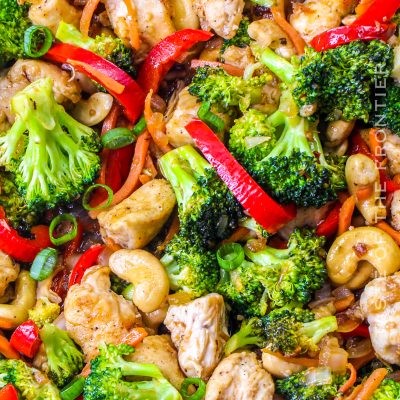
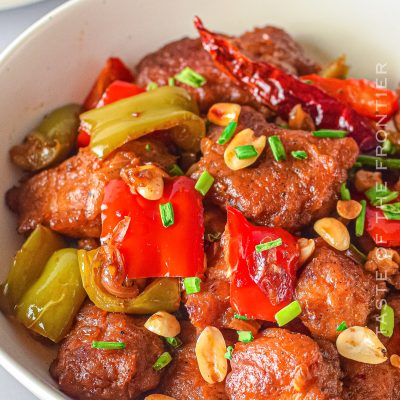
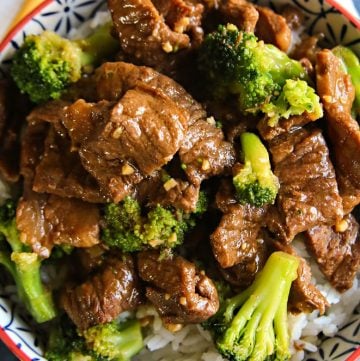
More Great Asian-Inspired Recipes
Panda Express Chow Mein – Copycat Recipe
CONNECT WITH YUMMI HAUS!
Be sure to follow me on my social media, so you never miss a post!

Shrimp and Chicken Fried Rice
Ingredients
- 2 tablespoons vegetable oil divided
- ½ pound medium shrimp peeled and deveined
- ½ pound chicken breast boneless, skinless – diced
- 2 large eggs lightly beaten
- 1 small onion diced
- 1 cup peas and carrots frozen but thawed
- 3 cups white rice cold, cooked – preferably day-old
- 3 tablespoons soy sauce
- 1 tablespoon oyster sauce optional
- 1 teaspoon sesame oil
- 2 green onions sliced
Salt and pepper, to taste
Instructions
- Heat 1 tablespoon of the oil in a large skillet or wok over medium-high heat.
- Add the shrimp and cook until they turn pink, about 2 minutes per side. Remove and set aside.
- Add the chicken to the same pan and cook until browned and cooked through, about 5 minutes.
- Remove and set aside with the shrimp.
- Add the remaining oil to the pan and then add the beaten eggs.
- Scramble until set, then move them to one side of the pan.
- Add the onion, peas, and carrots; cook for 2–3 minutes until softened.
- Add the rice, making sure all portions that are stuck together are broken apart, and the rice is evenly disbursed.
- Stir to combine.
- Pour in the soy sauce, oyster sauce (if using), and sesame oil.
- Stir-fry for 3–4 minutes until heated through.
- Return the shrimp and chicken to the pan, tossing to combine.
- Season with salt and pepper.
- Garnish with green onions before serving.
Nutrition
Nutritional information for the recipe is provided as a courtesy and is approximate. Please double-check with your own dietary calculator for the best accuracy. We at Yummi Haus cannot guarantee the accuracy of the nutritional information given for any recipe on this site.







Share Your Thoughts